Department of Surgery, Temple University School of Medicine, Philadelphia, PA, USA.
J Ovarian Res. 2010 May 26;3:13. doi: 10.1186/1757-2215-3-13.
Ovarian cancer is the most common cause of cancer related death from gynecologic tumors in the United States. The insidious nature of the disease precludes early diagnosis, therefore surgical debulking and chemotherapy are considered as standard treatment modalities for advanced stages. We investigated the effect of the LXR agonist, T0901317, on ovarian cancer cell proliferation and apoptosis as a potential therapeutic agent.
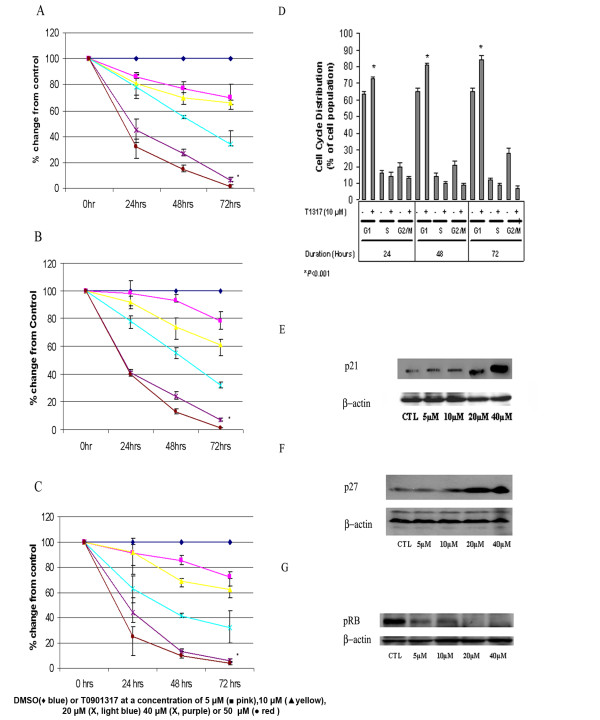
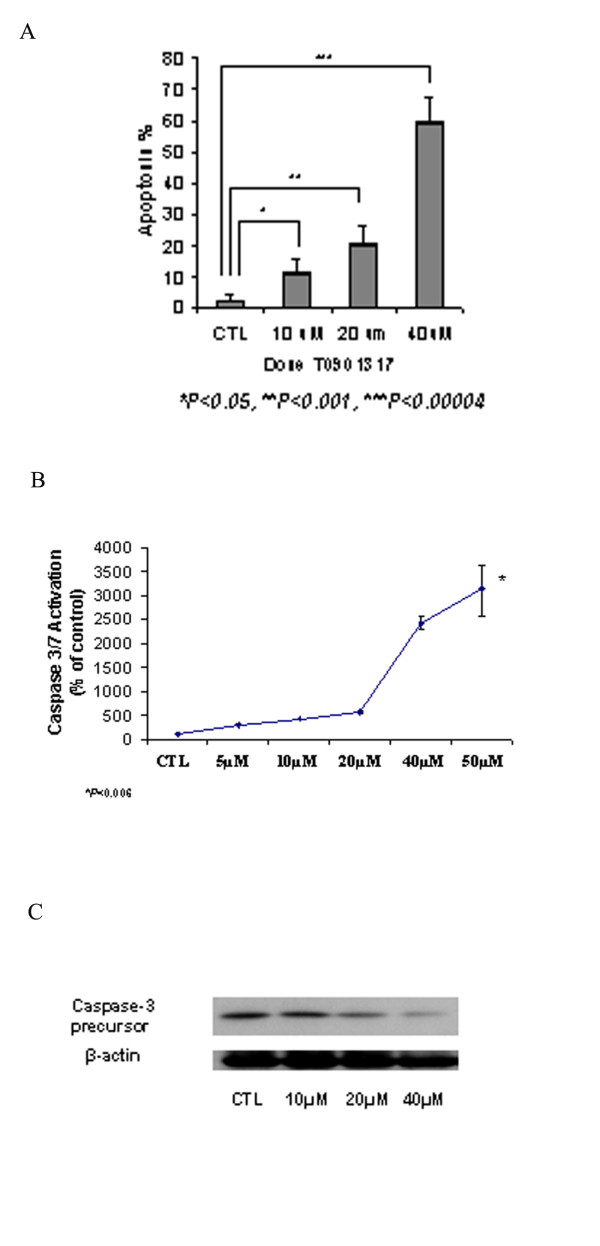
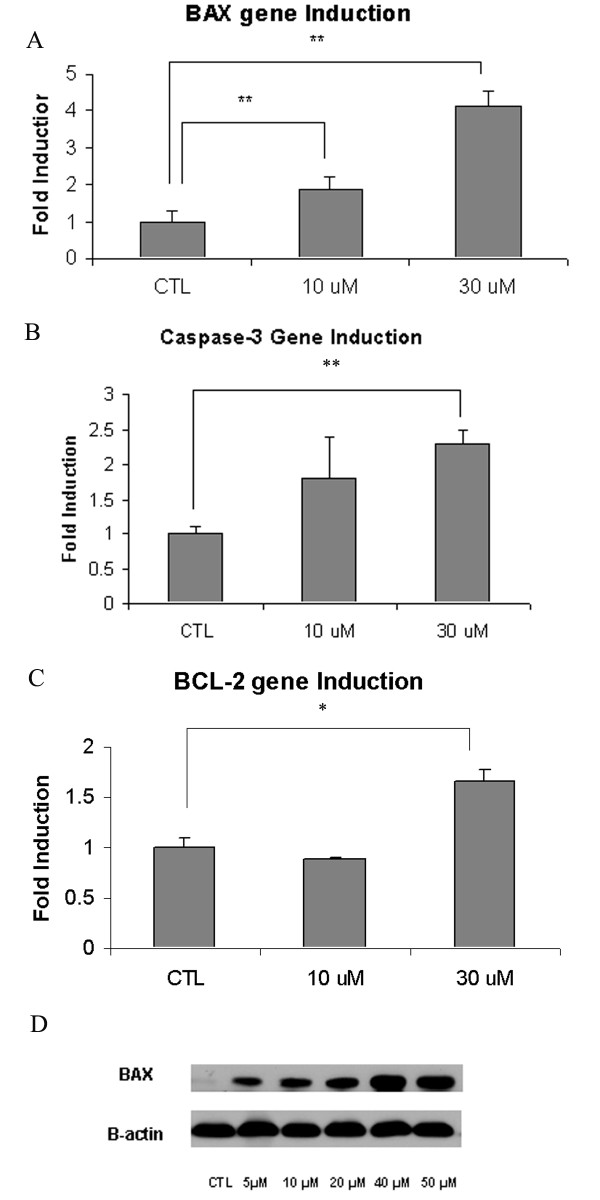
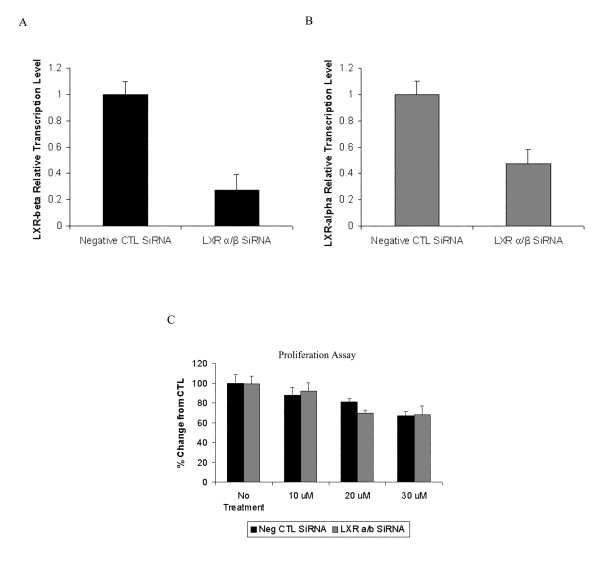
T0901317 treatment resulted in a significant (P <0.001) inhibition of cell proliferation in a time- and dose-dependent manner in CaOV3, SKOV3 and A2780 cells. Western blot analysis demonstrated an induction of p21 and p27 with a concominant reduction in phospho-RB protein levels. Cell cycle analysis demonstrated a significant (P <0.001) arrest in the G1 cell cycle phase. Significant induction of Caspase-3 and BAX gene expression occurred with treatment. Induction of apoptosis was confirmed by significant (P < 0.001) elevation of caspase activity on FACS analysis, caspase-glo assay, BAX protein induction and decreased caspase 3 precursor protein expression on Western blot analysis. LXR alpha/beta knockdown experiments did not reverse the anti-proliferative and cytotoxic effects of T0901317.
The LXR agonist, T0901317, significantly suppresses cell proliferation and induces programmed cell death in a dose- and time-dependent manner. Our results indicate that T0901317 induces its anti-proliferative and cytotoxic effects via an LXR-independent mechanism.
卵巢癌是美国妇科肿瘤中导致癌症相关死亡的最常见原因。该疾病隐匿性强,无法早期诊断,因此手术去瘤和化疗被视为晚期标准治疗方法。我们研究了 LXR 激动剂 T0901317 对卵巢癌细胞增殖和凋亡的影响,以期将其作为一种潜在的治疗药物。
T0901317 处理以时间和剂量依赖的方式显著(P <0.001)抑制了 CaOV3、SKOV3 和 A2780 细胞的增殖。Western blot 分析表明,p21 和 p27 的诱导伴随着磷酸化 RB 蛋白水平的降低。细胞周期分析表明,G1 细胞周期阶段显著(P <0.001)停滞。用 T0901317 处理后,Caspase-3 和 BAX 基因表达显著(P <0.001)上调。通过 FACS 分析、caspase-glo 测定、BAX 蛋白诱导和 Western blot 分析中 caspase-3 前体蛋白表达的降低,证实了细胞凋亡的诱导。LXRα/β 敲低实验并不能逆转 T0901317 的抗增殖和细胞毒性作用。
LXR 激动剂 T0901317 以剂量和时间依赖的方式显著抑制细胞增殖并诱导程序性细胞死亡。我们的结果表明,T0901317 通过一种不依赖于 LXR 的机制发挥其抗增殖和细胞毒性作用。