Nyul Thomas E, Beyries Keely, Hojnacki Taylor, Glynn Rebecca, Paulosky Kayla E, Gedela Anitej, Majer Ariana, Altman Lily, Buckley Kole H, Feng Zijie, Sun Kunfeng, Peng Zhicheng, Tobias John W, Hua Xianxin, Katona Bryson W
Division of Gastroenterology and Hepatology, Perelman School of Medicine, University of Pennsylvania, Philadelphia, PA 19104, USA.
Department of Cancer Biology, Abramson Family Cancer Research Institute, Perelman School of Medicine, University of Pennsylvania, Philadelphia, PA 19104, USA.
Cancers (Basel). 2023 Aug 16;15(16):4126. doi: 10.3390/cancers15164126.
Menin is a nuclear scaffold protein that regulates gene transcription in an oftentimes tissue-specific manner. Our previous work showed that menin is over-expressed in colorectal cancer (CRC); however, the full spectrum of menin function in colonic neoplasia remains unclear. Herein, we aimed to uncover novel menin-regulated pathways important for colorectal carcinogenesis.
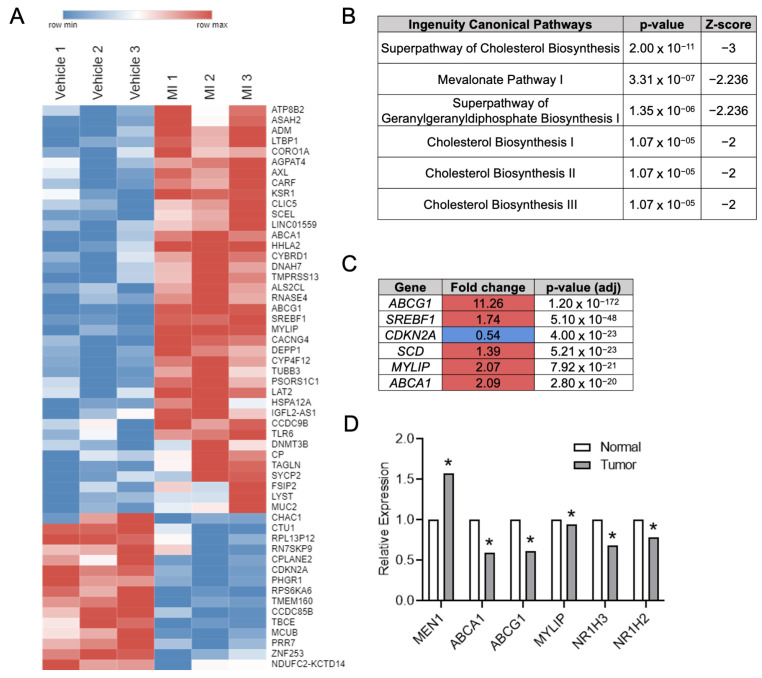
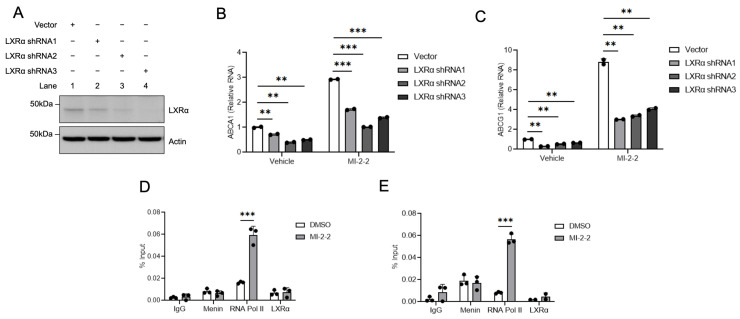
RNA-Seq analysis identified that menin regulates LXR-target gene expressions in CRC cell lines. Isolated colonic epithelium from ;-Cre and mice was used to validate the results in vivo. Cholesterol content was quantified via an enzymatic assay.
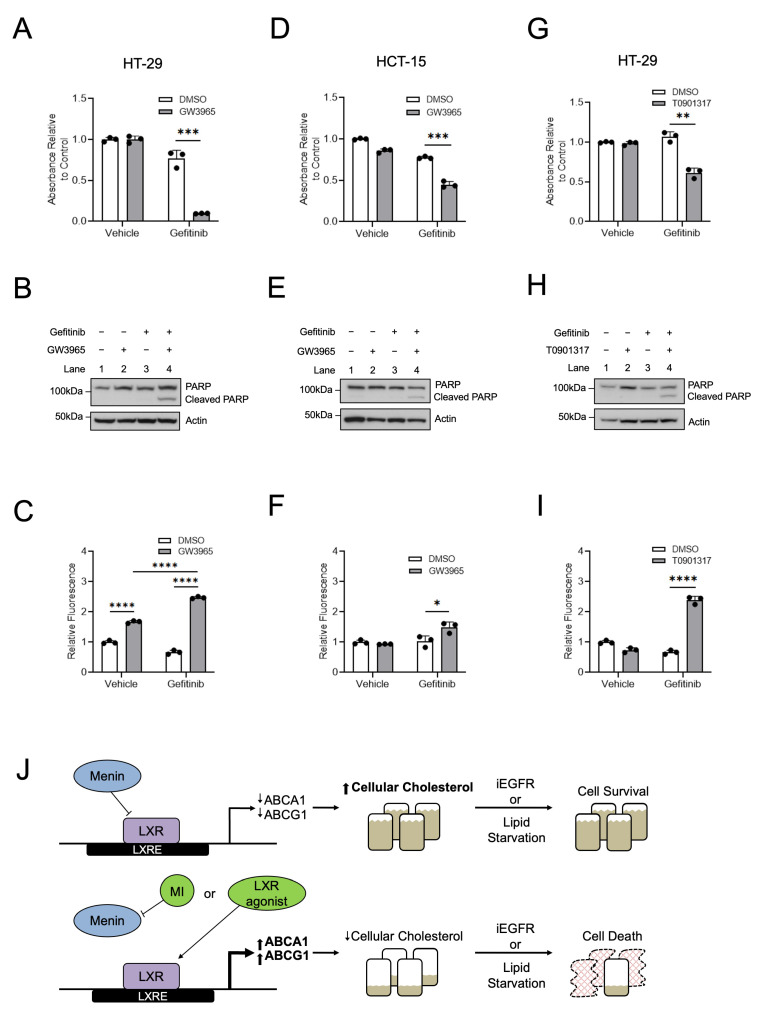
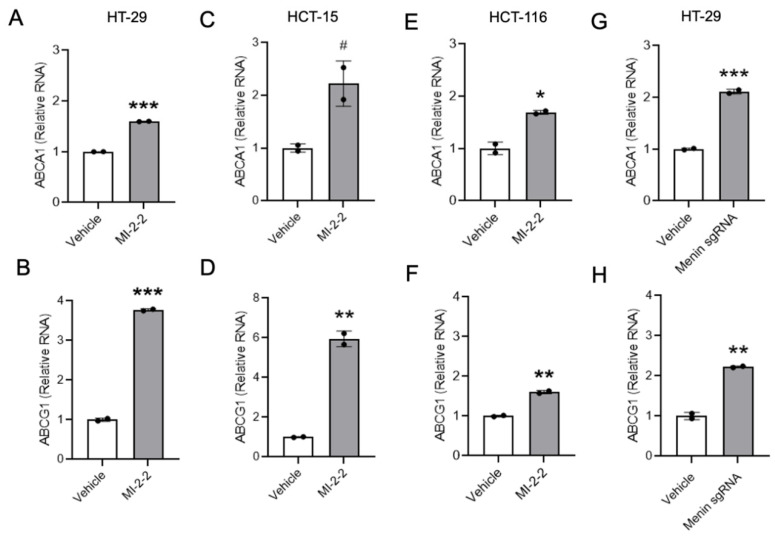
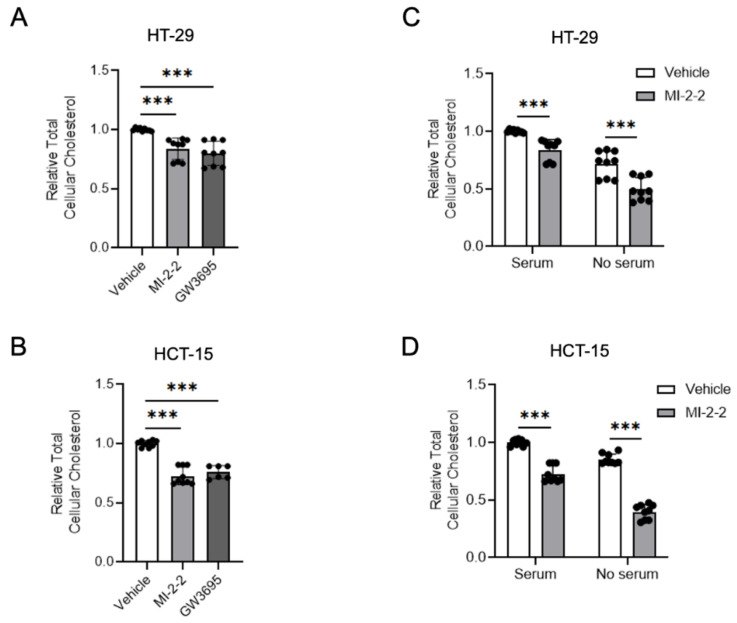
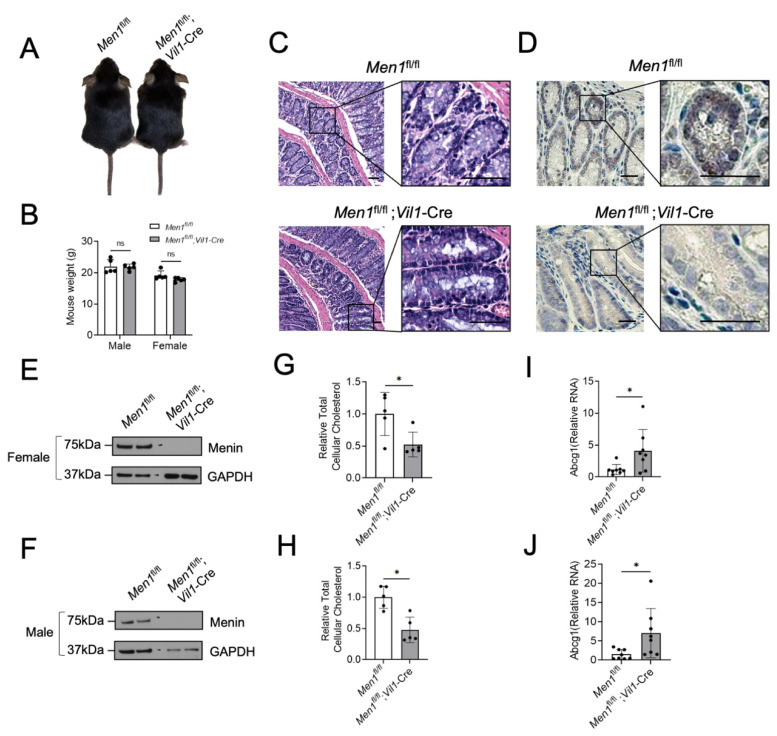
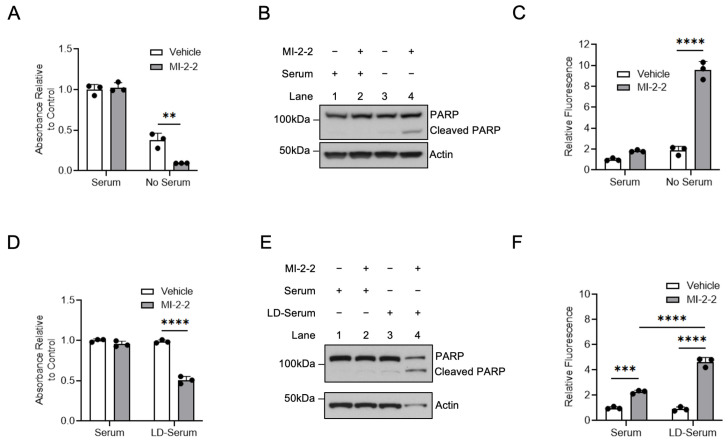
RNA-Seq analysis in the HT-29 CRC cell line identified that menin inhibition upregulated LXR-target genes, specifically and , with protein products that promote cellular cholesterol efflux. Similar results were noted across other CRC cell lines and with different methods of menin inhibition. Consistent with and upregulation, and similarly to LXR agonists, menin inhibition reduced the total cellular cholesterol in both HT-29 and HCT-15 cells. To confirm the effects of menin inhibition in vivo, we assessed ;-Cre mice lacking menin expression in the colonic epithelium. ;-Cre mice were found to have no distinct baseline phenotype compared to control mice. However, similarly to CRC cell lines, ;-Cre mice showed an upregulation of and a reduction in total cellular cholesterol. Promoting cholesterol efflux, either via menin inhibition or LXR activation, was found to synergistically suppress CRC cell growth under cholesterol-depleted conditions and when administered concomitantly with small molecule EGFR inhibitors.
Menin represses the transcription of LXR-target genes, including and in the colonic epithelium and CRC. Menin inhibition conversely upregulates LXR-target genes and reduces total cellular cholesterol, demonstrating that menin inhibition may be an important mechanism for targeting cholesterol-dependent pathways in colorectal carcinogenesis.
Menin是一种核支架蛋白,常以组织特异性方式调节基因转录。我们之前的研究表明,Menin在结直肠癌(CRC)中过度表达;然而,Menin在结肠肿瘤形成中的全部功能仍不清楚。在此,我们旨在揭示对结直肠癌发生至关重要的新型Menin调节途径。
RNA测序分析确定Menin在CRC细胞系中调节肝X受体(LXR)靶基因的表达。使用从;-Cre和小鼠分离的结肠上皮在体内验证结果。通过酶法测定胆固醇含量。
HT-29 CRC细胞系中的RNA测序分析确定,抑制Menin可上调LXR靶基因,特别是和,其蛋白产物可促进细胞胆固醇外流。在其他CRC细胞系中以及采用不同的Menin抑制方法时也观察到类似结果。与和的上调一致,并且与LXR激动剂相似,抑制Menin可降低HT-29和HCT-15细胞中的总细胞胆固醇。为了在体内确认抑制Menin的作用,我们评估了结肠上皮中缺乏Menin表达的;-Cre小鼠。发现;-Cre小鼠与对照小鼠相比没有明显的基线表型。然而,与CRC细胞系相似,;-Cre小鼠显示和上调,总细胞胆固醇降低。发现在胆固醇缺乏条件下以及与小分子表皮生长因子受体(EGFR)抑制剂同时给药时,通过抑制Menin或激活LXR促进胆固醇外流可协同抑制CRC细胞生长。
Menin抑制结肠上皮和CRC中包括和在内的LXR靶基因的转录。相反,抑制Menin会上调LXR靶基因并降低总细胞胆固醇,表明抑制Menin可能是靶向结直肠癌发生中胆固醇依赖性途径的重要机制。