Bioinformatics Centre, Bose Institute, P-1/12 CIT Scheme VIIM, Kolkata, India.
BMC Bioinformatics. 2010 May 27;11:286. doi: 10.1186/1471-2105-11-286.
Biological evolution conserves protein residues that are important for structure and function. Both protein stability and function often require a certain degree of structural co-operativity between spatially neighboring residues and it has previously been shown that conserved residues occur clustered together in protein tertiary structures, enzyme active sites and protein-DNA interfaces. Residues comprising protein interfaces are often more conserved compared to those occurring elsewhere on the protein surface. We investigate the extent to which conserved residues within protein-protein interfaces are clustered together in three-dimensions.
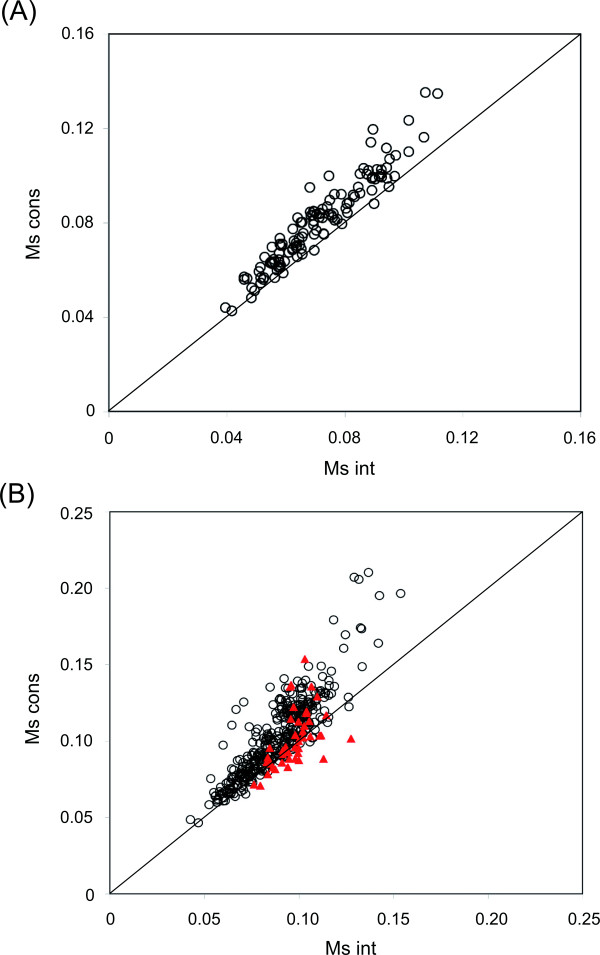
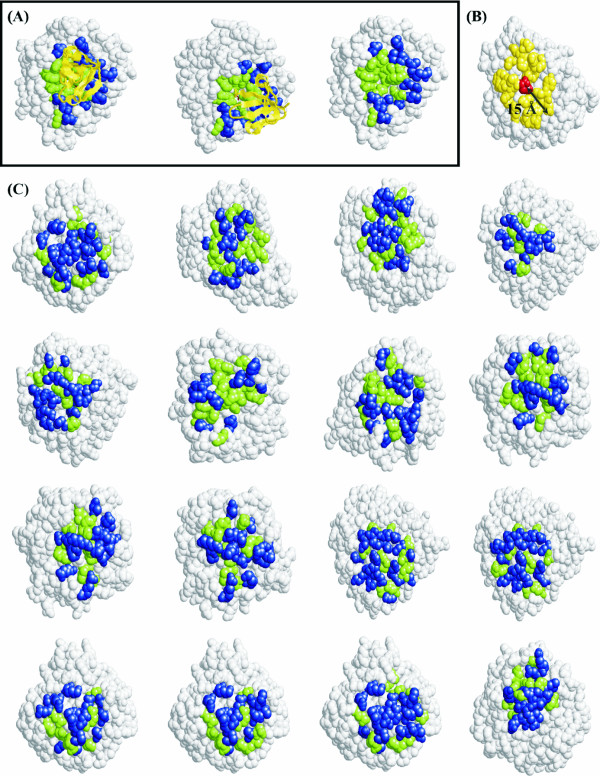
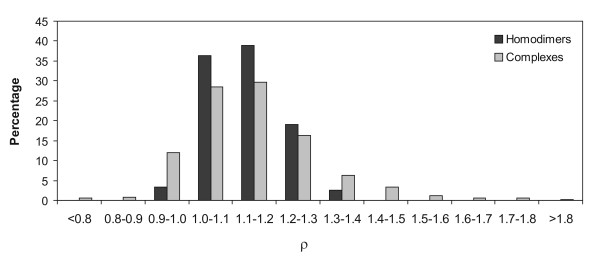
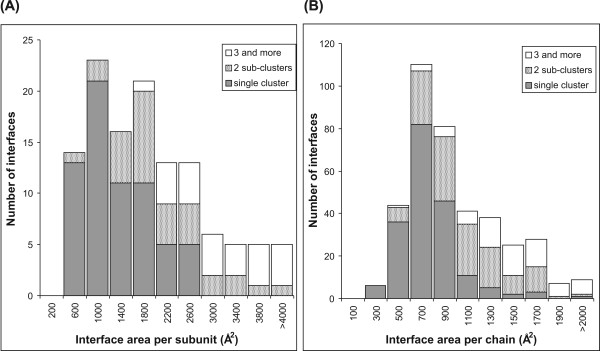
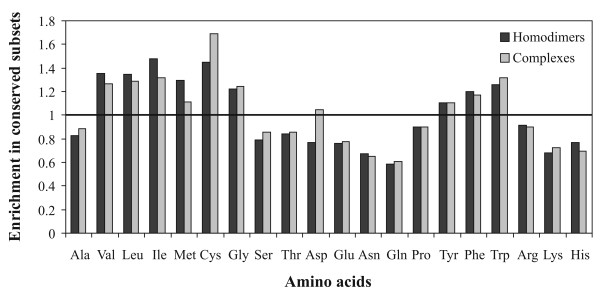
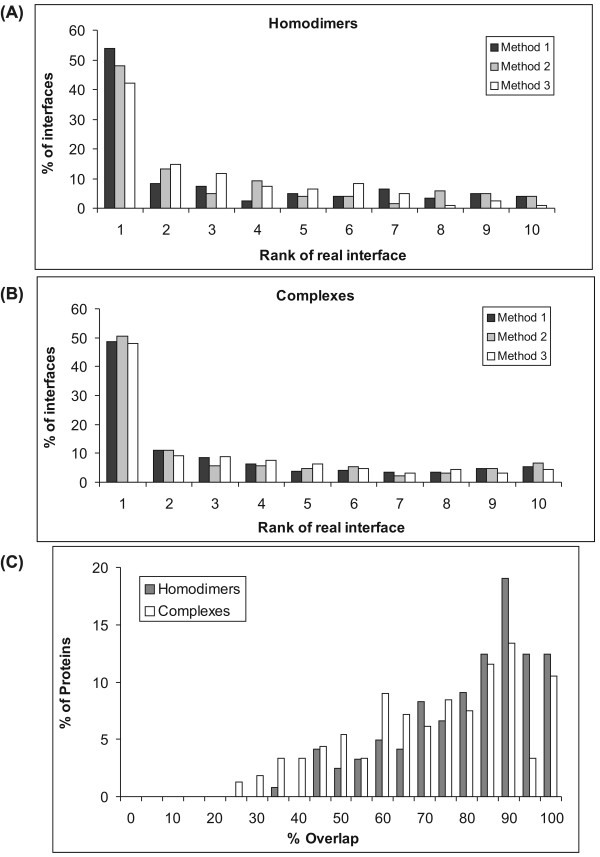
Out of 121 and 392 interfaces in homodimers and heterocomplexes, 96.7 and 86.7%, respectively, have the conserved positions clustered within the overall interface region. The significance of this clustering was established in comparison to what is seen for the subsets of the same size of randomly selected residues from the interface. Conserved residues occurring in larger interfaces could often be sub-divided into two or more distinct sub-clusters. These structural cluster(s) comprising conserved residues indicate functionally important regions within the protein-protein interface that can be targeted for further structural and energetic analysis by experimental scanning mutagenesis. Almost 60% of experimental hot spot residues (with DeltaDeltaG > 2 kcal/mol) were localized to these conserved residue clusters. An analysis of the residue types that are enriched within these conserved subsets compared to the overall interface showed that hydrophobic and aromatic residues are favored, but charged residues (both positive and negative) are less common. The potential use of this method for discriminating binding sites (interfaces) versus random surface patches was explored by comparing the clustering of conserved residues within each of these regions--in about 50% cases the true interface is ranked among the top 10% of all surface patches.
Protein-protein interaction sites are much larger than small molecule biding sites, but still conserved residues are not randomly distributed over the whole interface and are distinctly clustered. The clustered nature of evolutionarily conserved residues within interfaces as compared to those within other surface patches not involved in binding has important implications for the identification of protein-protein binding sites and would have applications in docking studies.
生物进化保留了对结构和功能很重要的蛋白质残基。蛋白质的稳定性和功能通常需要空间上相邻残基之间有一定程度的结构协同性,以前已经表明,在蛋白质三级结构、酶活性部位和蛋白质-DNA 界面中,保守残基聚集在一起。与蛋白质表面其他部位的残基相比,构成蛋白质界面的残基通常更保守。我们研究了蛋白质-蛋白质界面内的保守残基在三维空间中聚集的程度。
在同源二聚体和异源复合物中,分别有 96.7%和 86.7%的蛋白质界面中的保守位置聚集在整个界面区域内。通过与界面中相同大小的随机选择残基子集进行比较,确定了这种聚集的显著性。发生在较大界面中的保守残基通常可以分为两个或更多不同的亚簇。这些由保守残基组成的结构簇表明,蛋白质-蛋白质界面内存在功能重要的区域,可以通过实验扫描诱变进一步进行结构和能量分析。近 60%的实验热点残基(DeltaDeltaG>2 kcal/mol)位于这些保守残基簇中。与整个界面相比,对这些保守子集内富集的残基类型的分析表明,疏水性和芳香族残基是有利的,但带电荷的残基(无论是正电荷还是负电荷)则不太常见。通过比较这些区域中每个区域内保守残基的聚类情况,探索了这种方法用于区分结合位点(界面)与随机表面斑块的可能性——在大约 50%的情况下,真实界面在所有表面斑块中排名前 10%。
蛋白质-蛋白质相互作用位点比小分子结合位点大得多,但保守残基并非随机分布在整个界面上,而是明显聚集在一起。与不参与结合的其他表面斑块相比,界面内进化保守残基的聚集性质对蛋白质-蛋白质结合位点的识别具有重要意义,并将在对接研究中得到应用。