Department of Molecular and Cellular Biology, University of Arizona, Tucson, AZ 85721, USA.
J Cell Biol. 2010 May 31;189(5):813-27. doi: 10.1083/jcb.200912019.
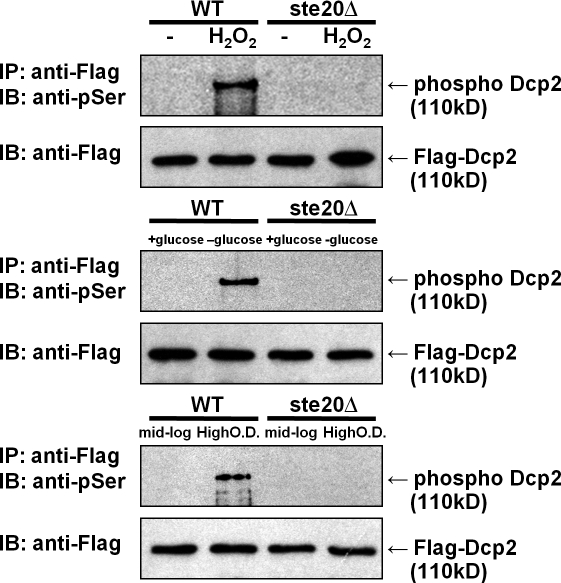
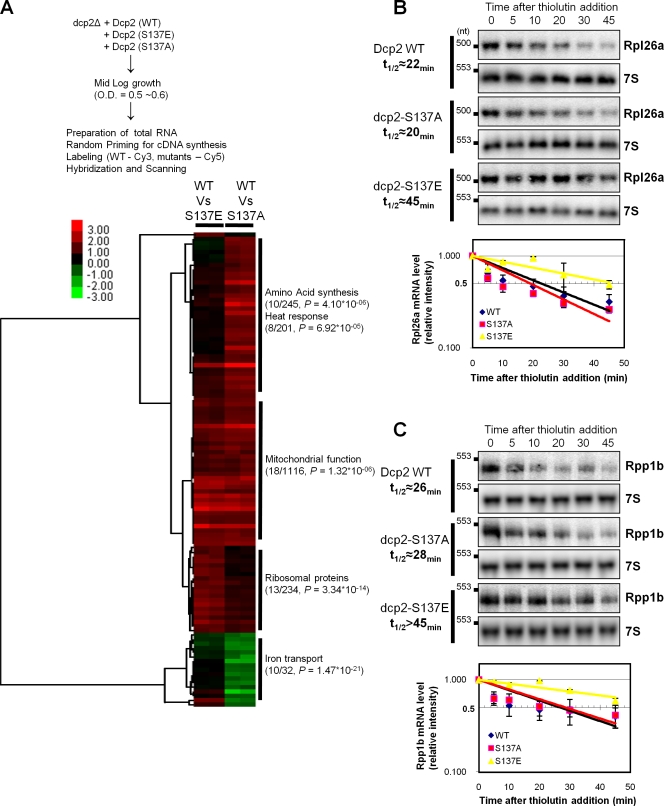
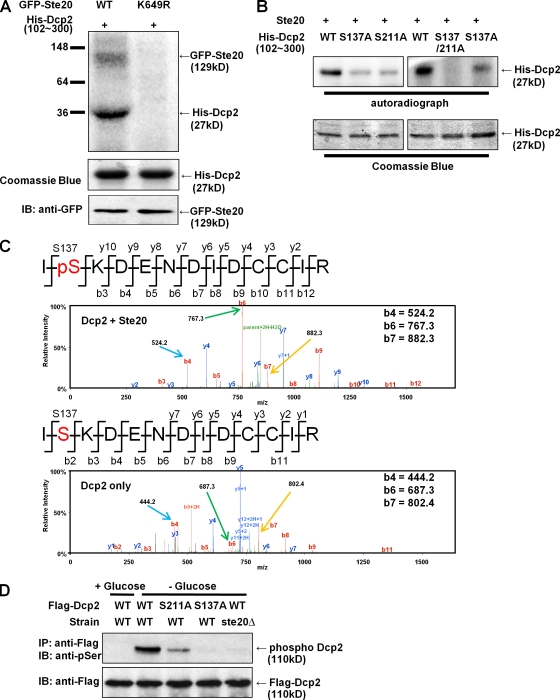
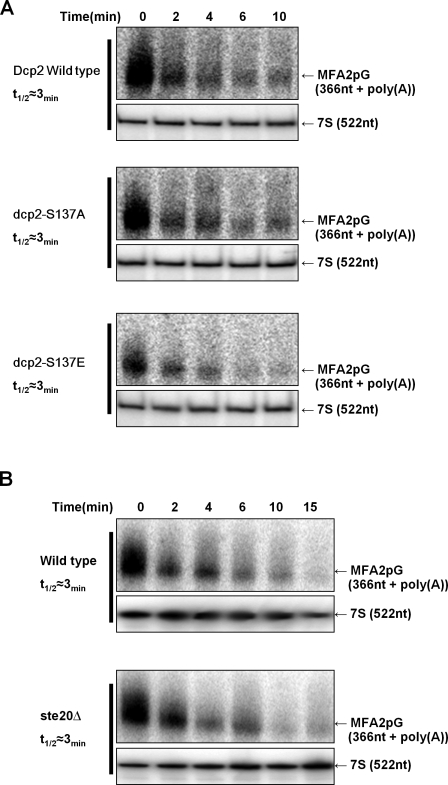
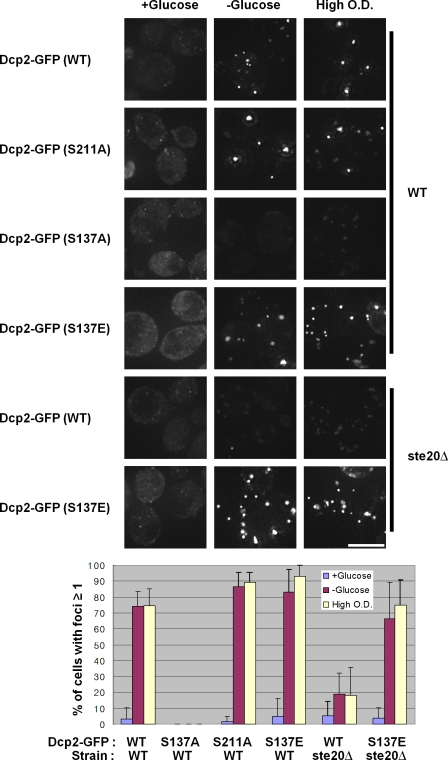
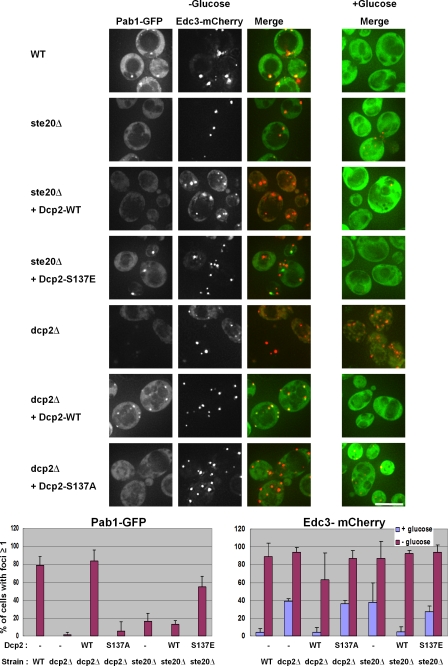
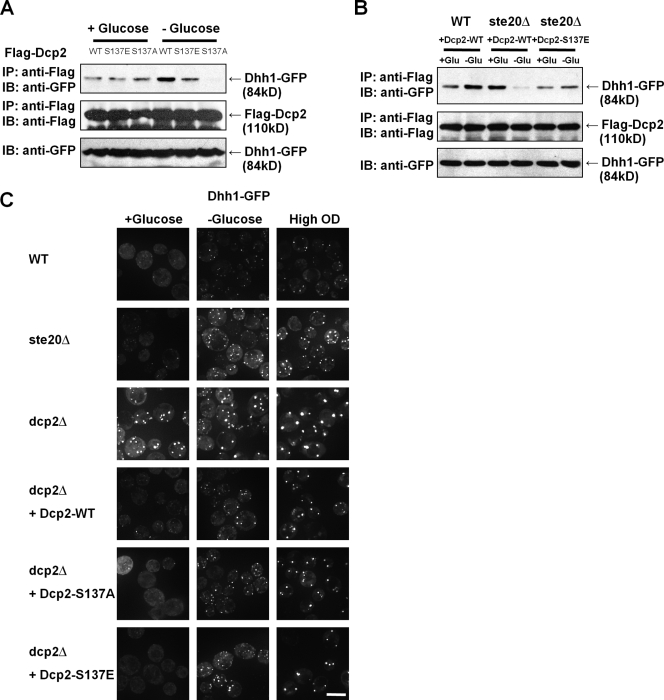
Translation and messenger RNA (mRNA) degradation are important sites of gene regulation, particularly during stress where translation and mRNA degradation are reprogrammed to stabilize bulk mRNAs and to preferentially translate mRNAs required for the stress response. During stress, untranslating mRNAs accumulate both in processing bodies (P-bodies), which contain some translation repressors and the mRNA degradation machinery, and in stress granules, which contain mRNAs stalled in translation initiation. How signal transduction pathways impinge on proteins modulating P-body and stress granule formation and function is unknown. We show that during stress in Saccharomyces cerevisiae, Dcp2 is phosphorylated on serine 137 by the Ste20 kinase. Phosphorylation of Dcp2 affects the decay of some mRNAs and is required for Dcp2 accumulation in P-bodies and specific protein interactions of Dcp2 and for efficient formation of stress granules. These results demonstrate that Ste20 has an unexpected role in the modulation of mRNA decay and translation and that phosphorylation of Dcp2 is an important control point for mRNA decapping.
翻译和信使 RNA(mRNA)降解是基因调控的重要位点,特别是在应激条件下,翻译和 mRNA 降解被重新编程以稳定大量的 mRNA,并优先翻译应激反应所需的 mRNA。在应激条件下,未翻译的 mRNA 既在包含一些翻译抑制剂和 mRNA 降解机制的处理体(P 体)中积累,也在翻译起始停滞的应激颗粒中积累。信号转导途径如何影响调节 P 体和应激颗粒形成和功能的蛋白质尚不清楚。我们表明,在酿酒酵母的应激过程中,Ste20 激酶通过丝氨酸 137 对 Dcp2 进行磷酸化。Dcp2 的磷酸化影响一些 mRNA 的衰减,并且需要 Dcp2 在 P 体中的积累和 Dcp2 与特定蛋白质的相互作用,以及有效地形成应激颗粒。这些结果表明,Ste20 在调节 mRNA 降解和翻译方面具有意想不到的作用,并且 Dcp2 的磷酸化是脱帽 mRNA 的重要控制点。