Department of Pharmaceutical Sciences, School of Pharmacy and Pharmaceutical Sciences, University at Buffalo, State University of New York, Buffalo, NY 14260, USA.
BMC Microbiol. 2010 Jun 1;10:162. doi: 10.1186/1471-2180-10-162.
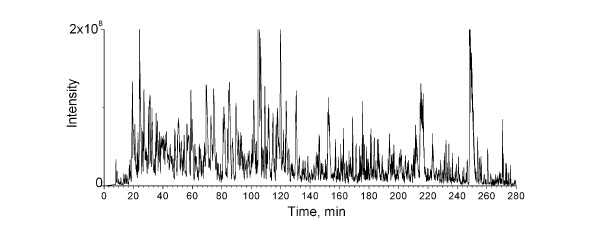
Nontypeable Haemophilus influenzae colonizes and infects the airways of adults with chronic obstructive pulmonary disease, the fourth most common cause of death worldwide.Thus, H. influenzae, an exclusively human pathogen, has adapted to survive in the hostile environment of the human airways.To characterize proteins expressed by H. influenzae in the airways, a prototype strain was grown in pooled human sputum to simulate conditions in the human respiratory tract.The proteins from whole bacterial cell lysates were solubilized with a strong buffer and then quantitatively cleaned with an optimized precipitation/on-pellet enzymatic digestion procedure.Proteomic profiling was accomplished by Nano-flow liquid chromatography/mass spectroscopy with low void volume and high separation efficiency with a shallow, long gradient.
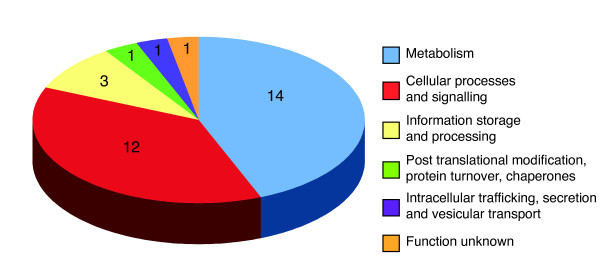
A total of 1402 proteins were identified with high confidence, including 170 proteins that were encoded by genes that are annotated as conserved hypothetical proteins.Thirty-one proteins were present in greater abundance in sputum-grown conditions at a ratio of > 1.5 compared to chemically defined media.These included 8 anti-oxidant and 5 stress-related proteins, suggesting that expression of antioxidant activity and stress responses is important for survival in the airways.Four proteins involved in uptake of divalent anions and 9 proteins that function in uptake of various molecules were present in greater abundance in sputum-grown conditions.
Proteomic expression profiling of H. influenzae grown in pooled human sputum revealed increased expression of antioxidant, stress-response proteins and cofactor and nutrient uptake systems compared to media grown cells.These observations suggest that H. influenzae adapts to the oxidative and nutritionally limited conditions of the airways in adults with chronic obstructive pulmonary disease by increasing expression of molecules necessary for survival in these conditions.
非典型流感嗜血杆菌定植并感染慢性阻塞性肺疾病(COPD)患者的气道,这是全球第四大致死原因。因此,作为一种专性人类病原体,流感嗜血杆菌已适应在人体气道这种恶劣环境中生存。为了鉴定流感嗜血杆菌在气道中表达的蛋白,我们采用汇集的人痰来模拟人体呼吸道条件,使模式菌株生长。用强缓冲液溶解全细菌细胞裂解物中的蛋白质,然后通过优化沉淀/沉淀酶消化程序进行定量清洗。采用低空隙体积和高分离效率的纳流液相色谱/质谱技术进行蛋白质组学分析,并采用浅、长梯度进行分析。
我们鉴定到 1402 种具有高置信度的蛋白质,包括 170 种由被注释为保守假定蛋白的基因编码的蛋白。31 种蛋白在痰培养条件下的丰度高于化学定义培养基中的丰度,比值>1.5。这包括 8 种抗氧化和 5 种应激相关蛋白,表明抗氧化活性和应激反应的表达对于在气道中生存很重要。4 种参与二价阴离子摄取的蛋白和 9 种参与各种分子摄取的蛋白在痰培养条件下的丰度更高。
与培养基培养细胞相比,在汇集的人痰中培养的流感嗜血杆菌的蛋白质组表达谱显示,抗氧化、应激反应蛋白以及辅助因子和营养摄取系统的表达增加。这些观察结果表明,流感嗜血杆菌通过增加在这些条件下生存所需分子的表达,适应慢性阻塞性肺疾病成人气道中的氧化和营养有限的条件。