Kenya Medical Research Institute-Wellcome Trust Research Programme, P,O Box, 230, Kilifi, Kenya.
Malar J. 2010 Jun 2;9:149. doi: 10.1186/1475-2875-9-149.
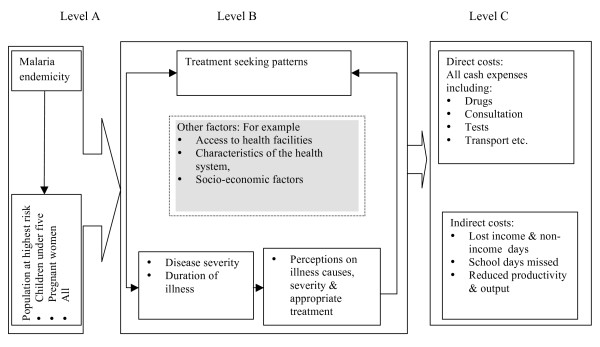
Malaria inflicts significant costs on households and on the economy of malaria endemic countries. There is also evidence that the economic burden is higher among the poorest in a population, and that cost burdens differ significantly between wet and dry seasons. What is not clear is whether, and how, the economic burden of malaria differs by disease endemicity. The need to account for geographical and epidemiological differences in the estimation of the social and economic burden of malaria is well recognized, but there is limited data, if any, to support this argument. This study sought to contribute towards filling this gap by comparing malaria cost burdens in four Kenyan districts of different endemicity.
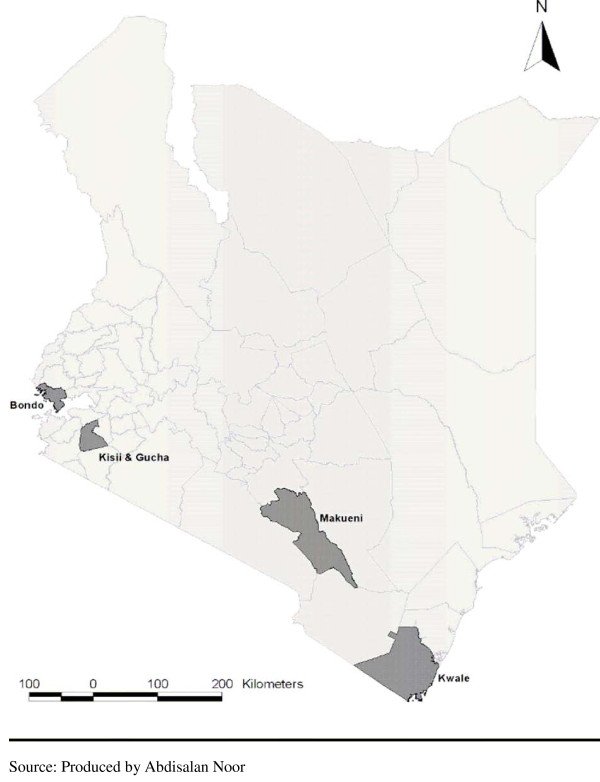
A cross-sectional household survey was conducted during the peak malaria transmission season in the poorest areas in four Kenyan districts with differing malaria transmission patterns (n = 179 households in Bondo; 205 Gucha; 184 Kwale; 141 Makueni).
There were significant differences in duration of fever, perception of fever severity and cost burdens. Fever episodes among adults and children over five years in Gucha and Makueni districts (highland endemic and low acute transmission districts respectively) lasted significantly longer than episodes reported in Bondo and Kwale districts (high perennial transmission and seasonal, intense transmission, respectively). Perceptions of illness severity also differed between districts: fevers reported among older children and adults in Gucha and Makueni districts were reported as severe compared to those reported in the other districts. Indirect and total costs differed significantly between districts but differences in direct costs were not significant. Total household costs were highest in Makueni (US$ 19.6 per month) and lowest in Bondo (US$ 9.2 per month).
Cost burdens are the product of complex relationships between social, economic and epidemiological factors. The cost data presented in this study reflect transmission patterns in the four districts, suggesting that a relationship between costs burdens and the nature of transmission might exist, and that the same warrants more attention from researchers and policy makers.
疟疾给疟疾流行国家的家庭和经济造成了巨大的负担。有证据表明,在人口中最贫困的人群中,经济负担更高,而且干湿季之间的成本负担差异很大。目前尚不清楚疟疾的经济负担是否以及如何因疾病流行程度而有所不同。人们已经充分认识到,在疟疾的社会和经济负担估计中,需要考虑到地理位置和流行病学差异,但支持这一观点的数据有限,如果有的话。本研究旨在通过比较肯尼亚四个不同流行程度的地区的疟疾成本负担来填补这一空白。
在肯尼亚四个疟疾传播模式不同的地区(邦多 179 户、古查 205 户、夸莱 184 户、马库埃尼 141 户)的最贫困地区,在疟疾高发季节进行了一项横断面家庭调查。
在发热持续时间、发热严重程度感知和成本负担方面存在显著差异。古查和马库埃尼地区(分别为高海拔流行和低急性传播地区)的 5 岁以上儿童和成人的发热持续时间明显长于邦多和夸莱地区(分别为高常年传播和季节性、高强度传播)。不同地区对疾病严重程度的看法也存在差异:古查和马库埃尼地区年龄较大的儿童和成人报告的发热被认为比其他地区的发热更严重。间接和总费用在不同地区之间存在显著差异,但直接费用没有显著差异。家庭总费用在马库埃尼最高(每月 19.6 美元),在邦多最低(每月 9.2 美元)。
成本负担是社会、经济和流行病学因素之间复杂关系的产物。本研究中提出的成本数据反映了四个地区的传播模式,表明成本负担与传播性质之间可能存在关系,这值得研究人员和决策者给予更多关注。