Department of Physiology, David Geffen School of Medicine, University of California-Los Angeles, Los Angeles, CA 90095, United States.
Gen Comp Endocrinol. 2010 Sep 15;168(3):401-7. doi: 10.1016/j.ygcen.2010.05.009. Epub 2010 May 31.
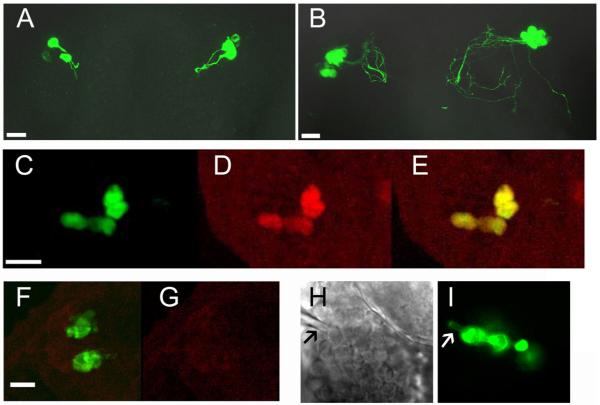
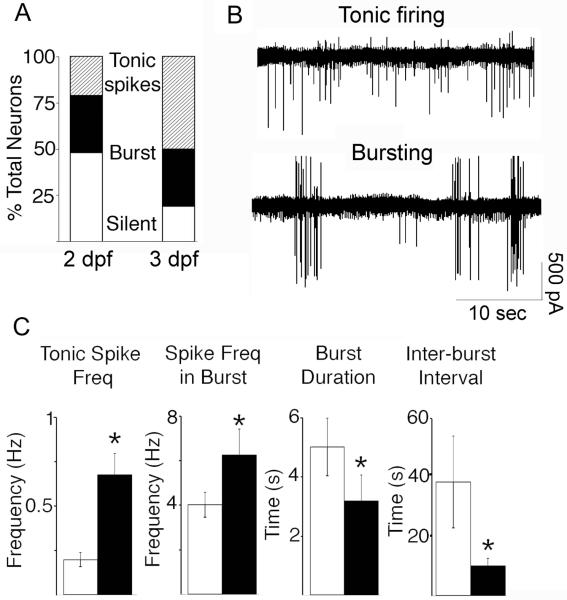
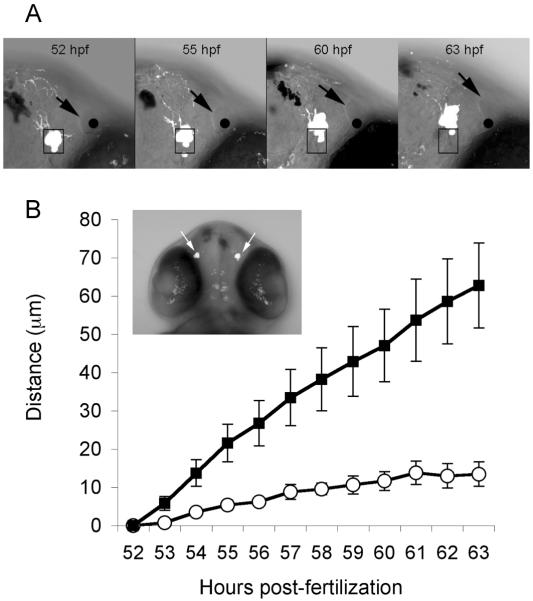
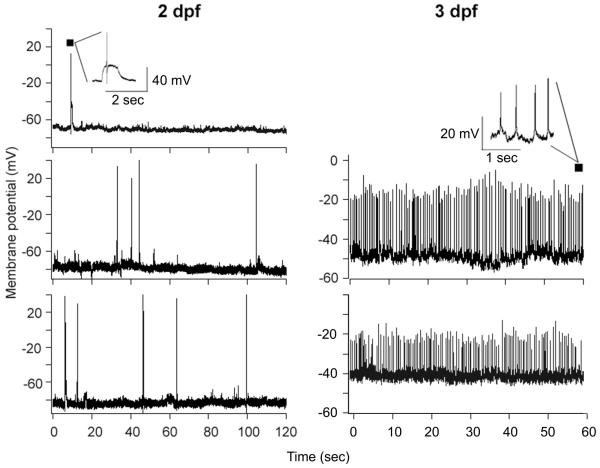
There are multiple populations of gonadotropin-releasing hormone (GnRH) neurons that have distinct physiological and behavioral functions. Teleost fish have a population of GnRH3 neurons located in the terminal nerve (TN) associated with the olfactory bulb that is thought to play a neuromodulatory role in multiple physiological systems, including olfactory, visual, and reproductive. We used transgenic zebrafish in which the GnRH3 promoter drives expression of a green fluorescent protein to identify GnRH3 neurons during development in live embryos. Unlike with hypophysiotropic GnRH neurons of zebrafish, TN-GnRH3 neurons are of neural crest origin and are one of the first populations of GnRH neurons to develop in the early embryo. Using a combination of optical imaging and electrophysiology, we showed that during the first 3 days post-fertilization, TN-GnRH3 neurons increase in number, extend neural projections, move in association with tissue expansion, and acquire an adult-pattern of spontaneous action potential firing. Early during development, about half of the neurons were quiescent/non-firing. Later, at 3 days post-fertilization, there was an increase in the proportion of neurons showing action potential firing and an increase in the number of neurons that showed an adult-like tonic or beating pattern of action potential firing with a firing frequency similar to that seen in adult TN-GnRH3 neurons. This study represents the first neurophysiological investigation of developing GnRH neurons in live embryos--an important advancement in understanding their potential non-reproductive roles during embryogenesis.
存在多种促性腺激素释放激素 (GnRH) 神经元群体,它们具有不同的生理和行为功能。硬骨鱼具有位于与嗅球相关的终神经 (TN) 中的 GnRH3 神经元群体,据认为它们在包括嗅觉、视觉和生殖在内的多个生理系统中发挥神经调质作用。我们使用转基因斑马鱼,其中 GnRH3 启动子驱动绿色荧光蛋白的表达,以在活体胚胎中鉴定发育过程中的 GnRH3 神经元。与斑马鱼的促垂体 GnRH 神经元不同,TN-GnRH3 神经元起源于神经嵴,是早期胚胎中最早发育的 GnRH 神经元群体之一。我们使用光学成像和电生理学的组合,表明在受精后第 3 天之前,TN-GnRH3 神经元数量增加,延伸神经投射,与组织扩张相关移动,并获得成人模式的自发性动作电位放电。在发育早期,大约一半的神经元处于静止/非放电状态。后来,在受精后第 3 天,表现出发作性动作电位放电的神经元比例增加,并且表现出成人样紧张或搏动性动作电位放电模式的神经元数量增加,其放电频率与成人 TN-GnRH3 神经元相似。这项研究代表了对活体胚胎中发育中的 GnRH 神经元进行的首次神经生理学研究,这是在理解它们在胚胎发生过程中的潜在非生殖作用方面的重要进展。