Department of Internal Medicine and Oncology, Johns Hopkins School of Medicine, Baltimore, Maryland, USA.
PLoS One. 2010 May 26;5(5):e10846. doi: 10.1371/journal.pone.0010846.
Dimeric naphthoquinones (BiQ) were originally synthesized as a new class of HIV integrase inhibitors but have shown integrase-independent cytotoxicity in acute lymphoblastic leukemia cell lines suggesting their use as potential anti-neoplastic agents. The mechanism of this cytotoxicity is unknown. In order to gain insight into the mode of action of binaphthoquinones we performed a systematic high-throughput screen in a yeast isogenic deletion mutant array for enhanced or suppressed growth in the presence of binaphthoquinones.
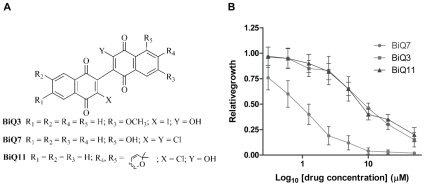
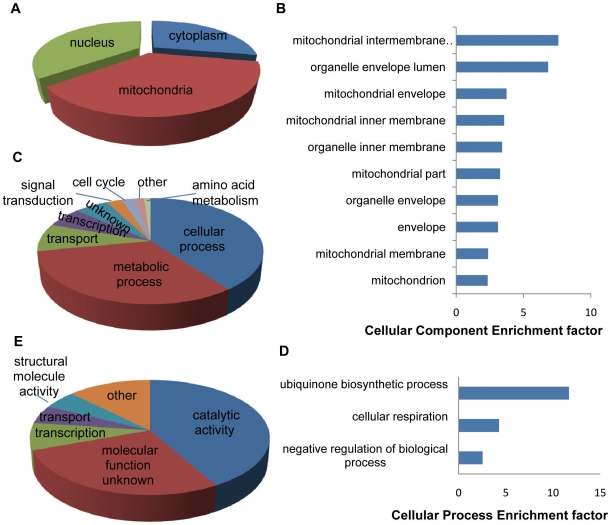
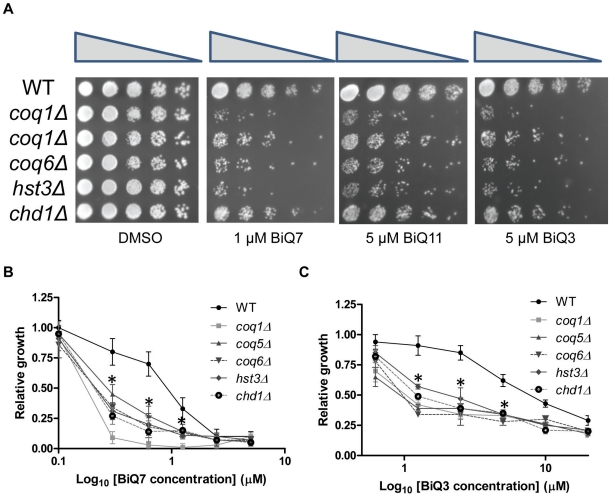
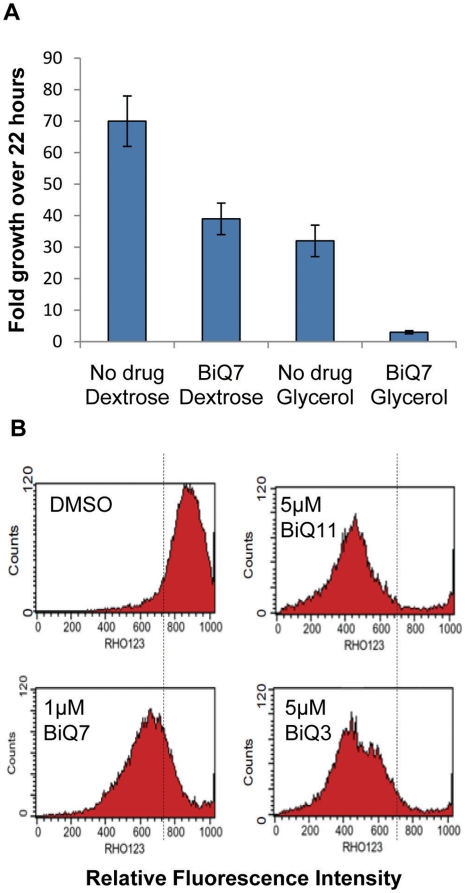
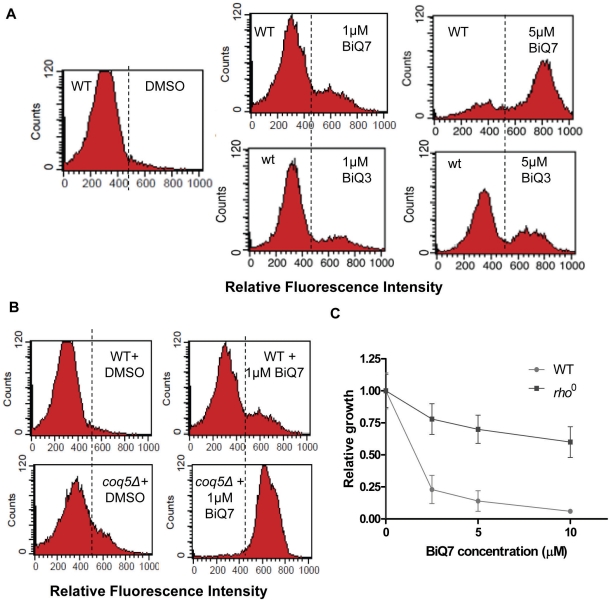
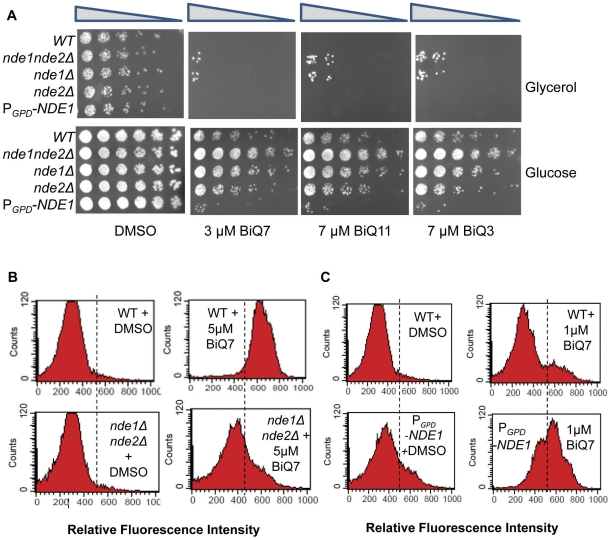
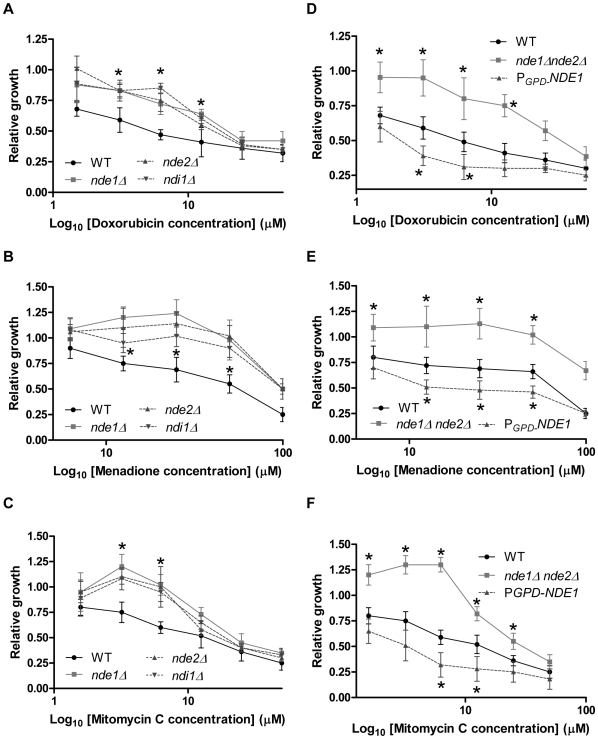
METHODOLOGY/PRINCIPAL FINDINGS: Exposure of wild type yeast strains to various BiQs demonstrated inhibition of yeast growth with IC(50)s in the microM range. Drug sensitivity and resistance screens were performed by exposing arrays of a haploid yeast deletion mutant library to BiQs at concentrations near their IC(50). Sensitivity screens identified yeast with deletions affecting mitochondrial function and cellular respiration as having increased sensitivity to BiQs. Corresponding to this, wild type yeast grown in the absence of a fermentable carbon source were particularly sensitive to BiQs, and treatment with BiQs was shown to disrupt the mitochondrial membrane potential and lead to the generation of reactive oxygen species (ROS). Furthermore, baseline ROS production in BiQ sensitive mutant strains was increased compared to wild type and could be further augmented by the presence of BiQ. Screens for resistance to BiQ action identified the mitochondrial external NAD(P)H dehydrogenase, NDE1, as critical to BiQ toxicity and over-expression of this gene resulted in increased ROS production and increased sensitivity of wild type yeast to BiQ.
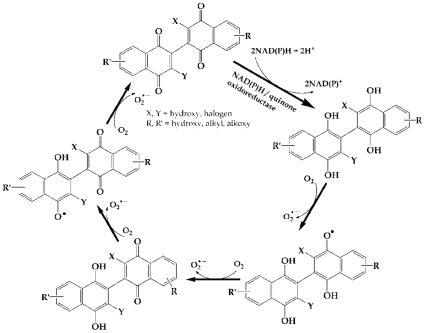
CONCLUSIONS/SIGNIFICANCE: In yeast, binaphthoquinone cytotoxicity is likely mediated through NAD(P)H:quonine oxidoreductases leading to ROS production and dysfunctional mitochondria. Further studies are required to validate this mechanism in mammalian cells.
二聚萘醌(BiQ)最初被合成作为一种新型 HIV 整合酶抑制剂,但在急性淋巴细胞白血病细胞系中显示出与整合酶无关的细胞毒性,这表明它们可用作潜在的抗肿瘤药物。这种细胞毒性的机制尚不清楚。为了深入了解联萘醌的作用机制,我们在酵母同基因缺失突变体阵列中进行了系统的高通量筛选,以研究联萘醌存在时的生长增强或抑制。
方法/主要发现:暴露于各种 BiQ 的野生型酵母菌株显示出酵母生长受到抑制,IC50 在微摩尔范围内。通过将酵母缺失突变体文库的单倍体阵列暴露于接近 IC50 的 BiQ 浓度下进行药物敏感性和耐药性筛选。敏感性筛选确定了影响线粒体功能和细胞呼吸的酵母缺失,对 BiQ 更为敏感。与此对应,在缺乏可发酵碳源的情况下生长的野生型酵母对 BiQ 特别敏感,并且 BiQ 的处理被证明会破坏线粒体膜电位并导致活性氧(ROS)的产生。此外,与野生型相比,BiQ 敏感突变株中的基线 ROS 产生增加,并且 BiQ 的存在可以进一步增强。筛选对 BiQ 作用的抗性鉴定出线粒体外部 NAD(P)H 脱氢酶 NDE1 对 BiQ 毒性至关重要,并且该基因的过表达导致 ROS 产生增加和野生型酵母对 BiQ 的敏感性增加。
结论/意义:在酵母中,联萘醌细胞毒性可能是通过 NAD(P)H:醌氧化还原酶介导的,导致 ROS 产生和功能失调的线粒体。需要进一步的研究来验证该机制在哺乳动物细胞中的作用。