Department of Biotechnology, All India Institute of Medical Sciences, New Delhi, India.
PLoS One. 2010 May 27;5(5):e10860. doi: 10.1371/journal.pone.0010860.
Tubercle bacilli are thought to persist in a dormant state during latent tuberculosis (TB) infection. Although little is known about the host factors that induce and maintain Mycobacterium tuberculosis (M. tb) within latent lesions, O(2) depletion, nutrient limitation and acidification are some of the stresses implicated in bacterial dormancy development/growth arrest. Adaptation to hypoxia and exposure to NO/CO is implemented through the DevRS/DosT two-component system which induces the dormancy regulon.
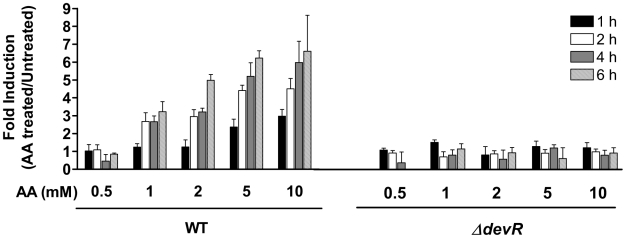
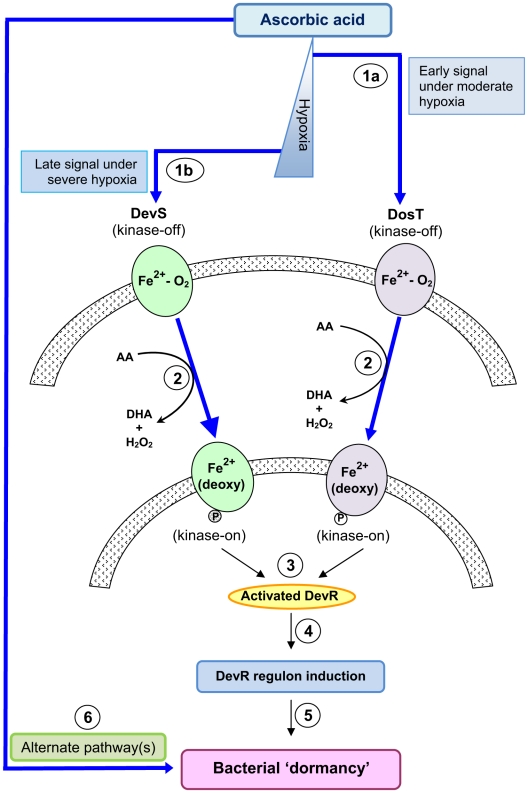
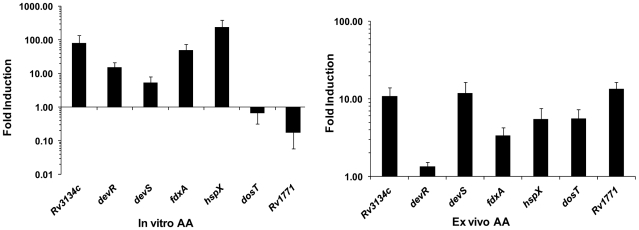
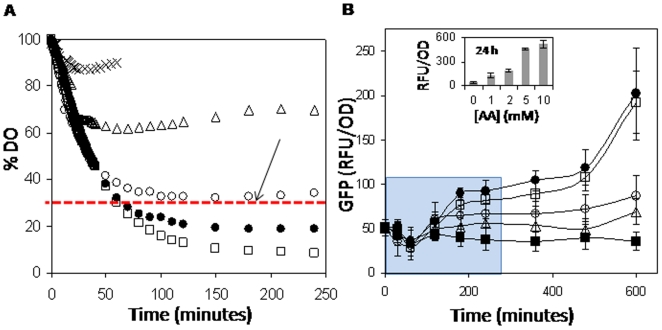
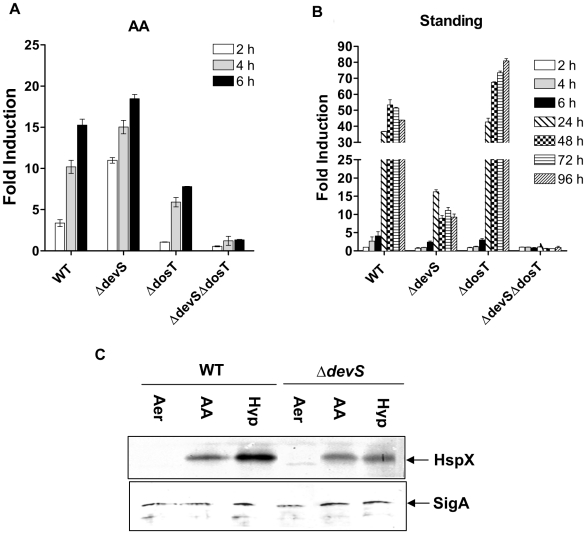
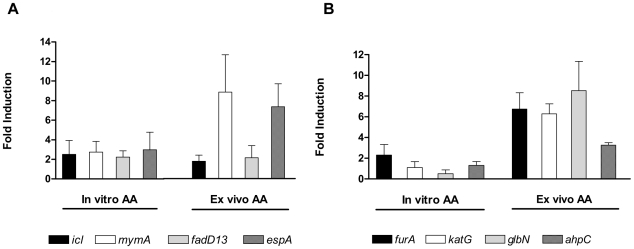
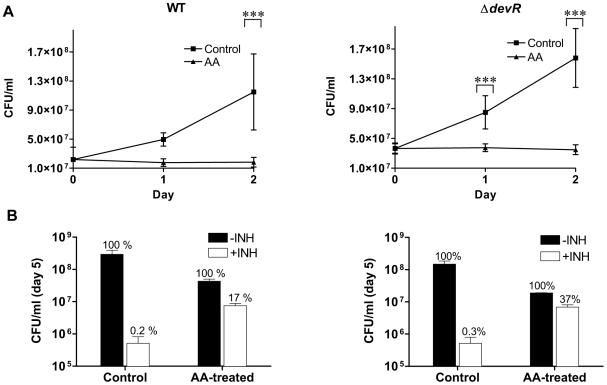
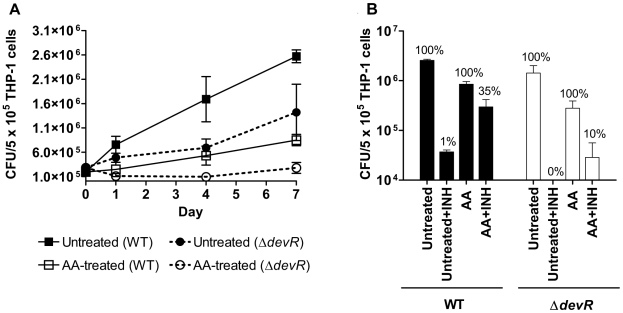
METHODOLOGY/PRINCIPAL FINDINGS: Here we show that vitamin C (ascorbic acid/AA) can serve as an additional signal to induce the DevR regulon. Physiological levels of AA scavenge O(2) and rapidly induce the DevR regulon at an estimated O(2) saturation of <30%. The kinetics and magnitude of the response suggests an initial involvement of DosT and a sustained DevS-mediated response during bacterial adaptation to increasing hypoxia. In addition to inducing DevR regulon mechanisms, vitamin C induces the expression of selected genes previously shown to be responsive to low pH and oxidative stress, triggers bacterial growth arrest and promotes dormancy phenotype development in M. tb grown in axenic culture and intracellularly in THP-1 cells.
CONCLUSIONS/SIGNIFICANCE: Vitamin C mimics multiple intracellular stresses and has wide-ranging regulatory effects on gene expression and physiology of M. tb which leads to growth arrest and a 'dormant' drug-tolerant phenotype, but in a manner independent of the DevRS/DosT system. The 'AA-dormancy infection model' offers a potential alternative to other models of non-replicating persistence of M. tb and may be useful for investigating host-'dormant' M. tb interactions. Our findings offer a new perspective on the role of nutritional factors in TB and suggest a possible role for vitamin C in TB.
结核分枝杆菌被认为在潜伏性结核病(TB)感染中处于休眠状态。虽然人们对诱导和维持潜伏性病变内结核分枝杆菌(M. tb)的宿主因素知之甚少,但 O(2)耗竭、营养限制和酸化等因素与细菌休眠发展/生长停滞有关。通过 DevRS/DosT 双组分系统适应缺氧和暴露于 NO/CO,该系统诱导休眠调节子。
方法/主要发现:在这里,我们表明维生素 C(抗坏血酸/AA)可以作为诱导 DevR 调节子的附加信号。生理浓度的 AA 清除 O(2),并在估计的 O(2)饱和度<30%时迅速诱导 DevR 调节子。该反应的动力学和幅度表明,在细菌适应缺氧增加的过程中,DosT 最初参与并持续进行 DevS 介导的反应。除了诱导 DevR 调节子机制外,维生素 C 还诱导先前显示对低 pH 和氧化应激有反应的选定基因的表达,触发细菌生长停滞,并在 axenic 培养物和 THP-1 细胞中促进 M. tb 的休眠表型发育。
结论/意义:维生素 C 模拟多种细胞内应激,对 M. tb 的基因表达和生理学具有广泛的调节作用,导致生长停滞和“休眠”药物耐受表型,但方式独立于 DevRS/DosT 系统。“AA 休眠感染模型”为 M. tb 非复制性持续存在的其他模型提供了一种潜在的替代方法,并且可能有助于研究宿主“休眠”M. tb 相互作用。我们的研究结果为营养因素在结核病中的作用提供了新的视角,并提示维生素 C 在结核病中可能发挥作用。