Dipartimento di Biotecnologie e Bioscienze, Università di Milano-Bicocca, Milano, Italy.
PLoS Genet. 2010 May 27;6(5):e1000966. doi: 10.1371/journal.pgen.1000966.
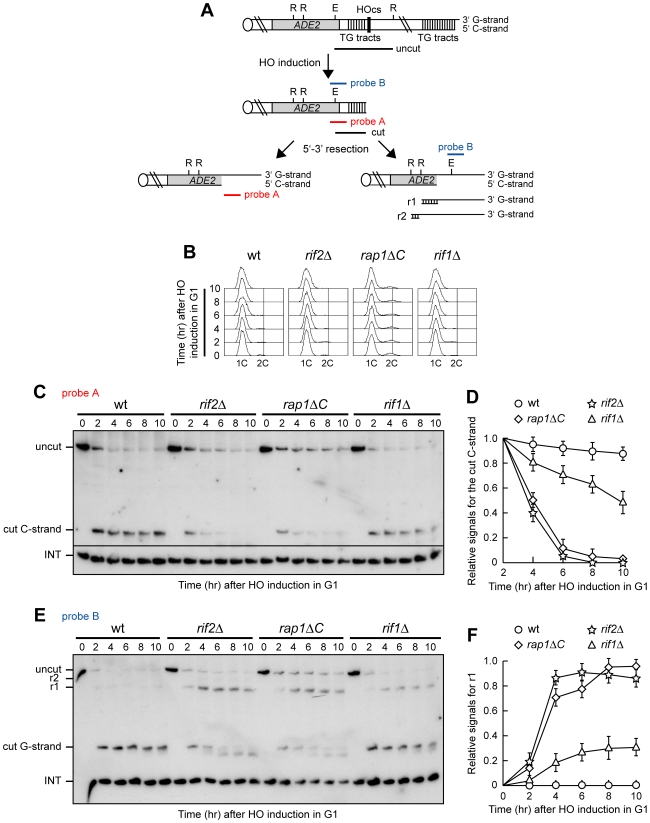
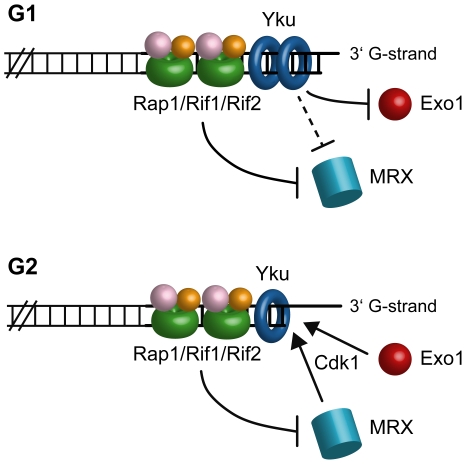
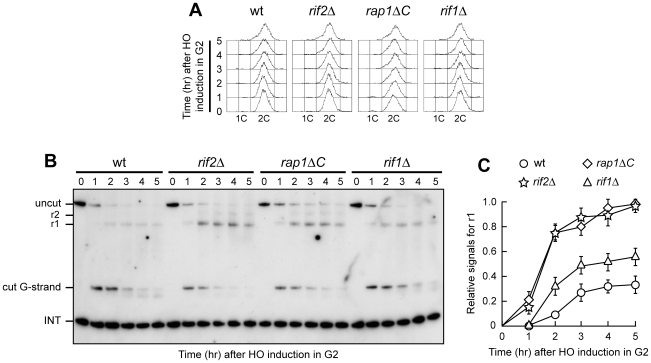
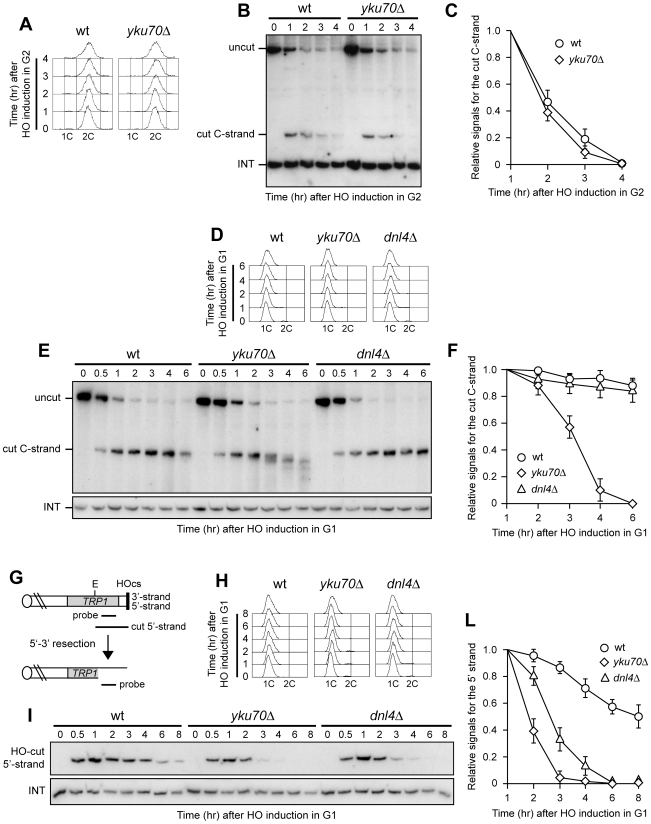
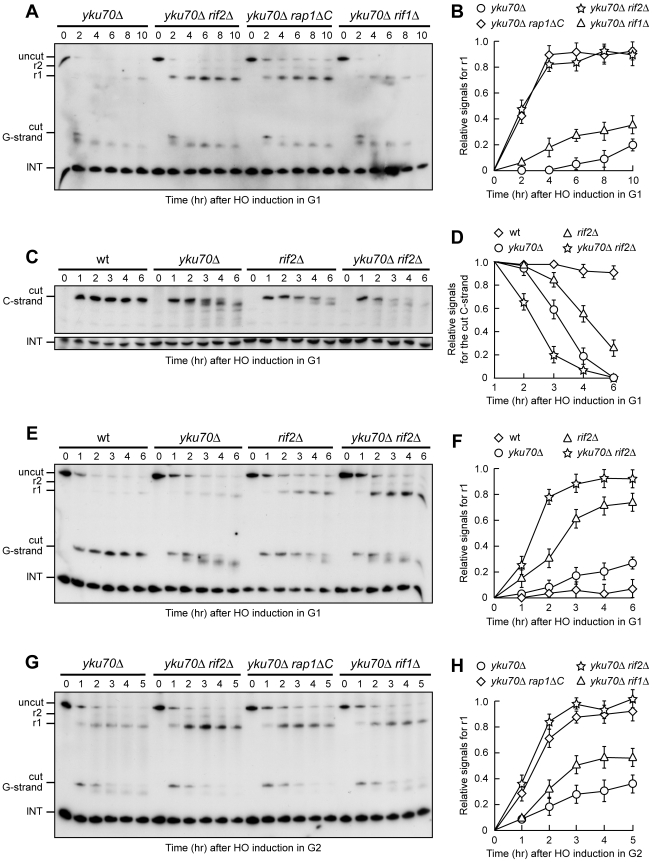
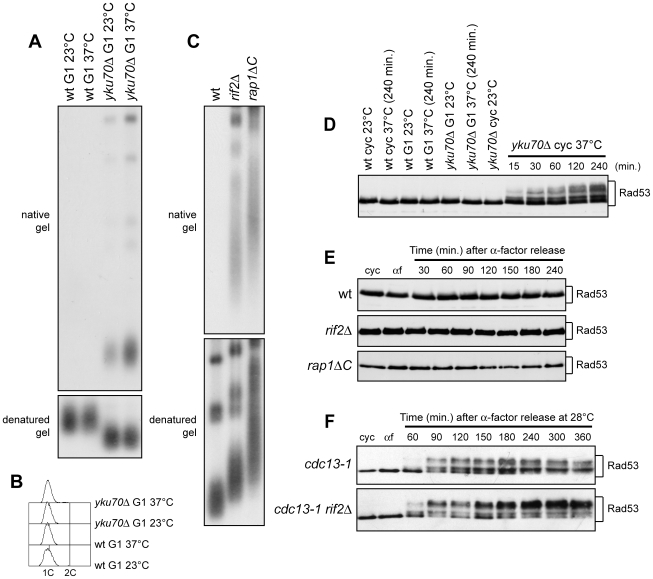
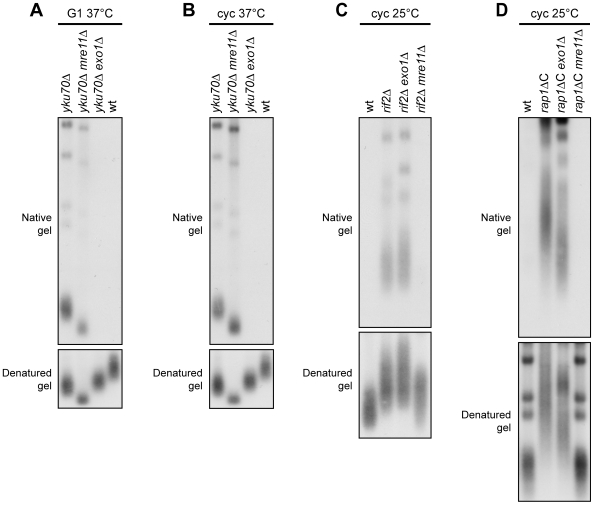
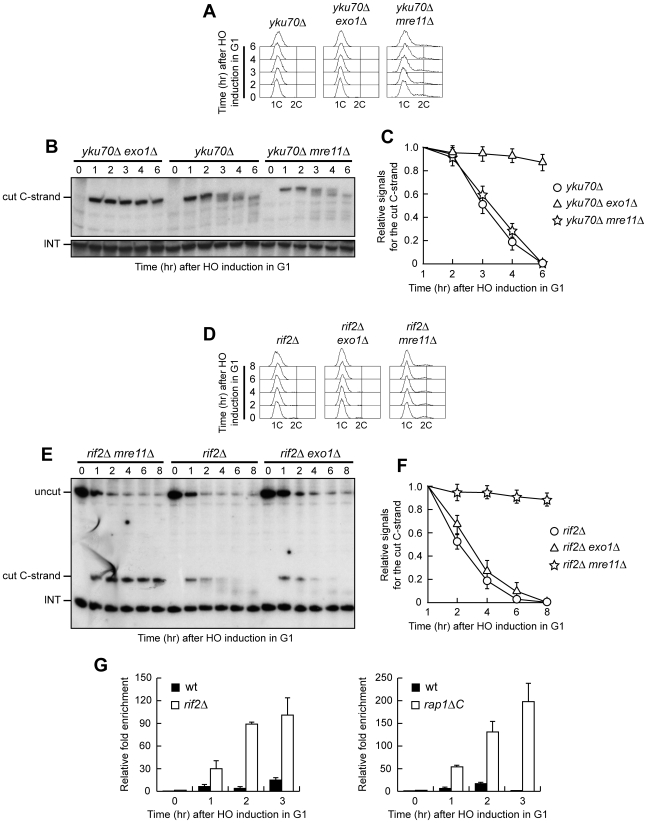
Eukaryotic cells distinguish their chromosome ends from accidental DNA double-strand breaks (DSBs) by packaging them into protective structures called telomeres that prevent DNA repair/recombination activities. Here we investigate the role of key telomeric proteins in protecting budding yeast telomeres from degradation. We show that the Saccharomyces cerevisiae shelterin-like proteins Rif1, Rif2, and Rap1 inhibit nucleolytic processing at both de novo and native telomeres during G1 and G2 cell cycle phases, with Rif2 and Rap1 showing the strongest effects. Also Yku prevents telomere resection in G1, independently of its role in non-homologous end joining. Yku and the shelterin-like proteins have additive effects in inhibiting DNA degradation at G1 de novo telomeres, where Yku plays the major role in preventing initiation, whereas Rif1, Rif2, and Rap1 act primarily by limiting extensive resection. In fact, exonucleolytic degradation of a de novo telomere is more efficient in yku70Delta than in rif2Delta G1 cells, but generation of ssDNA in Yku-lacking cells is limited to DNA regions close to the telomere tip. This limited processing is due to the inhibitory action of Rap1, Rif1, and Rif2, as their inactivation allows extensive telomere resection not only in wild-type but also in yku70Delta G1 cells. Finally, Rap1 and Rif2 prevent telomere degradation by inhibiting MRX access to telomeres, which are also protected from the Exo1 nuclease by Yku. Thus, chromosome end degradation is controlled by telomeric proteins that specifically inhibit the action of different nucleases.
真核细胞通过将染色体末端包装成称为端粒的保护结构来区分它们与偶然的 DNA 双链断裂 (DSB),从而防止 DNA 修复/重组活性。在这里,我们研究了关键端粒蛋白在保护芽殖酵母端粒免受降解中的作用。我们表明,酿酒酵母类似庇护蛋白 Rif1、Rif2 和 Rap1 在 G1 和 G2 细胞周期阶段抑制从头和天然端粒的核酶处理,其中 Rif2 和 Rap1 显示出最强的作用。此外,Yku 在 G1 期独立于其在非同源末端连接中的作用阻止端粒切除。Yku 和类似庇护蛋白在抑制 G1 期从头端粒的 DNA 降解方面具有相加作用,其中 Yku 在防止起始中起主要作用,而 Rif1、Rif2 和 Rap1 主要通过限制广泛的切除起作用。事实上,在 yku70Delta 中,从头端粒的外切核酸酶降解比在 rif2Delta G1 细胞中更有效,但在缺乏 Yku 的细胞中,ssDNA 的产生仅限于靠近端粒尖端的 DNA 区域。这种有限的处理是由于 Rap1、Rif1 和 Rif2 的抑制作用,因为它们的失活不仅允许野生型,而且还允许 yku70Delta G1 细胞进行广泛的端粒切除。最后,Rap1 和 Rif2 通过抑制 MRX 进入端粒来防止端粒降解,Yku 还保护端粒免受 Exo1 核酸酶的侵害。因此,染色体末端降解受端粒蛋白控制,这些蛋白特异性抑制不同核酸酶的作用。