Department of Microbiology and Molecular Genetics, University of Medicine and Dentistry of New Jersey-New Jersey Medical School, Newark, NJ 07103, USA.
Mol Biol Cell. 2012 Jan;23(2):347-59. doi: 10.1091/mbc.E11-06-0568. Epub 2011 Nov 30.
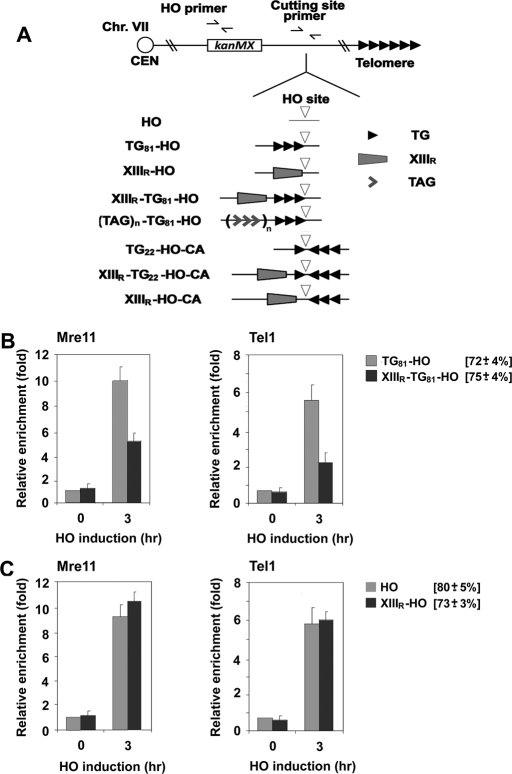
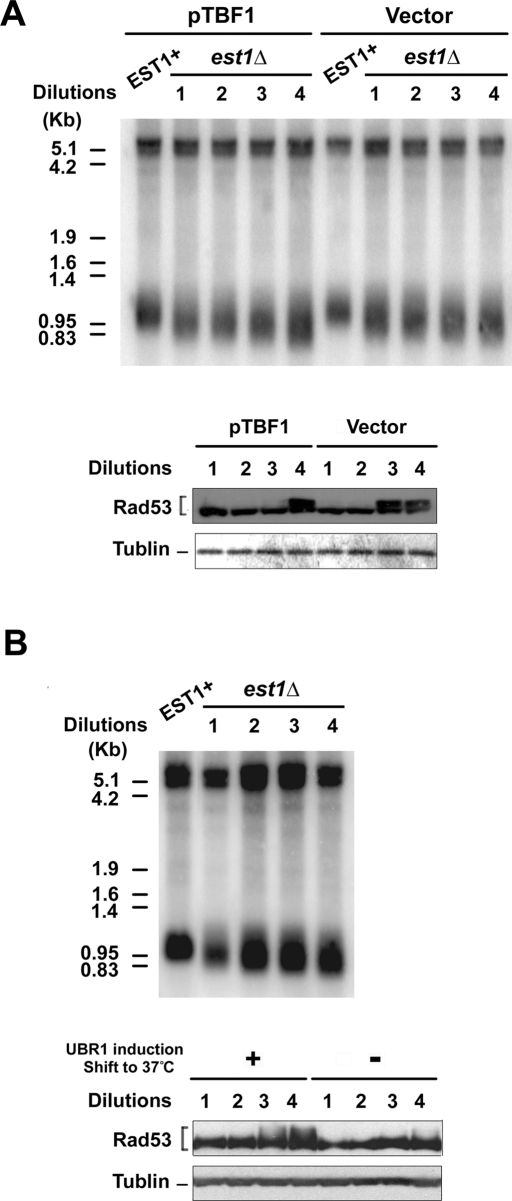
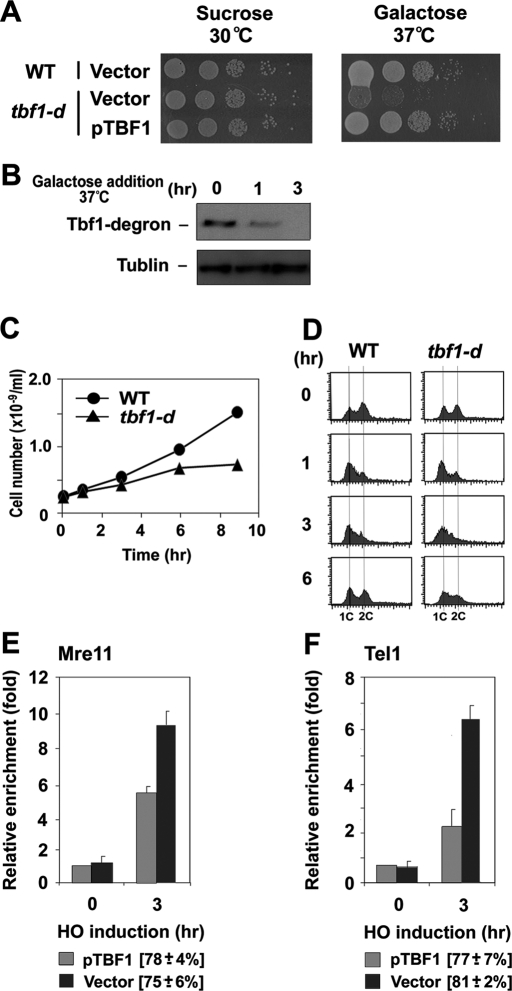
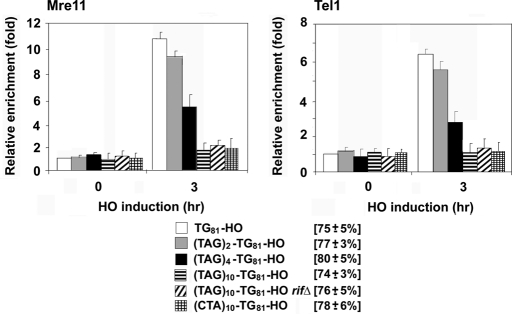
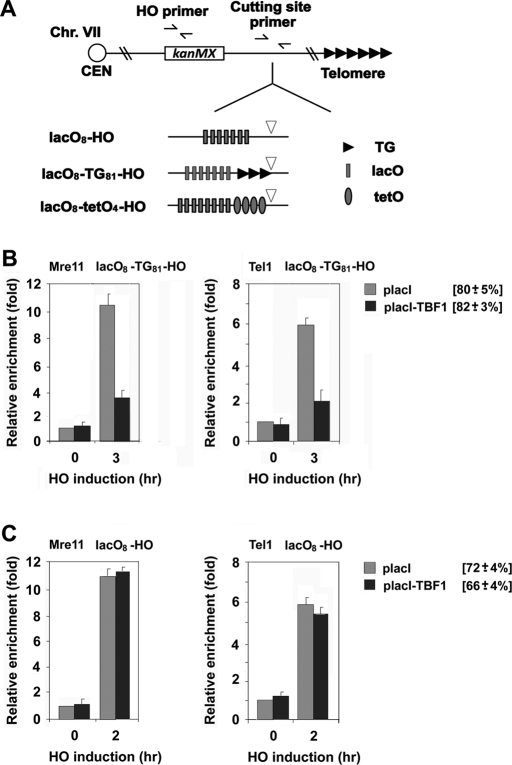
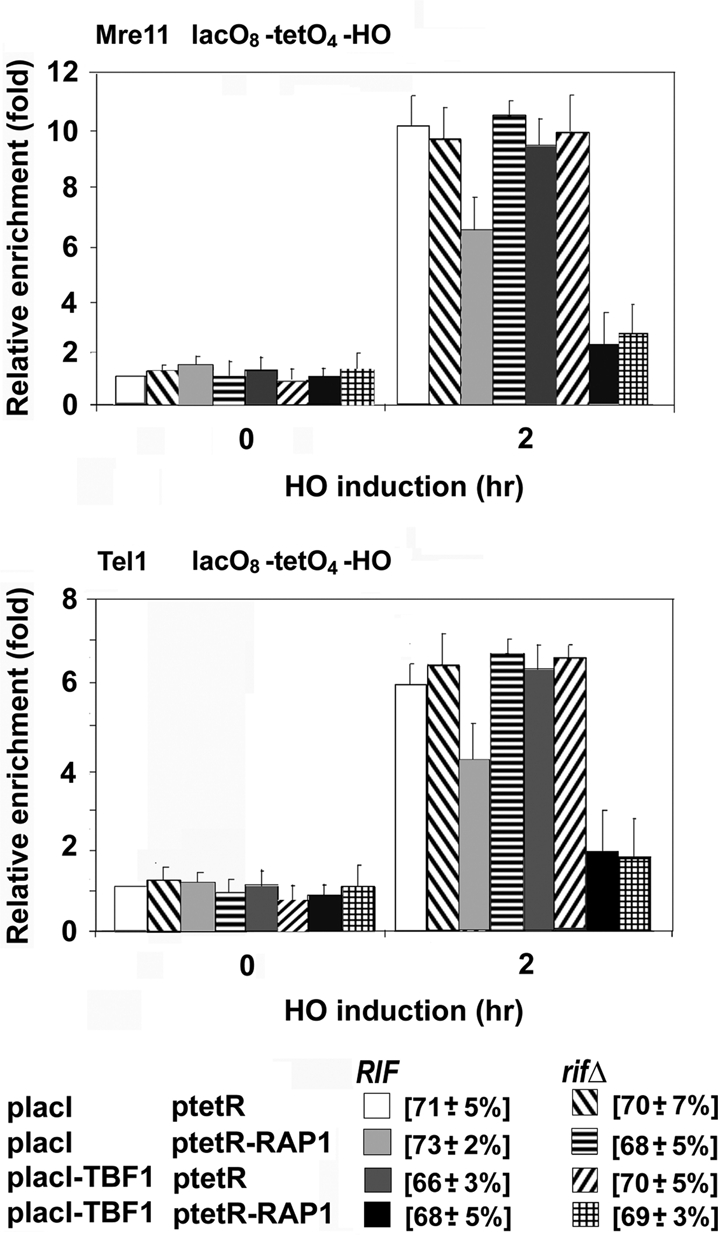
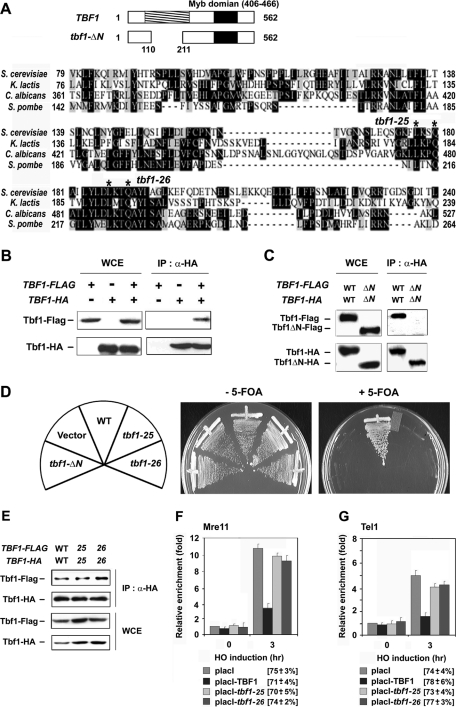
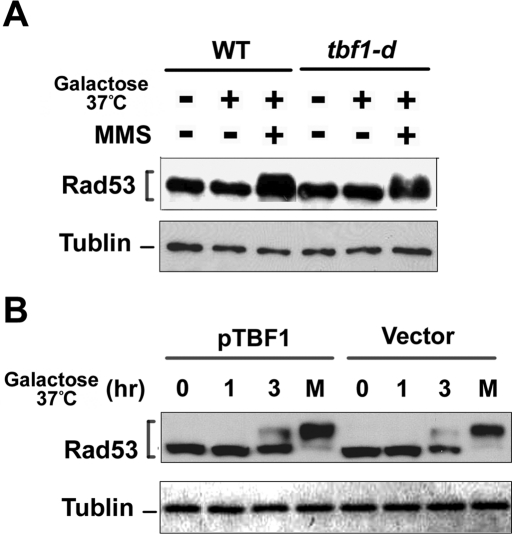
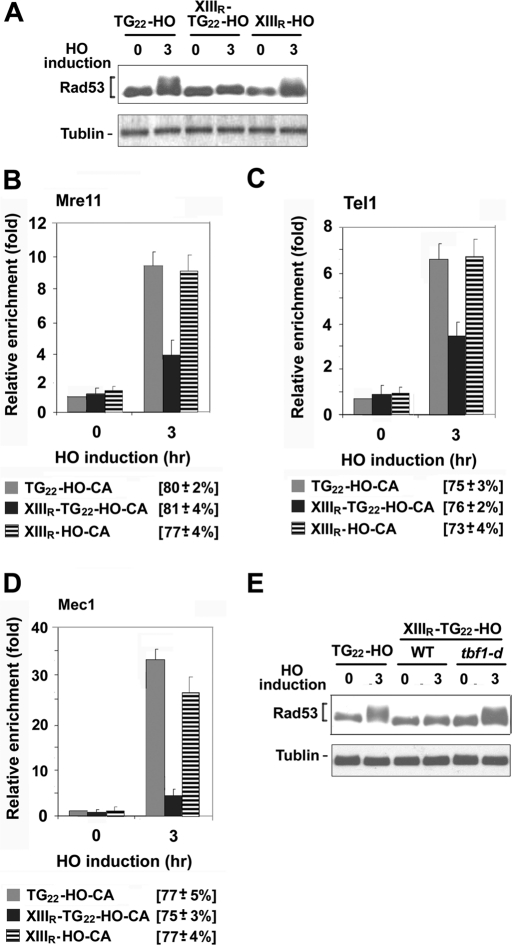
Chromosome ends, known as telomeres, have to be distinguished from DNA double-strand breaks that activate DNA damage checkpoints. In budding yeast, the Mre11-Rad50-Xrs2 (MRX) complex associates with DNA ends and promotes checkpoint activation. Rap1 binds to double-stranded telomeric regions and recruits Rif1 and Rif2 to telomeres. Rap1 collaborates with Rif1 and Rif2 and inhibits MRX localization to DNA ends. This Rap1-Rif1-Rif2 function becomes attenuated at shortened telomeres. Here we show that Rap1 acts together with the subtelomere-binding protein Tbf1 and inhibits MRX localization to DNA ends. The placement of a subtelomeric sequence or TTAGGG repeats together with a short telomeric TG repeat sequence inhibits MRX accumulation at nearby DNA ends in a Tbf1-dependent manner. Moreover, tethering of both Tbf1 and Rap1 proteins decreases MRX and Tel1 accumulation at nearby DNA ends. This Tbf1- and Rap1-dependent pathway operates independently of Rif1 or Rif2 function. Depletion of Tbf1 protein stimulates checkpoint activation in cells containing short telomeres but not in cells containing normal-length telomeres. These data support a model in which Tbf1 and Rap1 collaborate to maintain genomic stability of short telomeres.
染色体末端,即端粒,必须与激活 DNA 损伤检查点的 DNA 双链断裂区分开来。在芽殖酵母中,Mre11-Rad50-Xrs2(MRX)复合物与 DNA 末端结合,并促进检查点的激活。Rap1 结合到双链端粒区域,并招募 Rif1 和 Rif2 到端粒。Rap1 与 Rif1 和 Rif2 合作,并抑制 MRX 向 DNA 末端的定位。这种 Rap1-Rif1-Rif2 功能在端粒缩短时会减弱。在这里,我们表明 Rap1 与亚端粒结合蛋白 Tbf1 一起作用,抑制 MRX 向 DNA 末端的定位。短端粒 TG 重复序列与亚端粒序列或 TTAGGG 重复序列一起定位,以 Tbf1 依赖的方式抑制 MRX 在附近 DNA 末端的积累。此外,Tbf1 和 Rap1 蛋白的固定减少了附近 DNA 末端的 MRX 和 Tel1 的积累。这种 Tbf1 和 Rap1 依赖的途径与 Rif1 或 Rif2 功能无关。Tbf1 蛋白的耗竭会刺激含有短端粒的细胞中的检查点激活,但不会刺激含有正常长度端粒的细胞中的检查点激活。这些数据支持了一个模型,即 Tbf1 和 Rap1 合作来维持短端粒的基因组稳定性。