Department of Ecology and Evolutionary Biology, Brown University, 80 Waterman Street, Providence, RI 02912, USA.
Ecohealth. 2010 Aug;7(1):24-32. doi: 10.1007/s10393-010-0317-y. Epub 2010 Jun 4.
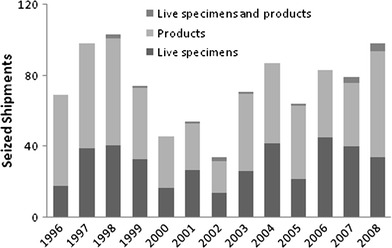
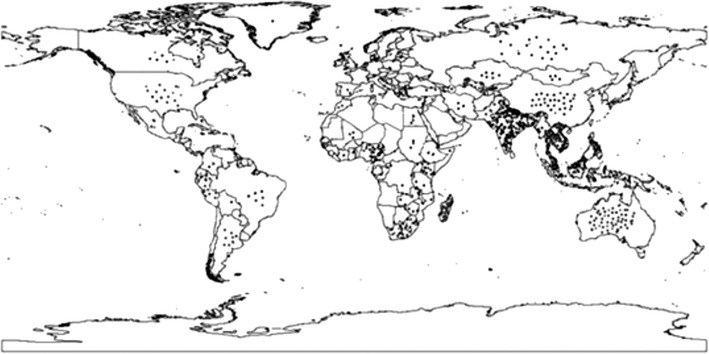
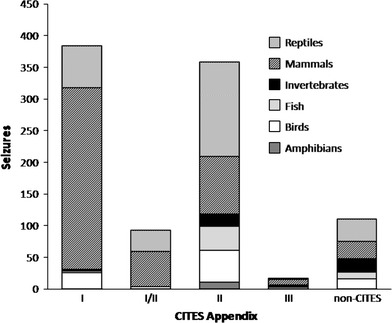
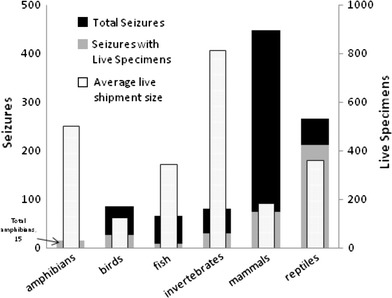
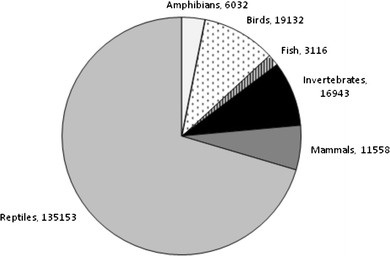
The global trade in illegal wildlife is a multi-billion dollar industry that threatens biodiversity and acts as a potential avenue for invasive species and disease spread. Despite the broad-sweeping implications of illegal wildlife sales, scientists have yet to describe the scope and scale of the trade. Here, we provide the most thorough and current description of the illegal wildlife trade using 12 years of seizure records compiled by TRAFFIC, the wildlife trade monitoring network. These records comprise 967 seizures including massive quantities of ivory, tiger skins, live reptiles, and other endangered wildlife and wildlife products. Most seizures originate in Southeast Asia, a recently identified hotspot for future emerging infectious diseases. To date, regulation and enforcement have been insufficient to effectively control the global trade in illegal wildlife at national and international scales. Effective control will require a multi-pronged approach including community-scale education and empowering local people to value wildlife, coordinated international regulation, and a greater allocation of national resources to on-the-ground enforcement.
全球非法野生动植物贸易是一个价值数十亿美元的产业,它威胁着生物多样性,并可能成为入侵物种和疾病传播的途径。尽管非法野生动植物销售的影响广泛,但科学家们尚未描述该贸易的范围和规模。在这里,我们利用 TRAFFIC(野生动植物贸易监测网络)收集的 12 年扣押记录,提供了对非法野生动植物贸易最全面和最新的描述。这些记录包括 967 起扣押事件,其中包括大量象牙、虎皮、活爬行动物和其他濒危野生动植物及其制品。大多数扣押事件发生在东南亚,这是一个最近被确定为未来新发传染病热点的地区。迄今为止,监管和执法力度不足以在国家和国际范围内有效控制非法野生动植物的全球贸易。有效控制需要采取多管齐下的方法,包括在社区层面开展教育,使当地人重视野生动植物,协调国际监管,并在国家资源方面加大对实地执法的投入。