Matsuda Y, Hirobe T, Chapman V M
Department of Molecular and Cellular Biology, Roswell Park Cancer Institute, Buffalo, NY 14263.
Proc Natl Acad Sci U S A. 1991 Jun 1;88(11):4850-4. doi: 10.1073/pnas.88.11.4850.
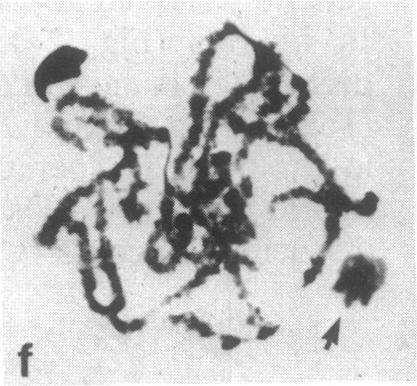
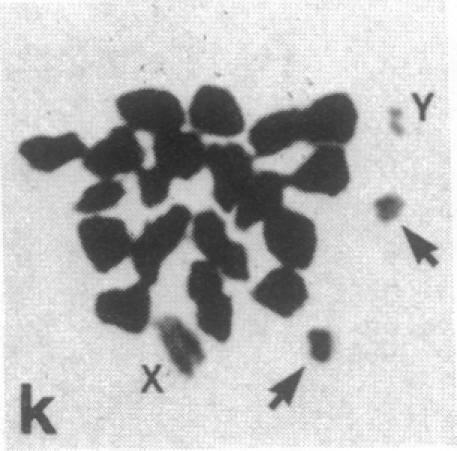
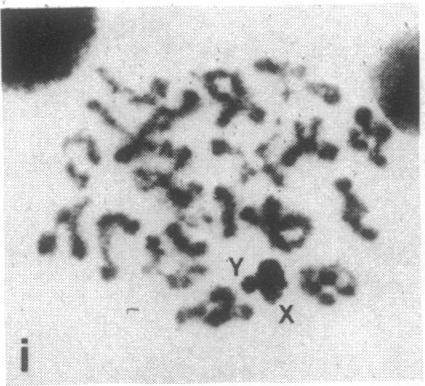
A high frequency of X-Y chromosome dissociation (95%) was found at first meiotic metaphase (MI) in spermatocytes of interspecific hybrids between laboratory mice, C57BL/6J (BL/6) and Mus spretus, compared with an X-Y dissociation frequency of only 3-4% in parental mice. The X-Y dissociation in F1 hybrids occurred before diakinesis rather than as a precocious dissociation at MI. The high X-Y dissociation was accompanied by spermatogenic breakdown after MI, resulting in male sterility. All F1 males were sterile and approximately half of the backcross males from fertile F1 females crossed with either BL/6 or M. spretus males were sterile. Male sterility was highly correlated with X-Y dissociation in both backcrosses. All of the mice with high X-Y dissociation were sterile and all of the males with low X-Y dissociation were fertile or subfertile. This correlation suggested that genetic divergence of the X-Y pairing region could contribute to the male sterile phenotype such that the BL/6 X chromosome would not pair with the M. spretus Y chromosome. The segregation of species-type alleles of amelogenin (Amelb and Amels), a distal X chromosome locus adjacent to the X-Y pairing region, was followed in backcross males that were analyzed for X-Y dissociation and sterility (we have used Amel as the designation for the mouse amelogenin locus; the current designation for this locus is Amg). A 95% concordance between Amelb with fertility and Amels with sterility was observed in backcrosses with BL/6, whereas the converse was observed in the backcross to M. spretus. These results imply that X-Y pairing plays an important role in male fertility and suggest that genetic divergence in X-Y pairing region between Mus species can contribute to the reproductive barriers between species and the process of speciation.
在实验室小鼠C57BL/6J(BL/6)和西班牙小鼠(Mus spretus)的种间杂交后代精母细胞的第一次减数分裂中期(MI),发现X-Y染色体解离频率很高(95%),而亲本小鼠中的X-Y解离频率仅为3%-4%。F1杂种中的X-Y解离发生在终变期之前,而不是在MI期的早熟解离。高X-Y解离伴随着MI期后的生精障碍,导致雄性不育。所有F1雄性均不育,来自可育F1雌性与BL/6或西班牙小鼠雄性杂交产生的回交雄性中,约有一半不育。在两个回交中,雄性不育与X-Y解离高度相关。所有具有高X-Y解离的小鼠均不育,而所有具有低X-Y解离的雄性均育性正常或亚育性。这种相关性表明,X-Y配对区域的遗传差异可能导致雄性不育表型,使得BL/6 X染色体不能与西班牙小鼠Y染色体配对。在对X-Y解离和不育进行分析的回交雄性中,追踪了牙釉蛋白(Amelb和Amels)的物种类型等位基因的分离情况,牙釉蛋白是与X-Y配对区域相邻的远端X染色体位点(我们使用Amel作为小鼠牙釉蛋白位点的名称;该位点的当前名称是Amg)。在与BL/6的回交中,观察到Amelb与育性以及Amels与不育之间的一致性为95%,而在与西班牙小鼠的回交中则观察到相反的情况。这些结果表明X-Y配对在雄性育性中起重要作用,并表明小家鼠属物种之间X-Y配对区域的遗传差异可能导致物种间的生殖障碍和物种形成过程。