Department of Microbiology & Immunology, Stanford University School of Medicine, Stanford, California, United States of America.
PLoS Pathog. 2010 Jun 3;6(6):e1000931. doi: 10.1371/journal.ppat.1000931.
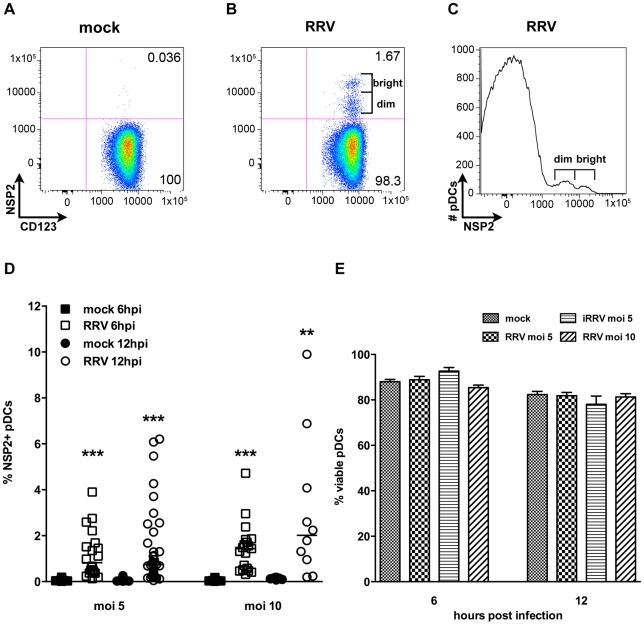
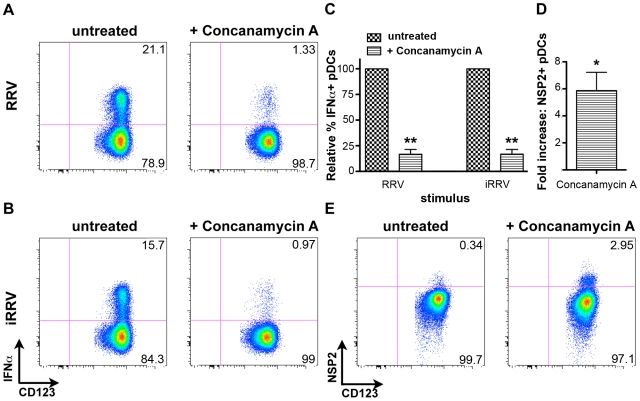
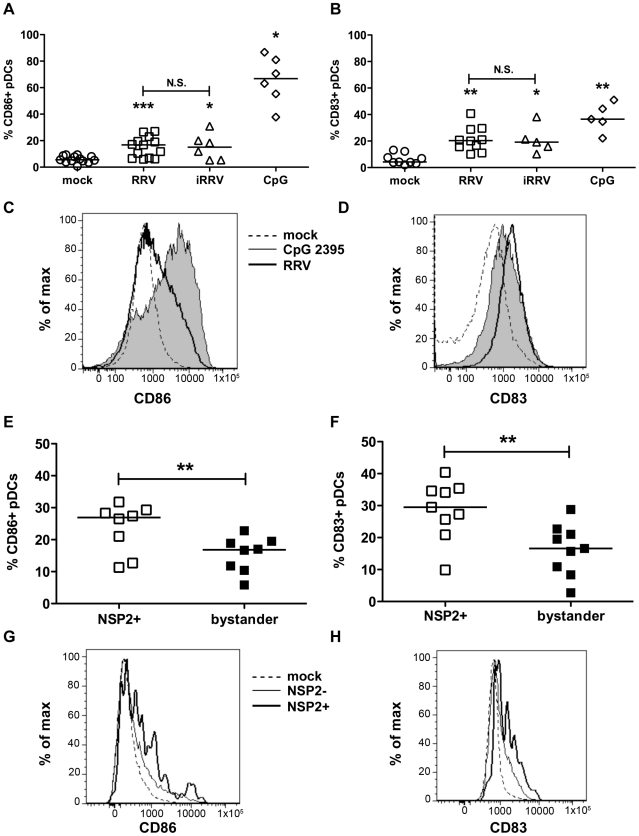
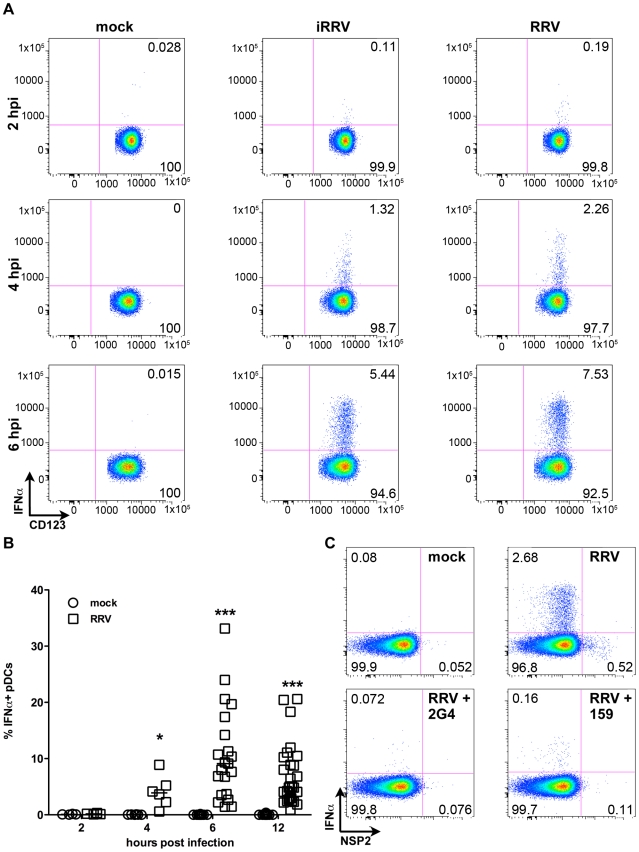
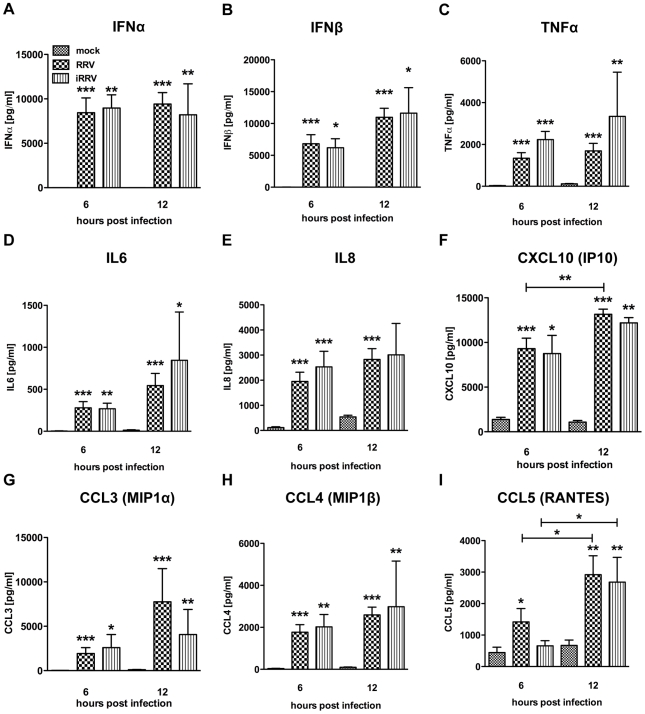
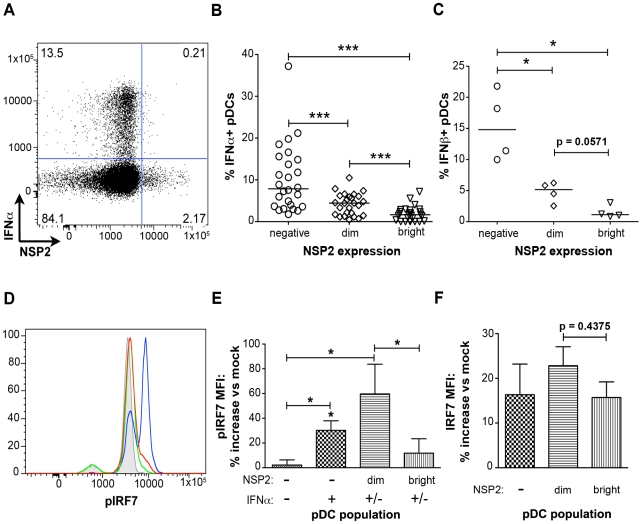
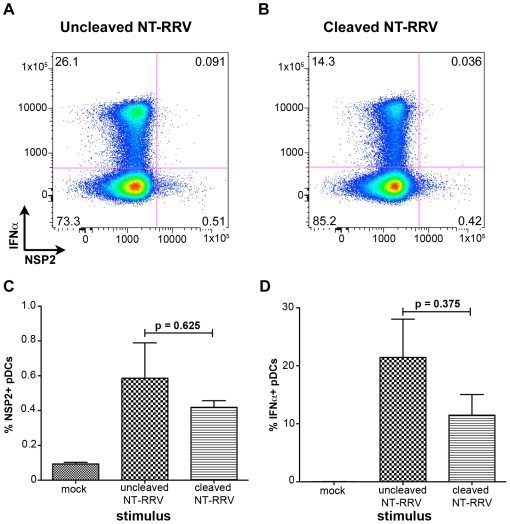
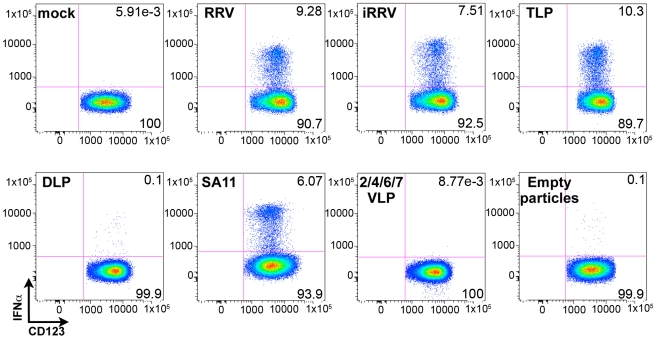
Rotaviruses are the leading cause of severe dehydrating diarrhea in children worldwide. Rotavirus-induced immune responses, especially the T and B cell responses, have been extensively characterized; however, little is known about innate immune mechanisms involved in the control of rotavirus infection. Although increased levels of systemic type I interferon (IFNalpha and beta) correlate with accelerated resolution of rotavirus disease, multiple rotavirus strains, including rhesus rotavirus (RRV), have been demonstrated to antagonize type I IFN production in a variety of epithelial and fibroblast cell types through several mechanisms, including degradation of multiple interferon regulatory factors by a viral nonstructural protein. This report demonstrates that stimulation of highly purified primary human peripheral plasmacytoid dendritic cells (pDCs) with either live or inactivated RRV induces substantial IFNalpha production by a subset of pDCs in which RRV does not replicate. Characterization of pDC responses to viral stimulus by flow cytometry and Luminex revealed that RRV replicates in a small subset of human primary pDCs and, in this RRV-permissive small subset, IFNalpha production is diminished. pDC activation and maturation were observed independently of viral replication and were enhanced in cells in which virus replicates. Production of IFNalpha by pDCs following RRV exposure required viral dsRNA and surface proteins, but neither viral replication nor activation by trypsin cleavage of VP4. These results demonstrate that a minor subset of purified primary human peripheral pDCs are permissive to RRV infection, and that pDCs retain functionality following RRV stimulus. Additionally, this study demonstrates trypsin-independent infection of primary peripheral cells by rotavirus, which may allow for the establishment of extraintestinal viremia and antigenemia. Importantly, these data provide the first evidence of IFNalpha induction in primary human pDCs by a dsRNA virus, while simultaneously demonstrating impaired IFNalpha production in primary human cells in which RRV replicates. Rotavirus infection of primary human pDCs provides a powerful experimental system for the study of mechanisms underlying pDC-mediated innate immunity to viral infection and reveals a potentially novel dsRNA-dependent pathway of IFNalpha induction.
轮状病毒是全球导致严重脱水性腹泻的主要原因。轮状病毒诱导的免疫反应,特别是 T 和 B 细胞反应,已经得到了广泛的描述;然而,对于控制轮状病毒感染的固有免疫机制知之甚少。尽管全身性 I 型干扰素(IFNα和β)水平升高与轮状病毒病的快速缓解相关,但多种轮状病毒株,包括恒河猴轮状病毒(RRV),已被证明通过多种机制拮抗多种上皮细胞和成纤维细胞类型中 I 型 IFN 的产生,包括病毒非结构蛋白对多个干扰素调节因子的降解。本报告表明,用活或灭活的 RRV 刺激高度纯化的原代人外周浆细胞样树突状细胞(pDC),可诱导其中一部分 pDC 产生大量 IFNα,而 RRV 在此部分 pDC 中不复制。通过流式细胞术和 Luminex 对 pDC 对病毒刺激的反应进行表征,发现 RRV 在一小部分人原代 pDC 中复制,并且在这种 RRV 允许的小亚群中,IFNα 的产生减少。pDC 的激活和成熟与病毒复制无关,并且在病毒复制的细胞中增强。pDC 暴露于 RRV 后产生 IFNα 需要病毒 dsRNA 和表面蛋白,但不需要病毒复制或 VP4 蛋白的胰蛋白酶切割激活。这些结果表明,一小部分纯化的原代人外周 pDC 对 RRV 感染具有易感性,并且 pDC 在 RRV 刺激后保持功能。此外,本研究证明了轮状病毒对原代外周细胞的胰蛋白酶非依赖性感染,这可能允许建立肠道外病毒血症和抗原血症。重要的是,这些数据提供了第一个证据,表明 dsRNA 病毒可在原代人 pDC 中诱导 IFNα,同时证明在 RRV 复制的原代人细胞中 IFNα 产生受损。轮状病毒感染原代人 pDC 为研究 pDC 介导的抗病毒固有免疫的机制提供了一个强大的实验系统,并揭示了一种潜在的新型 dsRNA 依赖的 IFNα 诱导途径。