Plant Breeding Laboratory, University of Padjadjaran, Bandung, Indonesia.
PLoS Biol. 2010 Jun 1;8(6):e1000388. doi: 10.1371/journal.pbio.1000388.
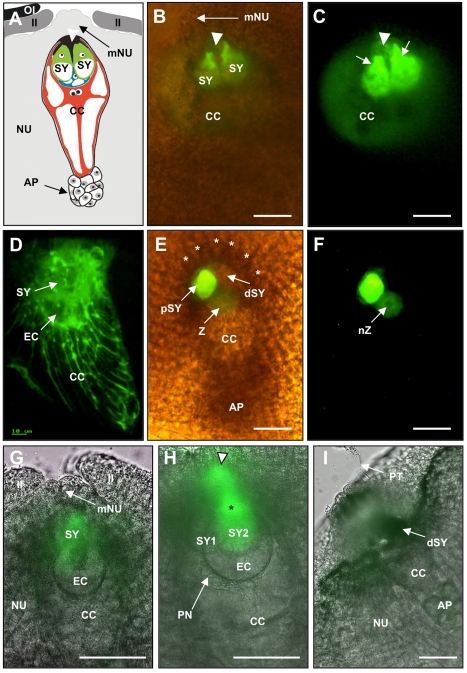
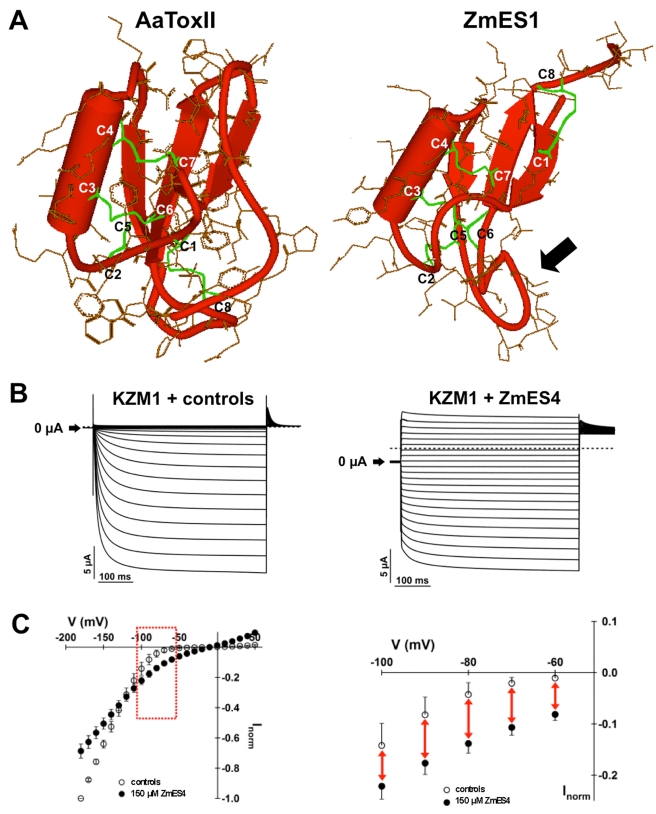
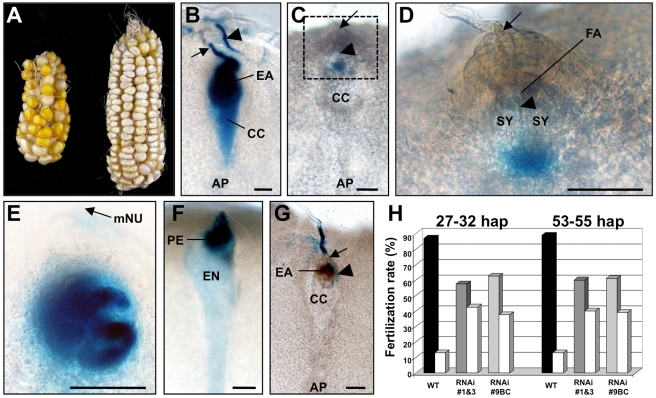
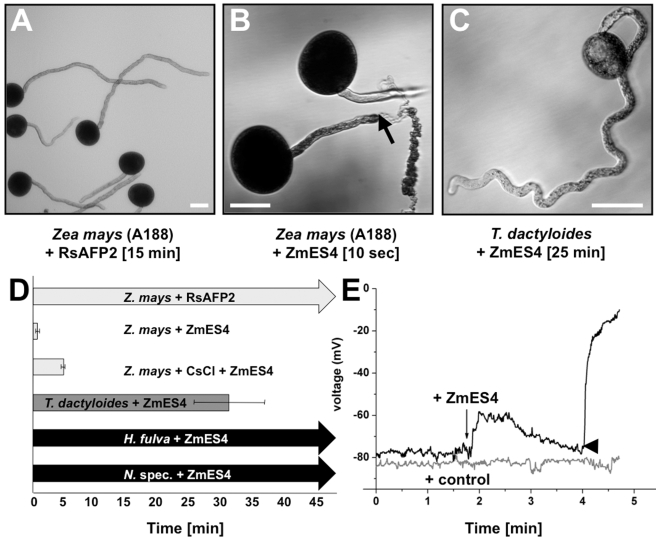
In contrast to animals and lower plant species, sperm cells of flowering plants are non-motile and are transported to the female gametes via the pollen tube, i.e. the male gametophyte. Upon arrival at the female gametophyte two sperm cells are discharged into the receptive synergid cell to execute double fertilization. The first players involved in inter-gametophyte signaling to attract pollen tubes and to arrest their growth have been recently identified. In contrast the physiological mechanisms leading to pollen tube burst and thus sperm discharge remained elusive. Here, we describe the role of polymorphic defensin-like cysteine-rich proteins ZmES1-4 (Zea mays embryo sac) from maize, leading to pollen tube growth arrest, burst, and explosive sperm release. ZmES1-4 genes are exclusively expressed in the cells of the female gametophyte. ZmES4-GFP fusion proteins accumulate in vesicles at the secretory zone of mature synergid cells and are released during the fertilization process. Using RNAi knock-down and synthetic ZmES4 proteins, we found that ZmES4 induces pollen tube burst in a species-preferential manner. Pollen tube plasma membrane depolarization, which occurs immediately after ZmES4 application, as well as channel blocker experiments point to a role of K(+)-influx in the pollen tube rupture mechanism. Finally, we discovered the intrinsic rectifying K(+) channel KZM1 as a direct target of ZmES4. Following ZmES4 application, KZM1 opens at physiological membrane potentials and closes after wash-out. In conclusion, we suggest that vesicles containing ZmES4 are released from the synergid cells upon male-female gametophyte signaling. Subsequent interaction between ZmES4 and KZM1 results in channel opening and K(+) influx. We further suggest that K(+) influx leads to water uptake and culminates in osmotic tube burst. The species-preferential activity of polymorphic ZmES4 indicates that the mechanism described represents a pre-zygotic hybridization barrier and may be a component of reproductive isolation in plants.
与动物和低等植物不同,开花植物的精子细胞是非运动的,通过花粉管(即雄性配子体)运输到雌性配子。到达雌性配子体后,两个精子细胞被排入接受助细胞以执行双受精。最近已经鉴定出参与雌雄配子间信号转导以吸引花粉管并阻止其生长的第一个参与者。相比之下,导致花粉管爆裂从而释放精子的生理机制仍然难以捉摸。在这里,我们描述了玉米中多态防御素样富含半胱氨酸的蛋白质 ZmES1-4(玉米胚囊)的作用,导致花粉管生长停滞、爆裂和精子爆炸性释放。ZmES1-4 基因仅在雌性配子体的细胞中表达。ZmES4-GFP 融合蛋白在成熟助细胞的分泌区积累,并在受精过程中释放。使用 RNAi 敲低和合成 ZmES4 蛋白,我们发现 ZmES4 以物种偏好的方式诱导花粉管爆裂。花粉管质膜去极化在 ZmES4 应用后立即发生,以及通道阻断剂实验表明 K(+)内流在花粉管破裂机制中起作用。最后,我们发现内在整流 K(+)通道 KZM1 是 ZmES4 的直接靶标。在 ZmES4 应用后,KZM1 在生理膜电位下打开,并在冲洗后关闭。总之,我们认为含有 ZmES4 的囊泡在雌雄配子间信号转导时从助细胞中释放。随后 ZmES4 与 KZM1 相互作用导致通道打开和 K(+)内流。我们进一步提出,K(+)内流导致水摄取并最终导致渗透管爆裂。多态 ZmES4 的物种偏好活性表明,所描述的机制代表了一种合子前杂交障碍,并且可能是植物生殖隔离的一个组成部分。