Motivation and Emotion Neuroscience Collaboration, Athinoula A. Martinos Center for Biomedical Imaging, Department of Radiology, Massachusetts General Hospital and Harvard Medical School, Boston, Massachusetts, United States of America.
PLoS One. 2010 May 26;5(5):e10613. doi: 10.1371/journal.pone.0010613.
Approach and avoidance behavior provide a means for assessing the rewarding or aversive value of stimuli, and can be quantified by a keypress procedure whereby subjects work to increase (approach), decrease (avoid), or do nothing about time of exposure to a rewarding/aversive stimulus. To investigate whether approach/avoidance behavior might be governed by quantitative principles that meet engineering criteria for lawfulness and that encode known features of reward/aversion function, we evaluated whether keypress responses toward pictures with potential motivational value produced any regular patterns, such as a trade-off between approach and avoidance, or recurrent lawful patterns as observed with prospect theory.
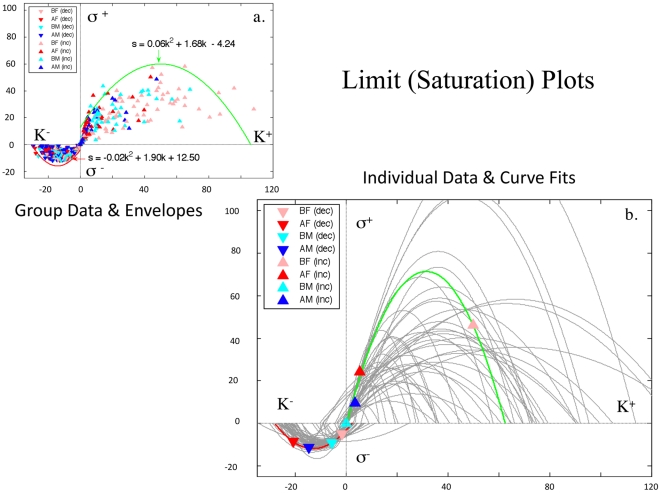
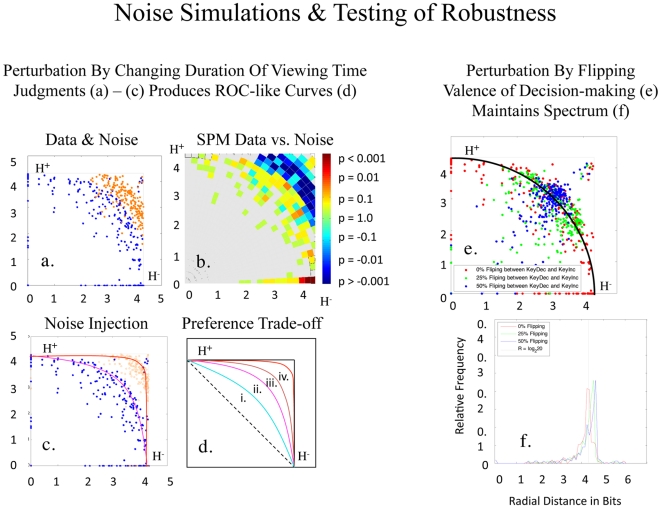
METHODOLOGY/PRINCIPAL FINDINGS: Three sets of experiments employed this task with beautiful face images, a standardized set of affective photographs, and pictures of food during controlled states of hunger and satiety. An iterative modeling approach to data identified multiple law-like patterns, based on variables grounded in the individual. These patterns were consistent across stimulus types, robust to noise, describable by a simple power law, and scalable between individuals and groups. Patterns included: (i) a preference trade-off counterbalancing approach and avoidance, (ii) a value function linking preference intensity to uncertainty about preference, and (iii) a saturation function linking preference intensity to its standard deviation, thereby setting limits to both.
CONCLUSIONS/SIGNIFICANCE: These law-like patterns were compatible with critical features of prospect theory, the matching law, and alliesthesia. Furthermore, they appeared consistent with both mean-variance and expected utility approaches to the assessment of risk. Ordering of responses across categories of stimuli demonstrated three properties thought to be relevant for preference-based choice, suggesting these patterns might be grouped together as a relative preference theory. Since variables in these patterns have been associated with reward circuitry structure and function, they may provide a method for quantitative phenotyping of normative and pathological function (e.g., psychiatric illness).
趋近和回避行为为评估刺激的奖赏或厌恶价值提供了一种手段,并且可以通过按键程序来量化,在该程序中,被试通过增加(趋近)、减少(回避)或对暴露于奖赏/厌恶刺激的时间保持不变来工作。为了研究趋近/回避行为是否可能受到符合工程规律标准的定量原则的支配,并且是否编码了奖赏/厌恶功能的已知特征,我们评估了对具有潜在动机价值的图片进行按键反应是否会产生任何规则模式,例如趋近和回避之间的权衡,或者像预期理论所观察到的那样反复出现的规则模式。
方法/主要发现:三组实验使用美丽的人脸图像、一套标准化的情感照片以及饥饿和饱腹感时的食物图片进行了这项任务。对数据进行的迭代建模方法确定了多种类似法律的模式,这些模式基于个体基础上的变量。这些模式在刺激类型之间是一致的,对噪声具有鲁棒性,可以用简单的幂律来描述,并且在个体和群体之间是可扩展的。这些模式包括:(i)偏好权衡,平衡趋近和回避,(ii)将偏好强度与对偏好的不确定性联系起来的价值函数,以及(iii)将偏好强度与标准差联系起来的饱和函数,从而限制了两者。
结论/意义:这些类似法律的模式与预期理论、匹配法则和alliesthesia 的关键特征是兼容的。此外,它们似乎与均值方差和期望效用方法对风险的评估一致。对刺激类别的反应进行排序表明了三种被认为与基于偏好的选择相关的特性,这表明这些模式可能作为一种相对偏好理论组合在一起。由于这些模式中的变量与奖赏回路结构和功能有关,它们可能为正常和病理功能(例如精神病)的定量表型提供了一种方法。