Department of Otorhinolaryngology, University Medical Center Groningen, PO Box 30.0001, 9700 RB Groningen, The Netherlands.
Eur Arch Otorhinolaryngol. 2010 Nov;267(11):1679-84. doi: 10.1007/s00405-010-1298-8. Epub 2010 Jun 9.
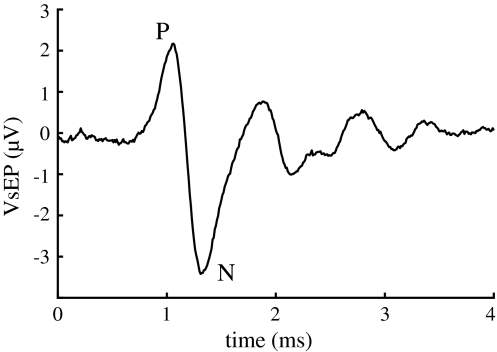
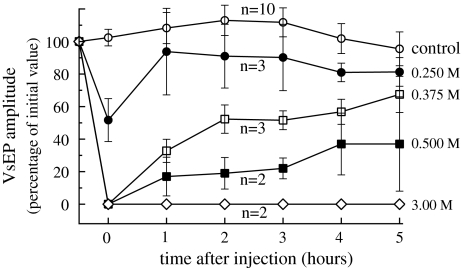
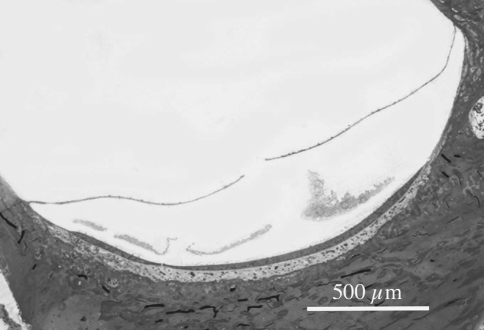
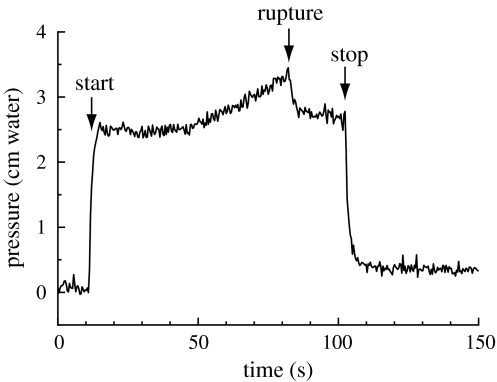
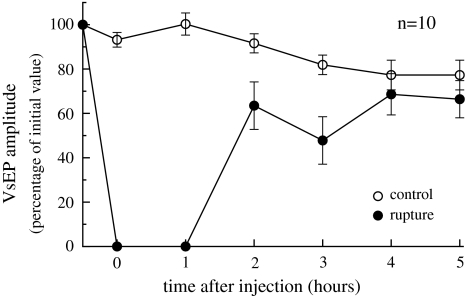
To investigate the effect on the functioning of the vestibular system of a rupture of Reissner's membrane, artificial endolymph was injected in scala media of ten guinea pigs and vestibular evoked potentials (VsEPs), evoked by vertical acceleration pulses, were measured. Directly after injection of a sufficient volume to cause rupture, all ears showed a complete disappearance of VsEP, followed by partial recovery. To investigate the effect of perilymphatic potassium concentration on the vestibular sensory and neural structures, different concentrations of KCl were injected directly into the vestibule. The KCl injections resulted in a dose-dependent decrease of VsEP, followed by a dose-dependent slow recovery. This animal model clearly shows a disturbing effect of a higher than normal K(+) concentration in perilymph on the vestibular and neural structures in the inner ear. Potassium intoxication is the most probable explanation for the observed effects. It is one of the explanations for Menière attacks.
为了研究 Reissner 膜破裂对前庭系统功能的影响,我们向十只豚鼠的中阶内注入人工内淋巴液,并测量由垂直加速脉冲诱发的前庭诱发电位(VsEPs)。在注入足以引起破裂的足够体积后,所有耳朵的 VsEP 完全消失,随后部分恢复。为了研究外淋巴液钾浓度对前庭感觉和神经结构的影响,我们直接将不同浓度的 KCl 注入前庭。KCl 注射导致 VsEP 呈剂量依赖性下降,随后呈剂量依赖性缓慢恢复。这种动物模型清楚地显示,外淋巴液中高于正常的 K(+)浓度对内耳的前庭和神经结构有干扰作用。钾中毒是观察到的效应最可能的解释。它是梅尼埃病发作的原因之一。