Institute of Microbiology, ETH Zurich, Zurich, Switzerland.
EMBO Mol Med. 2010 Jun;2(6):231-44. doi: 10.1002/emmm.201000075.
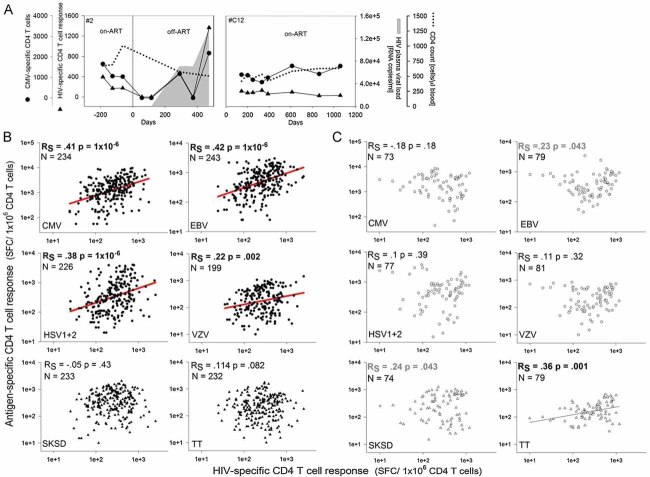
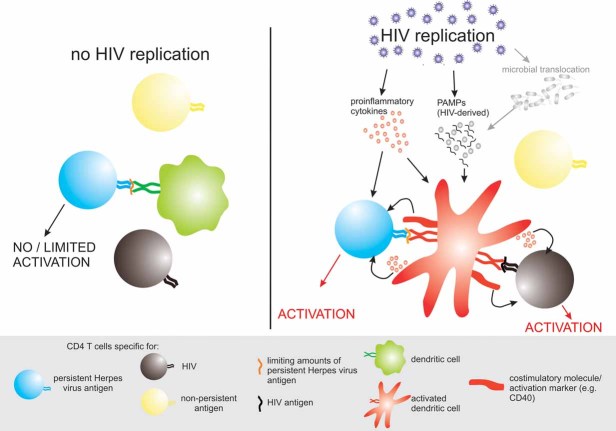
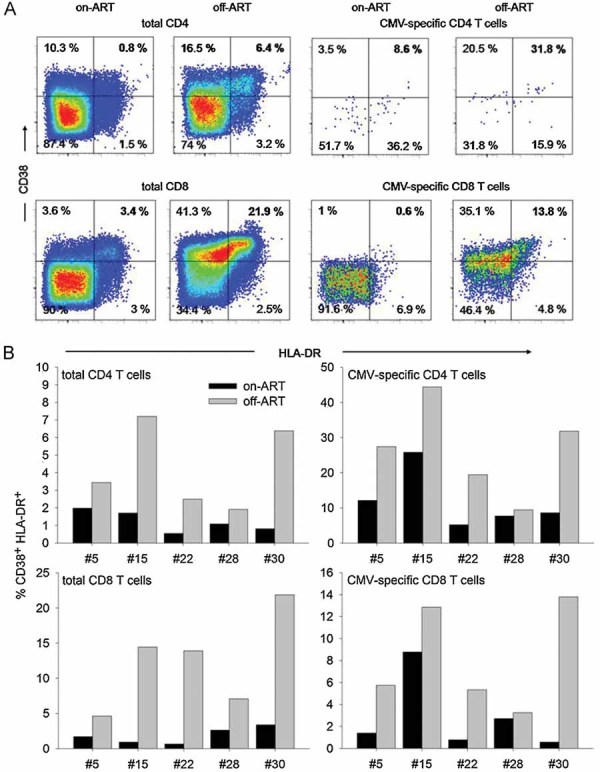
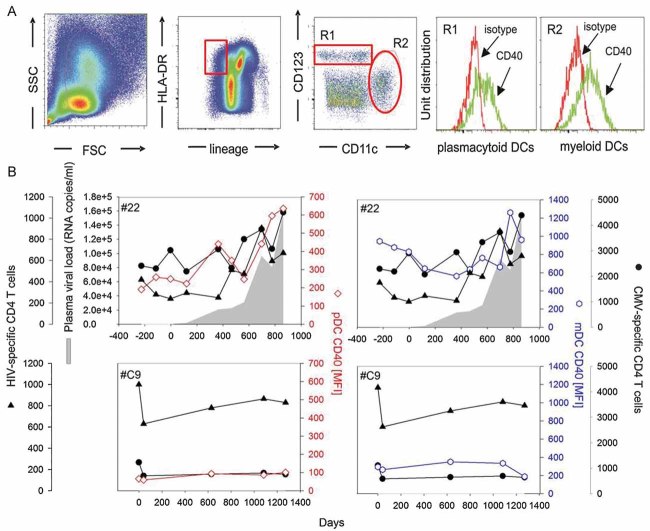
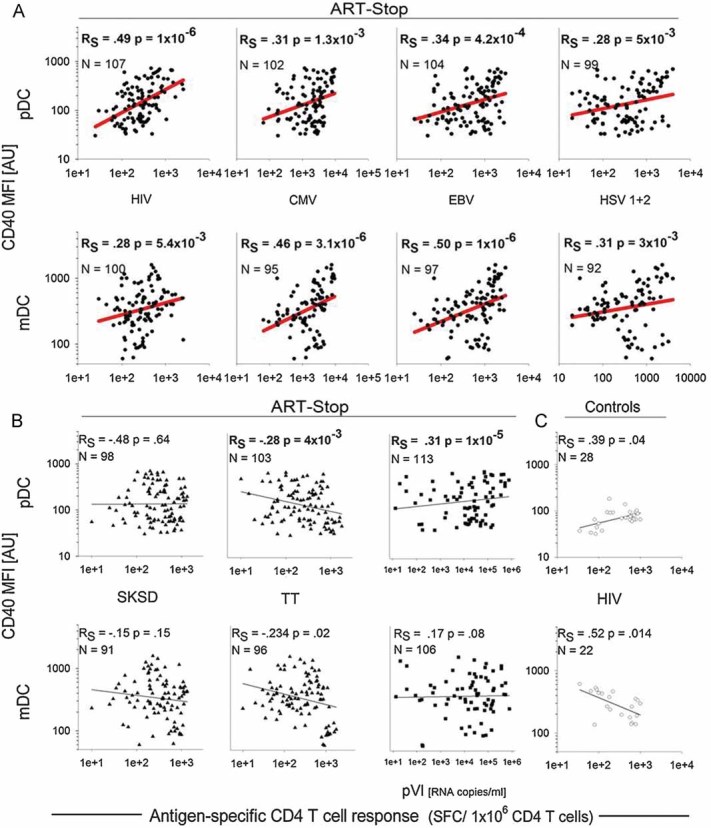
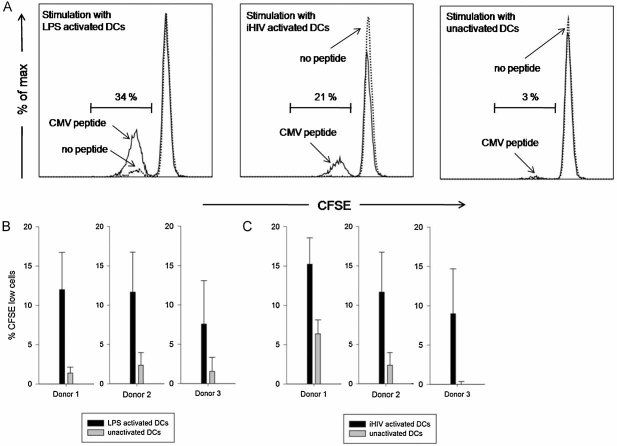
Hyperactivation of CD4+ T cells is a hallmark of untreated HIV-1 infection. The antigenic specificities of activated CD4+ T cells and the underlying mechanisms leading to their activation remain thus far elusive. We report here that during HIV rebound the dynamics of HIV-specific CD4+ T cells is highly correlated with the dynamics of CD4+ T cells specific for persistent antigens derived from various members of the herpes virus family, whereas CD4 responses towards non-persistent antigens were unaffected by HIV replication. Notably, the dynamics of HIV and herpes viral antigen-specific CD4+ T cells responses correlated with the expression level of activation markers on dendritic cells (DCs) and activated DCs were more potent in restimulating memory T cells. These data strongly suggest that HIV replication costimulates activation of CD4+ T cells specific for persistent herpes viral antigens via activation of DCs. We propose that a large proportion of activated T cells during untreated HIV infection may be specific for herpes viral antigens and identify a novel mechanism contributing to chronic immune activation in untreated HIV-1 infection.
CD4+T 细胞的过度激活是未经治疗的 HIV-1 感染的一个标志。目前仍不清楚激活的 CD4+T 细胞的抗原特异性以及导致其激活的潜在机制。我们在这里报告,在 HIV 反弹期间,HIV 特异性 CD4+T 细胞的动力学与针对来自疱疹病毒家族不同成员的持续性抗原的 CD4+T 细胞的动力学高度相关,而针对非持续性抗原的 CD4 反应不受 HIV 复制的影响。值得注意的是,HIV 和疱疹病毒抗原特异性 CD4+T 细胞反应的动力学与树突状细胞 (DC) 上激活标记物的表达水平相关,并且激活的 DC 更能刺激记忆 T 细胞。这些数据强烈表明,HIV 复制通过激活 DC 来共刺激针对持续性疱疹病毒抗原的 CD4+T 细胞的激活。我们提出,在未经治疗的 HIV 感染期间,大量激活的 T 细胞可能针对疱疹病毒抗原,并确定了一种导致未经治疗的 HIV-1 感染中慢性免疫激活的新机制。