Department of Nutrition and Food Sciences, Physiology and Toxicology, University of Navarra, Pamplona, Spain.
Lipids Health Dis. 2010 Jun 9;9:60. doi: 10.1186/1476-511X-9-60.
The expression of some genes controlling energy homeostasis could be regulated by epigenetic mechanisms that may play a role in body weight regulation. Thus, it is known that various nutritional factors affect DNA methylation. In order to assess whether the macronutrient composition of the diet could be related to the epigenetic regulation of gene expression and with obesity development, we investigated the effects on methylation and expression patterns of two pair-fed isocaloric diets in rats: control (rich in starch) and HFS (rich in fat and sucrose).
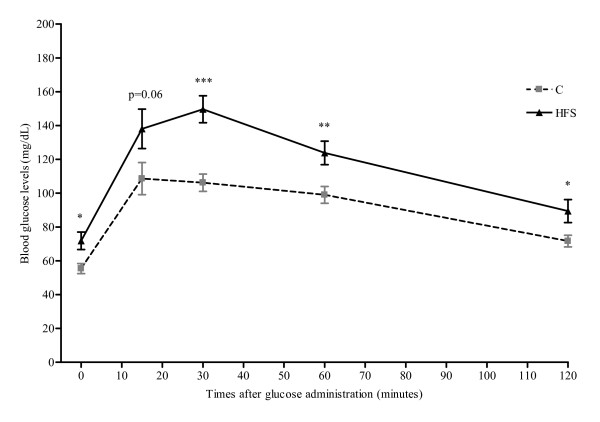
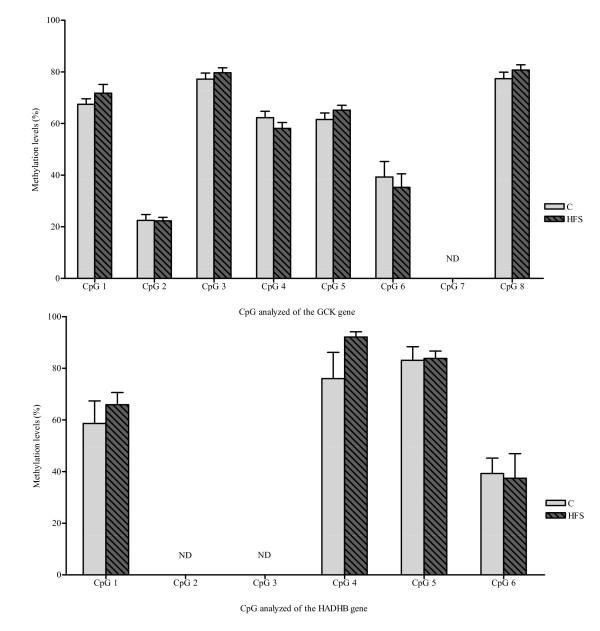
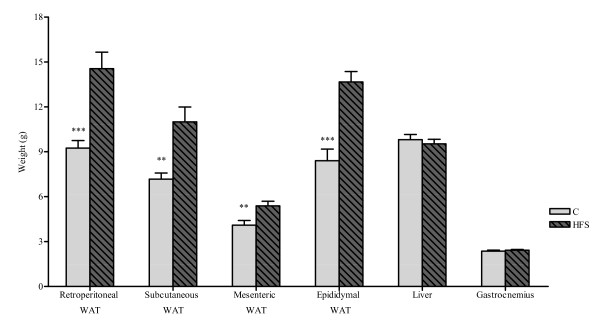
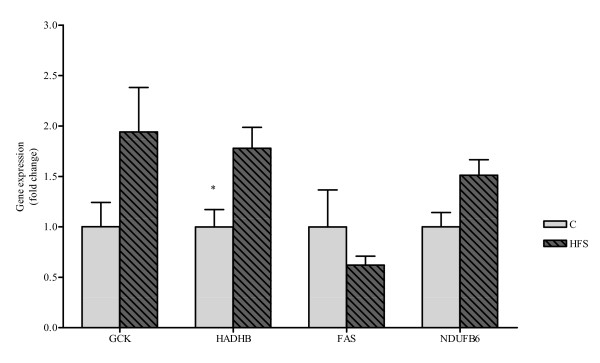
The pair-fed HFS diet induced higher weight gain and adiposity as compared to the controls as well as liver triglyceride accumulation and oxidative stress. Feeding the HFS diet impaired glucose tolerance and serum triglycerides and cholesterol. Liver glucokinase expression, a key glycolytic gene, remained unaltered, as well as the mRNA values of fatty acid synthase and NADH dehydrogenase (ubiquinone) 1 beta subcomplex, 6 (NDUFB6) in liver and visceral adipocytes, which regulate lipogenesis and mitochondrial oxidative metabolism, respectively. Liver expression of hydroxyacyl-coenzyme A dehydrogenase (HADHB), a key gene of beta-oxidation pathway, was higher in the HFS-fed animals. However, the methylation status of CpG islands in HADHB and glucokinase genes remained unchanged after feeding the HFS diet.
These results confirm that the distribution and type of macronutrients (starch vs. sucrose, and percent of fat) influence obesity onset and the associated metabolic complications. HFS diets produce obesity independently of total energy intake, although apparently no epigenetic (DNA methylation) changes accompanied the modifications observed in gene expression.
控制能量稳态的某些基因的表达可能受到表观遗传机制的调控,而这些机制可能在体重调节中发挥作用。因此,已知各种营养因素会影响 DNA 甲基化。为了评估饮食中的宏量营养素组成是否与基因表达的表观遗传调控以及肥胖的发生有关,我们研究了两种等热量喂养的对照饮食(富含淀粉)和 HFS 饮食(富含脂肪和蔗糖)对大鼠甲基化和表达模式的影响。
与对照组相比,HFS 喂养的大鼠体重增加和肥胖程度更高,肝甘油三酯积累和氧化应激也更严重。HFS 饮食喂养会损害葡萄糖耐量以及血清甘油三酯和胆固醇水平。肝脏葡萄糖激酶表达(关键糖酵解基因)未发生改变,脂肪酸合成酶和 NADH 脱氢酶(泛醌)1β亚基 6(NDUFB6)的 mRNA 值在肝脏和内脏脂肪细胞中也未发生改变,这两种酶分别调节脂肪生成和线粒体氧化代谢。HADHB(β氧化途径的关键基因)在 HFS 喂养的动物中肝脏表达更高。然而,HFS 饮食喂养后 HADHB 和葡萄糖激酶基因的 CpG 岛甲基化状态没有改变。
这些结果证实了宏量营养素(淀粉与蔗糖,以及脂肪百分比)的分布和类型会影响肥胖的发生和相关的代谢并发症。HFS 饮食会导致肥胖,而与总能量摄入无关,尽管表观遗传(DNA 甲基化)变化似乎没有伴随观察到的基因表达变化。