Department of Molecular and Cellular Biology, Osaka University Graduate School of Dentistry, Suita, Osaka, 565-0871, Japan.
Mol Biol Cell. 2010 Aug 1;21(15):2568-77. doi: 10.1091/mbc.E10-01-0049. Epub 2010 Jun 9.
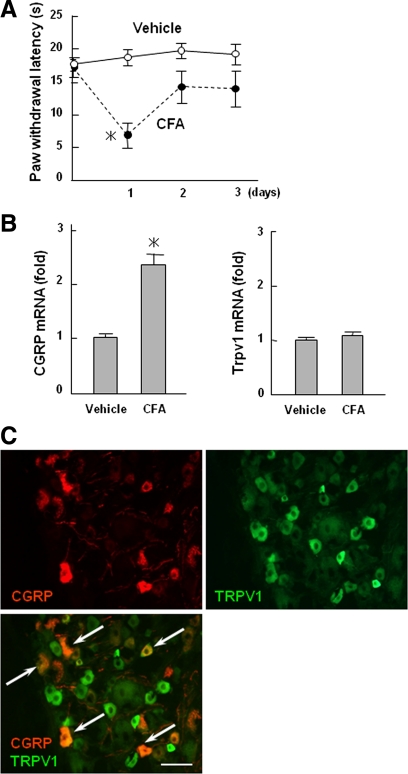
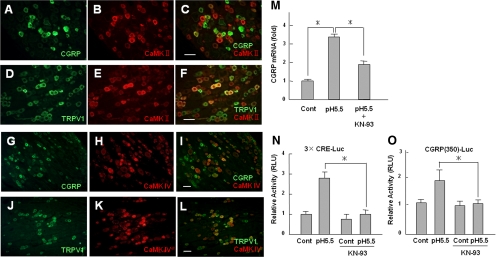
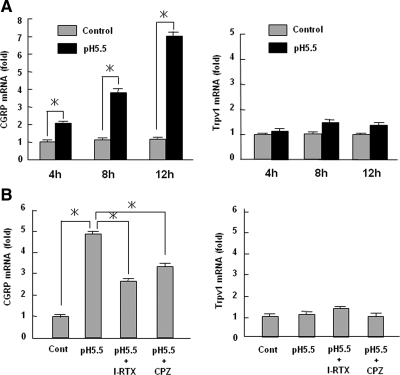
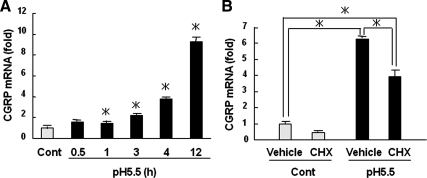
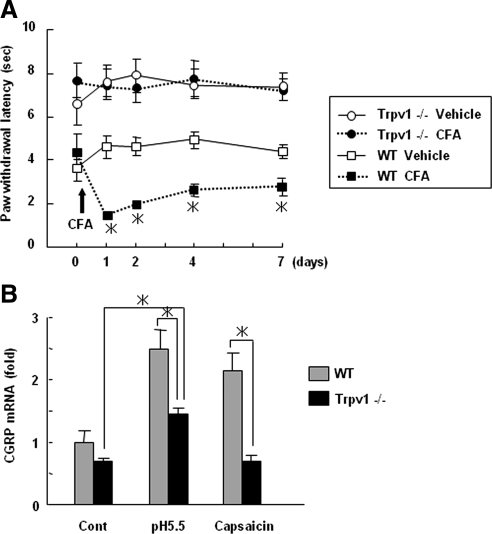
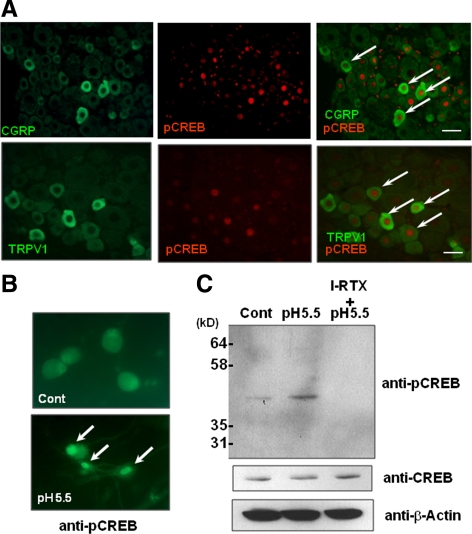
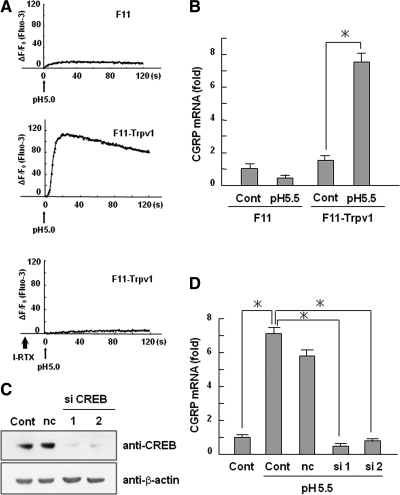
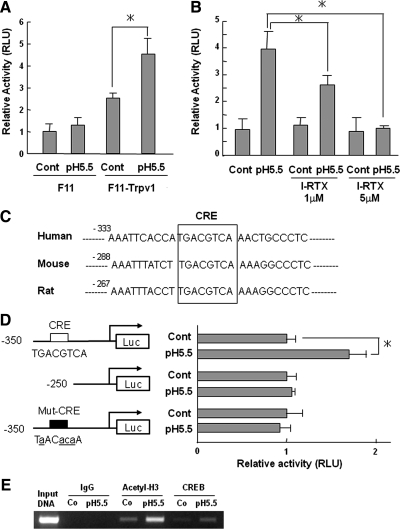
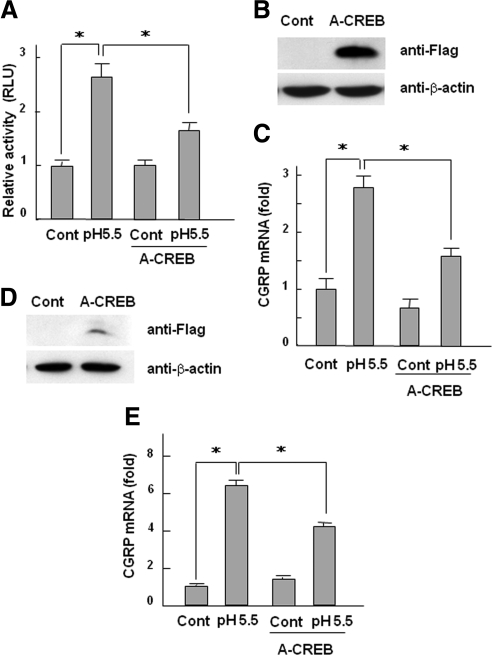
Increased production of calcitonin gene-related peptide (CGRP) in sensory neurons is implicated in inflammatory pain. The inflammatory site is acidic due to proton release from infiltrating inflammatory cells. Acid activation of peripheral nociceptors relays pain signals to the CNS. Here, we examined whether acid activated the transient receptor potential vanilloid subtype 1 (Trpv1), a widely recognized acid-sensing nociceptor and subsequently increased CGRP expression. Chemically induced inflammation was associated with thermal hyperalgesia and increased CGRP expression in dorsal root ganglion (DRG) in rats. In organ cultures of DRG, acid (pH 5.5) elevated CGRP expression and the selective Trpv1 antagonist 5'-Iodoresiniferatoxin decreased it. Trpv1-deficient DRG showed reduced CGRP increase by acid. Of note, many of CGRP/Trpv1-positive DRG neurons exhibited the phosphorylation of cAMP response element-binding protein (CREB), a nociceptive transcription factor. Knockdown of CREB by small interfering RNA or a dominant-negative form of CREB diminished acid-elevated CGRP expression. Acid elevated the transcriptional activity of CREB, which in turn stimulated CGRP gene promoter activity. These effects were inhibited by a Ca(2+)/calmodulin-dependent protein kinase (CaMK) inhibitor KN-93. In conclusion, our results suggest that inflammatory acidic environments activate Trpv1, leading to an up-regulation of CGRP expression via CaMK-CREB cascade, a series of events that may be associated with inflammatory pain.
感觉神经元中降钙素基因相关肽(CGRP)的产生增加与炎症性疼痛有关。由于浸润性炎症细胞释放质子,炎症部位呈酸性。酸性激活外周伤害感受器将疼痛信号传递到中枢神经系统。在这里,我们研究了酸是否激活了瞬时受体电位香草酸亚型 1(TRPV1),TRPV1 是一种广泛认可的酸敏伤害感受器,随后增加了 CGRP 的表达。化学诱导的炎症与大鼠背根神经节(DRG)的热痛觉过敏和 CGRP 表达增加有关。在 DRG 的器官培养物中,酸(pH 5.5)可升高 CGRP 的表达,而选择性 TRPV1 拮抗剂 5'-Iodoresiniferatoxin 则降低了其表达。酸对 TRPV1 缺陷型 DRG 中的 CGRP 增加作用降低。值得注意的是,许多 CGRP/TRPV1 阳性 DRG 神经元表现出环磷酸腺苷反应元件结合蛋白(CREB)的磷酸化,CREB 是一种伤害感受转录因子。通过小干扰 RNA 或显性失活形式的 CREB 敲低 CREB 可减少酸升高的 CGRP 表达。酸可升高 CREB 的转录活性,进而刺激 CGRP 基因启动子活性。这些作用可被 Ca2+/钙调蛋白依赖性蛋白激酶(CaMK)抑制剂 KN-93 抑制。总之,我们的结果表明,炎症性酸性环境激活 TRPV1,通过 CaMK-CREB 级联反应导致 CGRP 表达上调,这一系列事件可能与炎症性疼痛有关。