Laboratory of Behavioral Neuroscience, Intramural Research Program, National Institute of Mental Health, NIH, Bethesda, MD 20892, USA.
Behav Brain Res. 2011 Jan 1;216(1):19-28. doi: 10.1016/j.bbr.2010.06.004. Epub 2010 Jun 9.
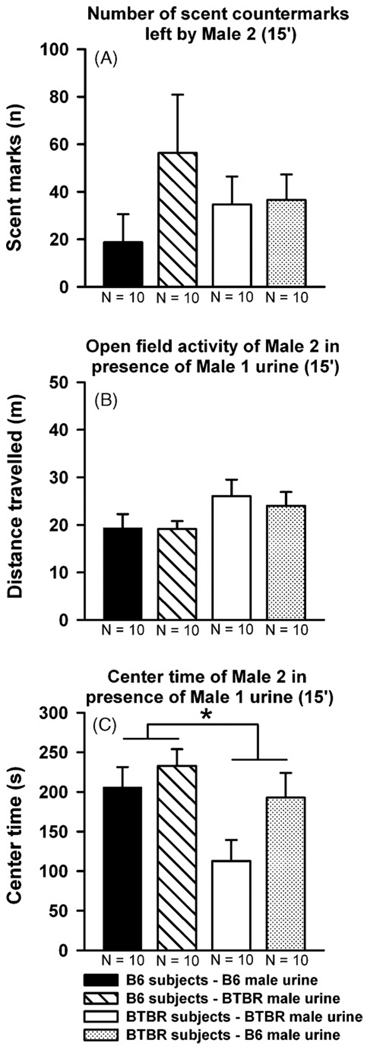
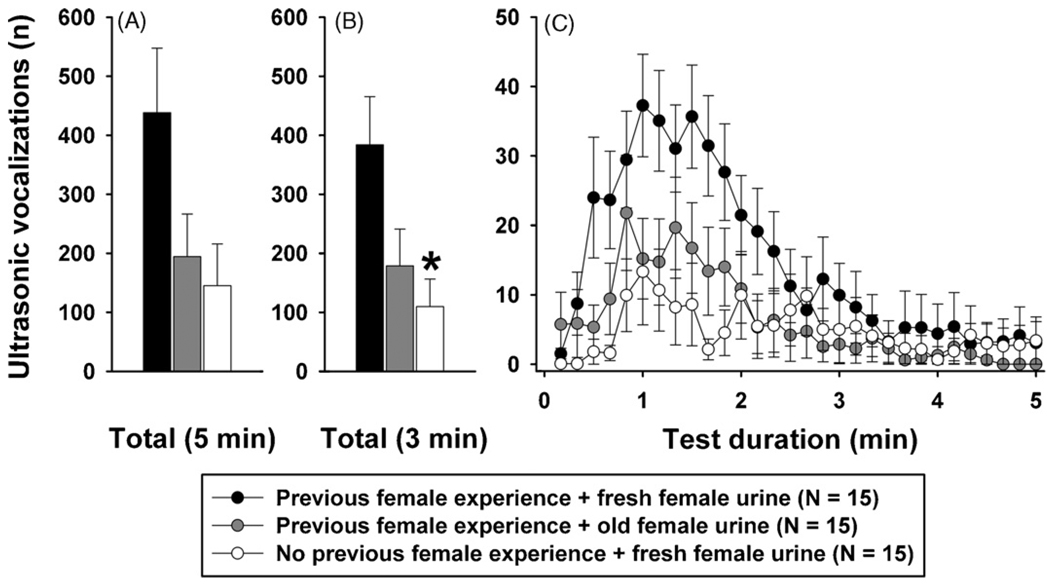
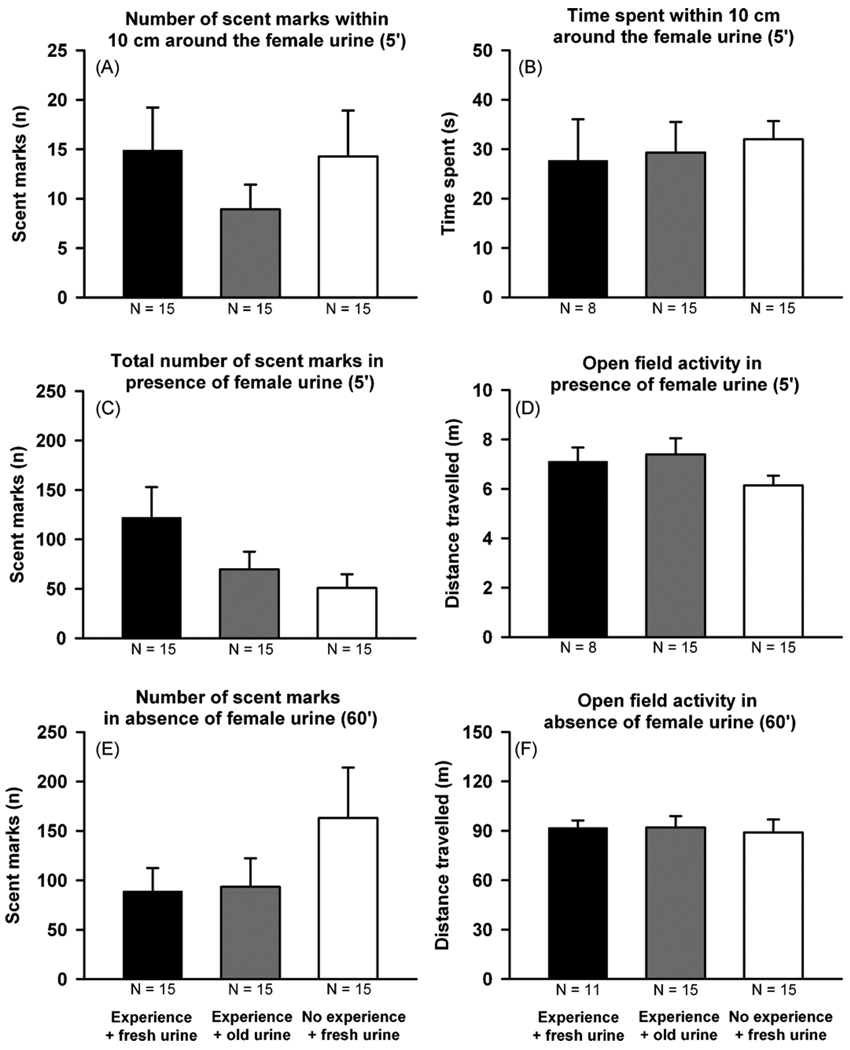
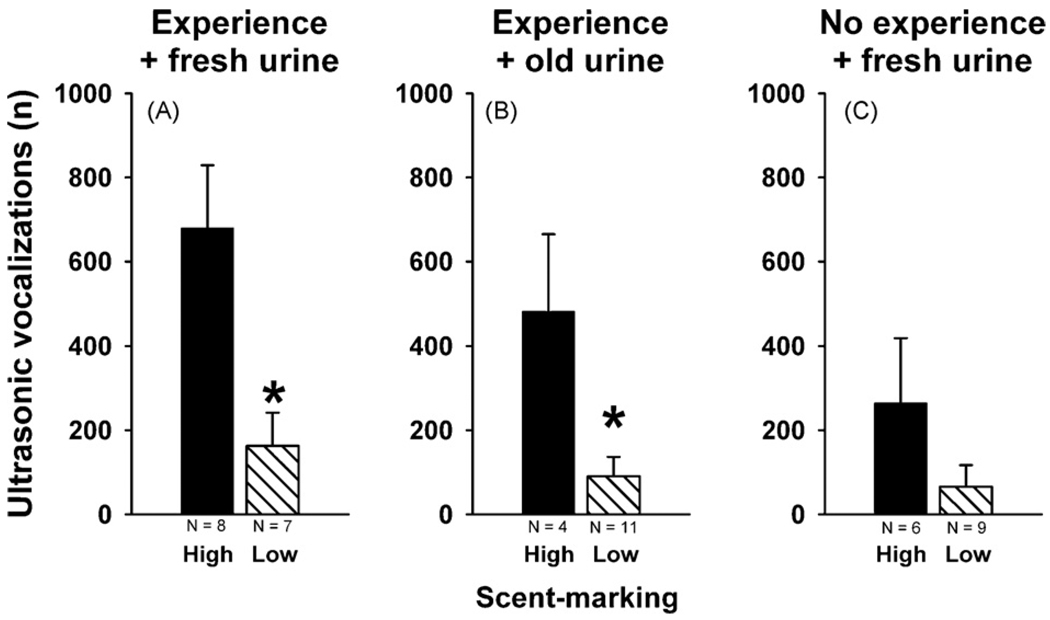
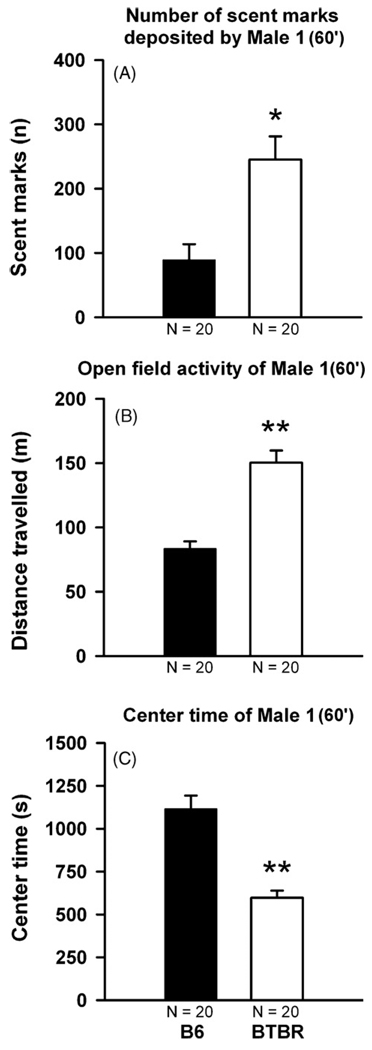
Despite the evidence for a communicative function of rodent scent marks and ultrasonic vocalizations, relatively little is known about the impact of social factors on these two forms of communication. Here, we tested the effects of two important social factors, prior exposure to a female and freshness of female urine, on male scent marks and ultrasonic vocalizations elicited by female urine. We also asked whether a recently reported strain difference between the highly social strain C57BL/6J (B6) and the mouse model of autism BTBR T+tf/J (BTBR) herein is specifically seen in response to female urine or also detectable in response to male urine traces. Results show that the emission of female urine-elicited ultrasonic vocalizations was dependent on previous female experience, while scent-marking behavior was not affected. A positive correlation was detected between scent-marking behavior and ultrasonic calling in the most biologically relevant context, male mice exposed to fresh female urine after female experience. Correlations were less prominent or missing in less biologically relevant contexts, e.g. in male mice exposed to fresh female urine without previous female experience, indicating that previous female experience is affecting both the emission of female urine-elicited ultrasonic vocalizations and the correlation between olfactory and acoustic communication. The strain difference in scent-marking behavior and ultrasonic calling between B6 and BTBR appears to be specific to female urine-elicited behavior as it was not seen in response to male urine traces, highlighting the relevance of the social context in which mouse communication is evaluated.
尽管啮齿动物气味标记和超声发声具有交际功能的证据确凿,但人们对这两种交流形式受社会因素影响的情况知之甚少。在这里,我们测试了两个重要的社会因素,即先前接触雌性和雌性尿液的新鲜度,对雄性气味标记和雌性尿液诱发的超声发声的影响。我们还询问了最近报道的高社交能力的 C57BL/6J(B6)品系和自闭症模型 BTBR T+tf/J(BTBR)品系之间的品系差异是否仅在对雌性尿液的反应中表现出来,还是也可在对雄性尿液痕迹的反应中检测到。结果表明,雌性尿液诱发的超声发声的发出取决于先前的雌性经验,而气味标记行为不受影响。在最具生物学相关性的背景下,即雄性小鼠在有雌性经验后接触新鲜雌性尿液时,检测到气味标记行为和超声叫声之间存在正相关。在不太具有生物学相关性的背景下,相关性不太明显或缺失,例如在雄性小鼠接触新鲜雌性尿液而无先前雌性经验的情况下,表明先前的雌性经验影响雌性尿液诱发的超声发声的发出和嗅觉与声学通讯之间的相关性。B6 和 BTBR 之间在气味标记行为和超声发声方面的品系差异似乎是雌性尿液诱发行为所特有的,因为在对雄性尿液痕迹的反应中没有观察到这种差异,突出了评估小鼠通讯时的社会背景的相关性。