Institute of Basic Medical Sciences, Department of Anatomy, University of Oslo, Oslo, Norway.
Immunogenetics. 2010 Aug;62(8):521-30. doi: 10.1007/s00251-010-0455-y. Epub 2010 Jun 11.
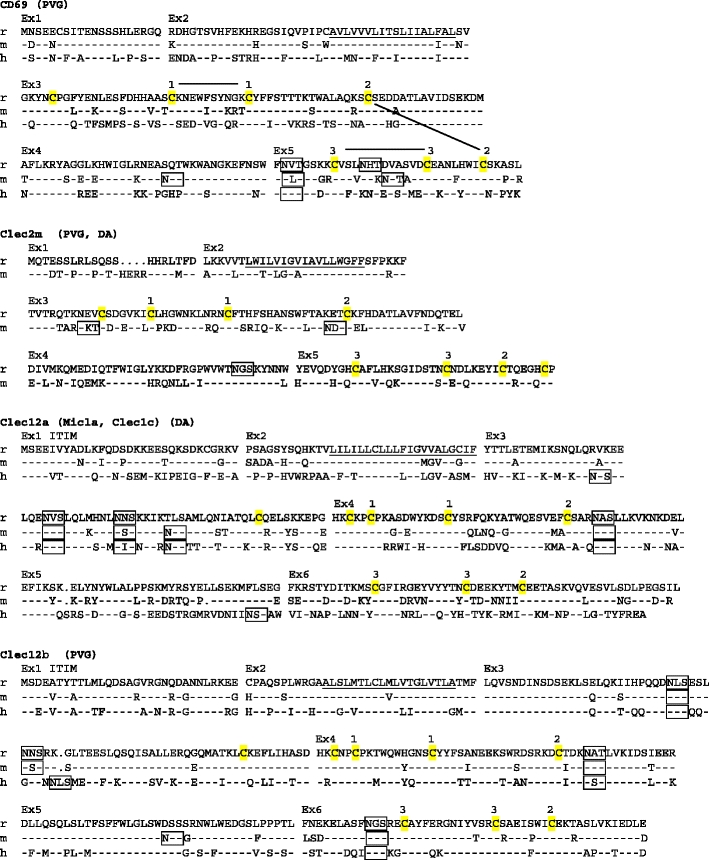
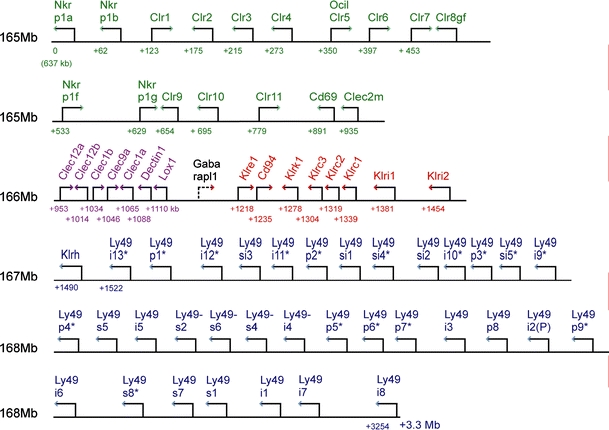
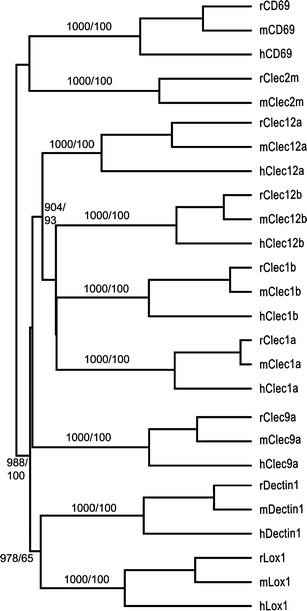
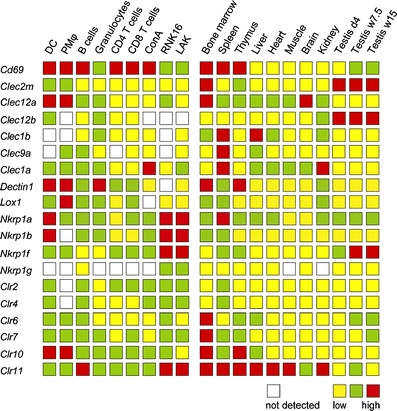
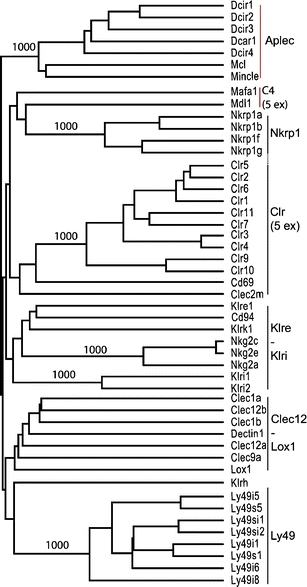
The natural killer cell gene complex (NKC) encodes receptors belonging to the C-type lectin superfamily expressed primarily by NK cells and other leukocytes. In the rat, the chromosomal region that starts with the Nkrp1a locus and ends with the Ly49i8 locus is predicted to contain 67 group V C-type lectin superfamily genes, making it one of the largest congregation of paralogous genes in vertebrates. Based on physical proximity and phylogenetic relationships between these genes, the rat NKC can be divided into four major parts. We have previously reported the cDNA cloning of the majority of the genes belonging to the centromeric Nkrp1/Clr cluster and the two telomeric groups, the Klre1-Klri2 and the Ly49 clusters. Here, we close the gap between the Nkrp1/Clr and the Klre1-Klri2 clusters by presenting the cDNA cloning and transcription patterns of eight genes spanning from Cd69 to Dectin1, including the novel Clec2m gene. The definition, organization, and evolution of the rat NKC are discussed.
自然杀伤细胞基因复合体(NKC)编码属于 C 型凝集素超家族的受体,主要由 NK 细胞和其他白细胞表达。在大鼠中,从 Nkrp1a 基因座开始到 Ly49i8 基因座结束的染色体区域预计包含 67 个 V 组 C 型凝集素超家族基因,使其成为脊椎动物中最大的基因簇之一。基于这些基因之间的物理接近度和系统发育关系,大鼠 NKC 可分为四个主要部分。我们之前已经报道了属于着丝粒 Nkrp1/Clr 簇和两个端粒群(KlrE1-KlrI2 和 Ly49 簇)的大多数基因的 cDNA 克隆。在这里,我们通过展示跨越从 Cd69 到 Dectin1 的八个基因的 cDNA 克隆和转录模式,包括新的 Clec2m 基因,填补了 Nkrp1/Clr 和 KlrE1-KlrI2 簇之间的空白。讨论了大鼠 NKC 的定义、组织和进化。