Schwartz John C, Gibson Mark S, Heimeier Dorothea, Koren Sergey, Phillippy Adam M, Bickhart Derek M, Smith Timothy P L, Medrano Juan F, Hammond John A
Livestock Viral Diseases Programme, The Pirbright Institute, Ash Road, Pirbright, Surrey, GU24 0NF, UK.
CEDOC, Faculdade de Ciências Médicas, Universidade Nova de Lisboa, 1150-082, Lisbon, Portugal.
Immunogenetics. 2017 Apr;69(4):255-269. doi: 10.1007/s00251-017-0973-y. Epub 2017 Feb 9.
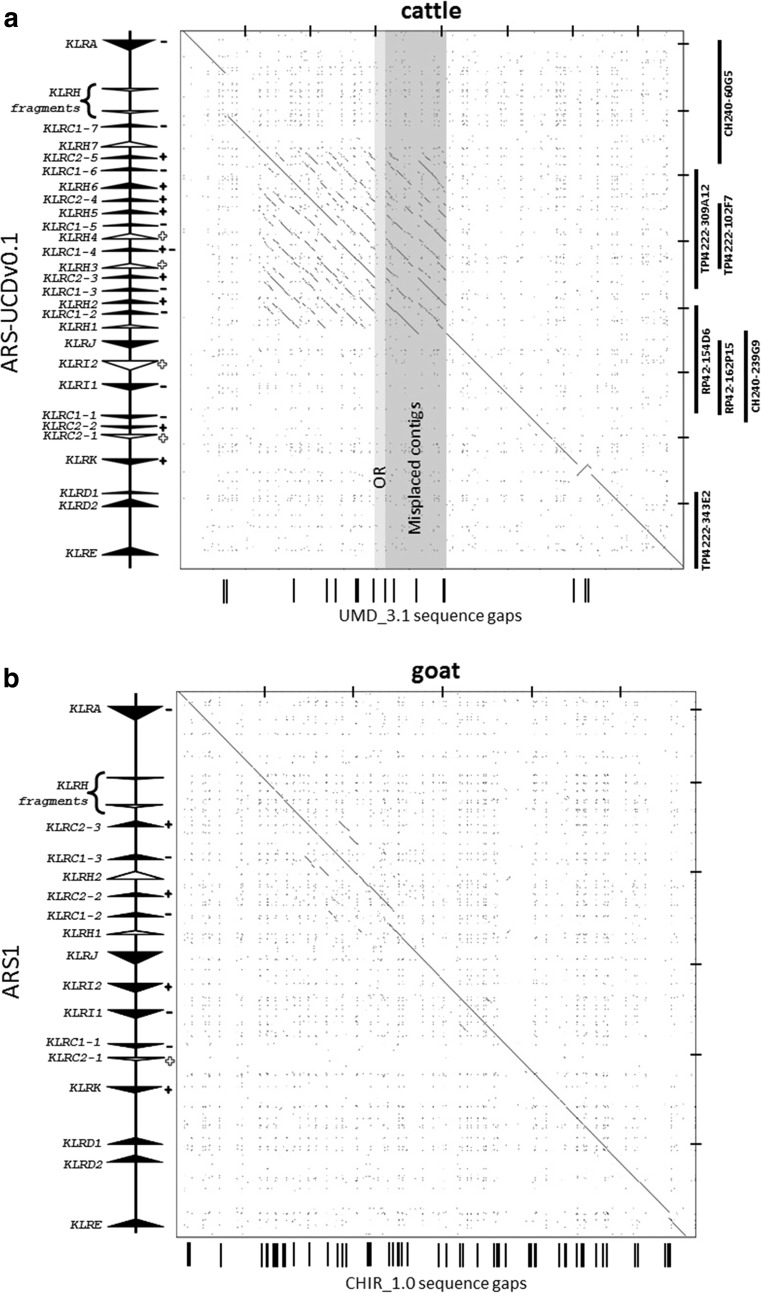
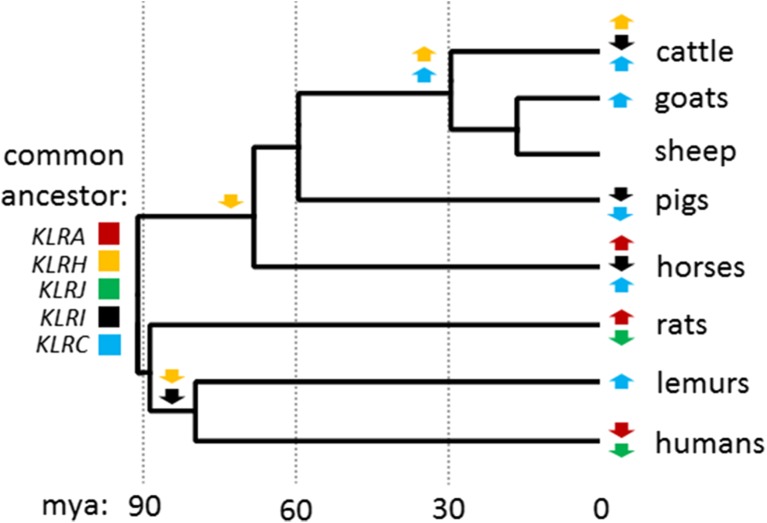
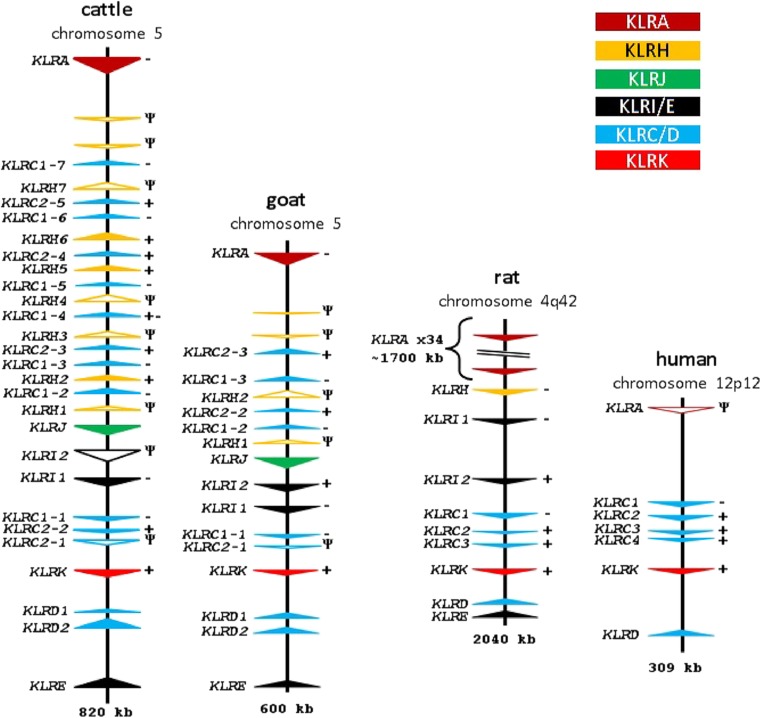
Natural killer (NK) cells are a diverse population of lymphocytes with a range of biological roles including essential immune functions. NK cell diversity is in part created by the differential expression of cell surface receptors which modulate activation and function, including multiple subfamilies of C-type lectin receptors encoded within the NK complex (NKC). Little is known about the gene content of the NKC beyond rodent and primate lineages, other than it appears to be extremely variable between mammalian groups. We compared the NKC structure between mammalian species using new high-quality draft genome assemblies for cattle and goat; re-annotated sheep, pig, and horse genome assemblies; and the published human, rat, and mouse lemur NKC. The major NKC genes are largely in the equivalent positions in all eight species, with significant independent expansions and deletions between species, allowing us to propose a model for NKC evolution during mammalian radiation. The ruminant species, cattle and goats, have independently evolved a second KLRC locus flanked by KLRA and KLRJ, and a novel KLRH-like gene has acquired an activating tail. This novel gene has duplicated several times within cattle, while other activating receptor genes have been selectively disrupted. Targeted genome enrichment in cattle identified varying levels of allelic polymorphism between the NKC genes concentrated in the predicted extracellular ligand-binding domains. This novel recombination and allelic polymorphism is consistent with NKC evolution under balancing selection, suggesting that this diversity influences individual immune responses and may impact on differential outcomes of pathogen infection and vaccination.
自然杀伤(NK)细胞是一类具有多种生物学功能的淋巴细胞群体,包括重要的免疫功能。NK细胞的多样性部分是由细胞表面受体的差异表达所产生的,这些受体调节细胞的激活和功能,包括NK复合体内编码的多个C型凝集素受体亚家族(NKC)。除了啮齿动物和灵长类谱系外,关于NKC的基因组成知之甚少,只知道它在哺乳动物群体之间似乎具有极大的变异性。我们使用牛和山羊的高质量新基因组草图组装、重新注释的绵羊、猪和马的基因组组装以及已发表的人类、大鼠和小鼠狐猴的NKC,比较了哺乳动物物种之间的NKC结构。在所有八个物种中,主要的NKC基因大多处于等效位置,但物种之间存在显著的独立扩增和缺失,这使我们能够提出一个哺乳动物辐射期间NKC进化的模型。反刍动物牛和山羊独立进化出了一个位于KLRA和KLRJ两侧的第二个KLRC基因座,并且一个新的KLRH样基因获得了一个激活尾巴。这个新基因在牛体内多次复制,而其他激活受体基因则被选择性破坏。牛的靶向基因组富集鉴定出集中在预测的细胞外配体结合域的NKC基因之间不同水平的等位基因多态性。这种新的重组和等位基因多态性与平衡选择下的NKC进化一致,表明这种多样性影响个体免疫反应,并可能影响病原体感染和疫苗接种的不同结果。