Department of Pharmacology, Toxicology and Therapeutics, University of Kansas Medical Center, Kansas City, KS 66160, USA.
J Pineal Res. 2010 Sep;49(2):106-14. doi: 10.1111/j.1600-079X.2010.00771.x. Epub 2010 May 27.
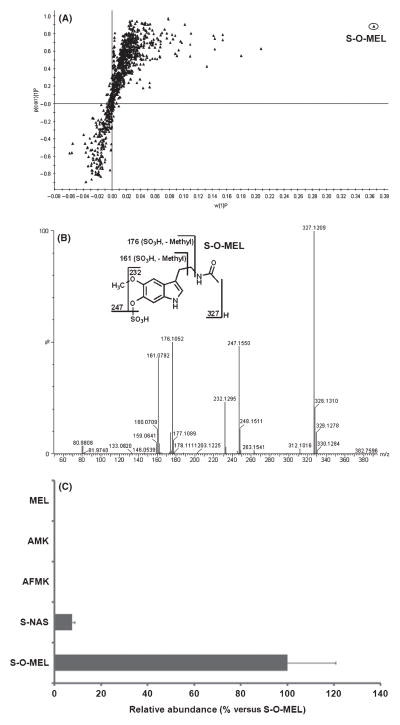
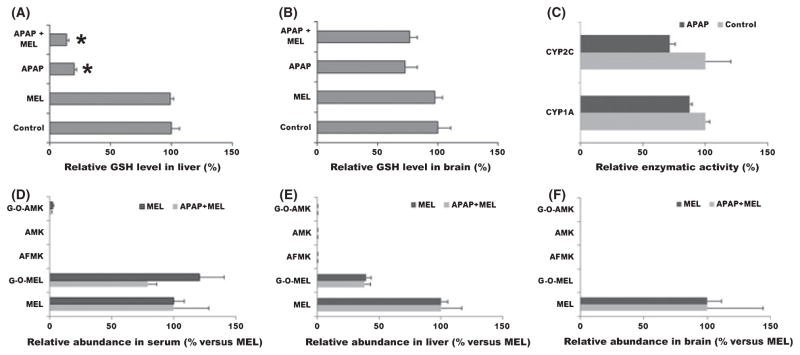
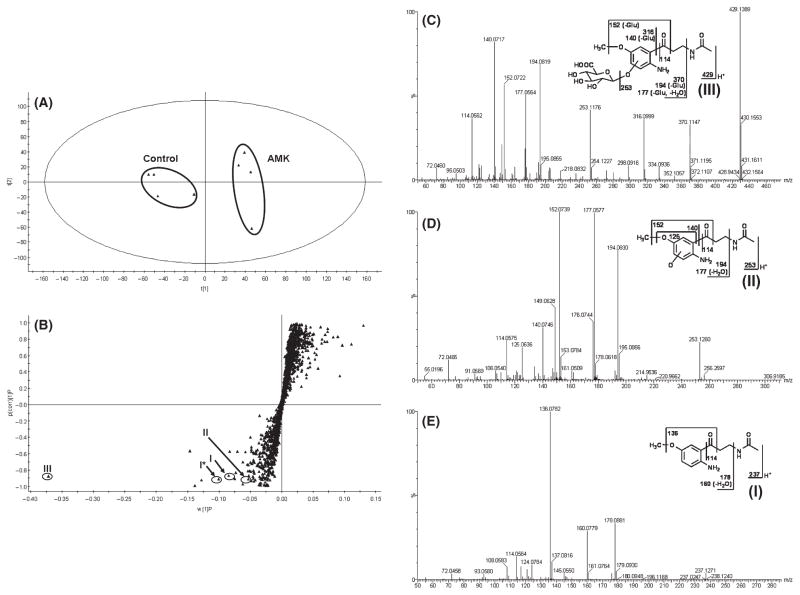
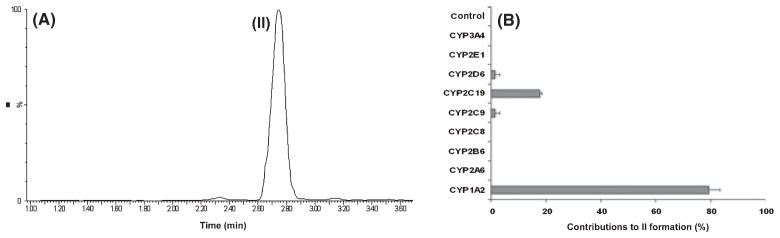
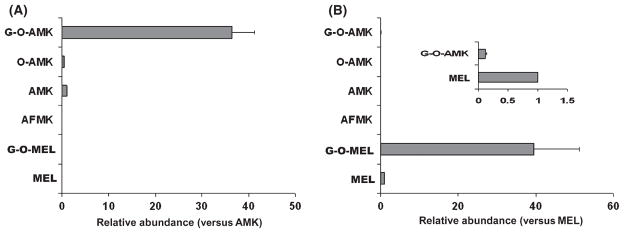
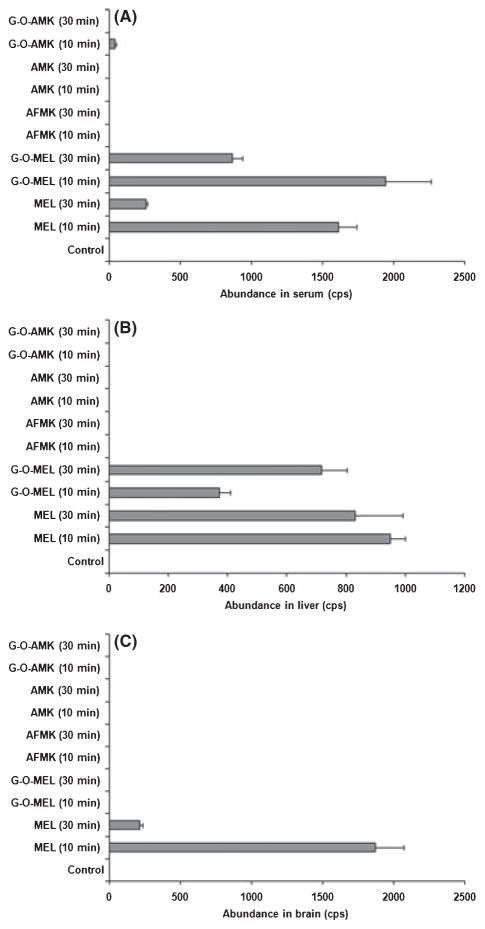
The interactions of melatonin, a potent endogenous antioxidant, with reactive oxygen species generate several products that include N(1)-acetyl-N(2)-formyl-5-methoxykynuramine (AFMK) and N(1)-acetyl-5-methoxy-kynuramine (AMK). The physiological or pathological significance of AFMK/AMK formation during the process of melatonin metabolism in mammals has not been clarified. Using a metabolomic approach in the current study, the AFMK/AMK pathway was thoroughly investigated both in mice and humans. Unexpectedly, AFMK and AMK were not identified in the urine of humans nor in the urine, feces or tissues (including liver, brain, and eyes) in mice under the current experimental conditions. Metabolomic analysis did identify novel metabolites of AMK, i.e. hydroxy-AMK and glucuronide-conjugated hydroxy-AMK. These two newly identified metabolites were, however, not found in the urine of humans. In addition, oxidative stress induced by acetaminophen in the mouse model did not boost AFMK/AMK formation. These data suggest that AFMK/AMK formation is not a significant pathway of melatonin disposition in mice, even under conditions of oxidative stress.
褪黑素是一种强效的内源性抗氧化剂,与活性氧相互作用会生成多种产物,包括 N(1)-乙酰基-N(2)-甲酰-5-甲氧基犬尿氨酸(AFMK)和 N(1)-乙酰基-5-甲氧基犬尿氨酸(AMK)。在哺乳动物的褪黑素代谢过程中,AFMK/AMK 形成的生理或病理意义尚不清楚。本研究采用代谢组学方法,在小鼠和人体中深入研究了 AFMK/AMK 途径。出乎意料的是,在当前的实验条件下,无论是在人体尿液中,还是在小鼠的尿液、粪便或组织(包括肝脏、大脑和眼睛)中,均未鉴定出 AFMK 和 AMK。代谢组学分析确实鉴定出 AMK 的两种新代谢物,即羟基-AMK 和葡萄糖醛酸结合的羟基-AMK。然而,这两种新鉴定的代谢物在人体尿液中并未发现。此外,在小鼠模型中,对乙酰氨基酚诱导的氧化应激并未促进 AFMK/AMK 的形成。这些数据表明,即使在氧化应激条件下,AFMK/AMK 的形成也不是褪黑素在小鼠体内处置的重要途径。