Johann Friedrich Blumenbach Institute of Zoology and Anthropology, University of Göttingen, Bürgerstr 50, D-37073 Göttingen, Germany.
Molecules. 2017 Nov 21;22(11):2015. doi: 10.3390/molecules22112015.
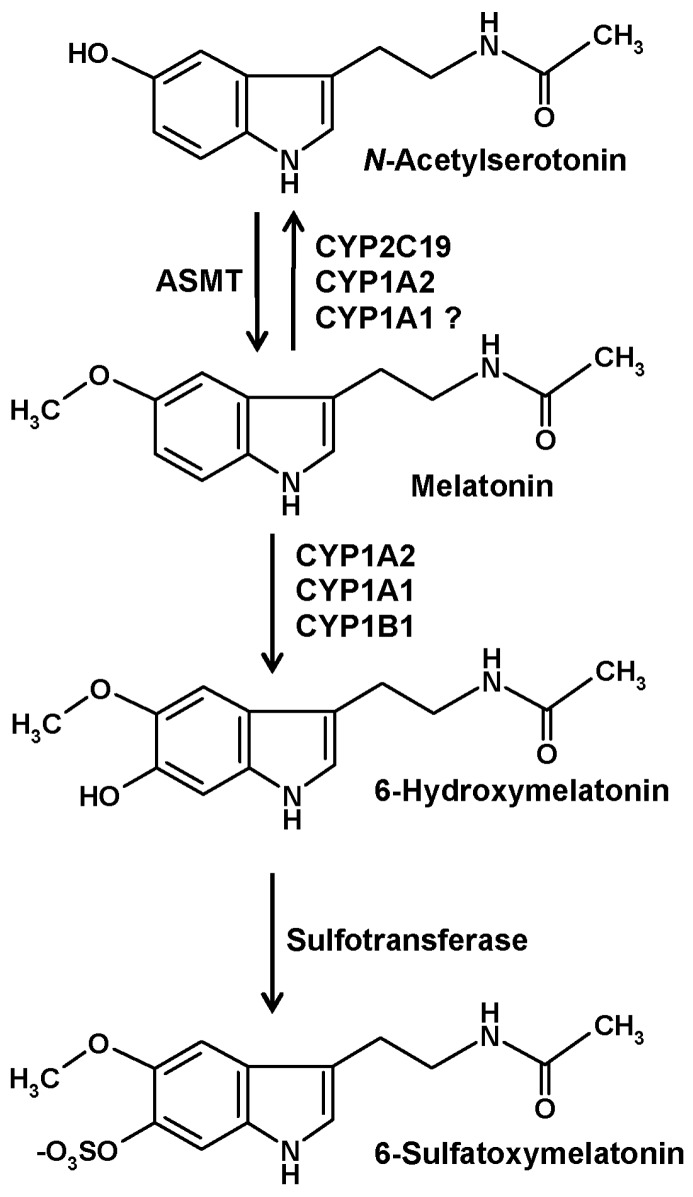
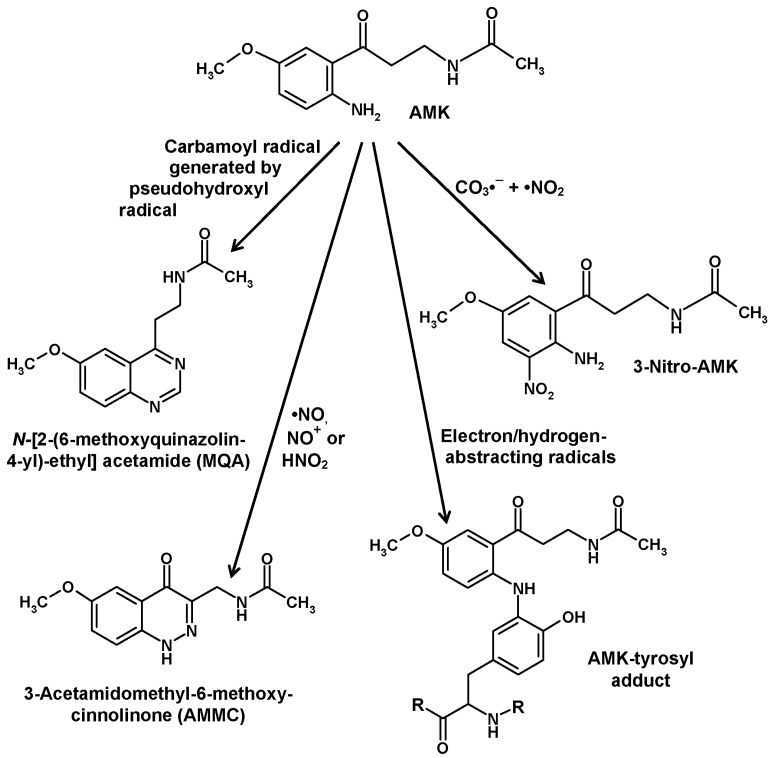
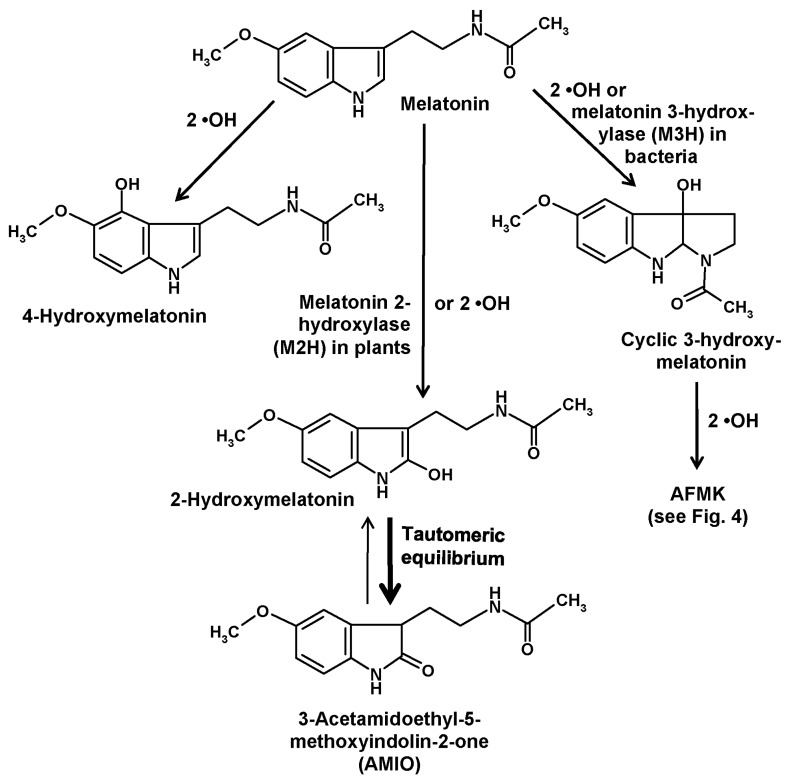
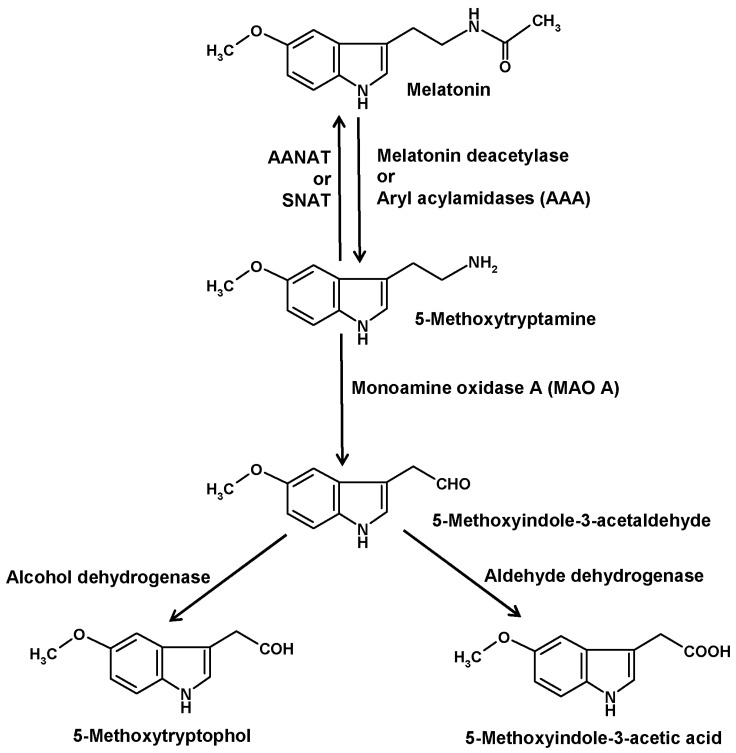
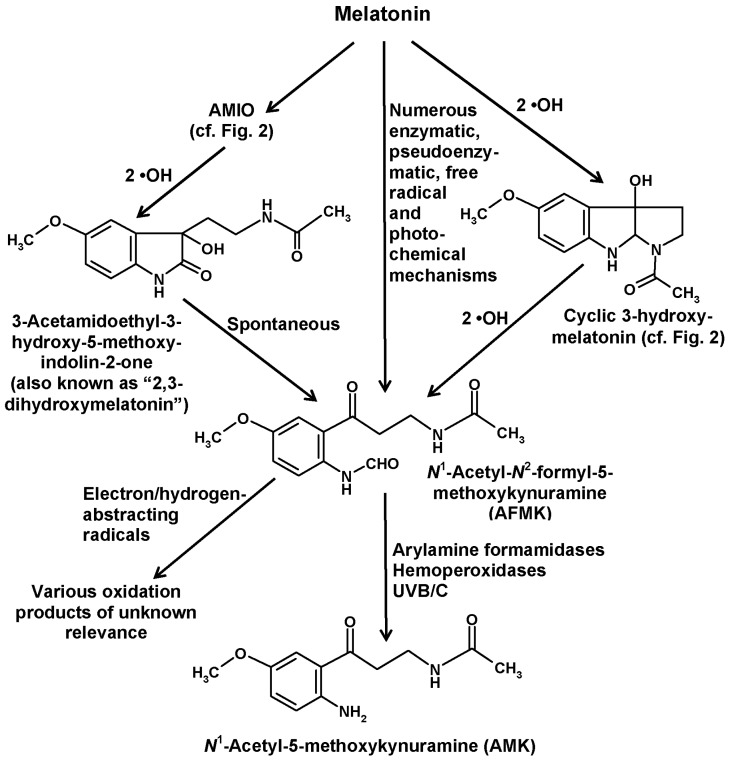
Melatonin is catabolized both enzymatically and nonenzymatically. Nonenzymatic processes mediated by free radicals, singlet oxygen, other reactive intermediates such as HOCl and peroxynitrite, or pseudoenzymatic mechanisms are not species- or tissue-specific, but vary considerably in their extent. Higher rates of nonenzymatic melatonin metabolism can be expected upon UV exposure, e.g., in plants and in the human skin. Additionally, melatonin is more strongly nonenzymatically degraded at sites of inflammation. Typical products are several hydroxylated derivatives of melatonin and ¹-acetyl-²-formyl-5-methoxykynuramine (AFMK). Most of these products are also formed by enzymatic catalysis. Considerable taxon- and site-specific differences are observed in the main enzymatic routes of catabolism. Formation of 6-hydroxymelatonin by cytochrome P subforms are prevailing in vertebrates, predominantly in the liver, but also in the brain. In pineal gland and non-mammalian retina, deacetylation to 5-methoxytryptamine (5-MT) plays a certain role. This pathway is quantitatively prevalent in dinoflagellates, in which 5-MT induces cyst formation and is further converted to 5-methoxyindole-3-acetic acid, an end product released to the water. In plants, the major route is catalyzed by melatonin 2-hydroxylase, whose product is tautomerized to 3-acetamidoethyl-3-hydroxy-5-methoxyindolin-2-one (AMIO), which exceeds the levels of melatonin. Formation and properties of various secondary products are discussed.
褪黑素既可以通过酶促反应也可以通过非酶促反应进行代谢分解。非酶促过程由自由基、单线态氧、其他活性中间体(如 HOCl 和过氧亚硝酸盐)或拟酶机制介导,这些过程不具有物种或组织特异性,但在程度上有很大差异。在受到紫外线照射时,如在植物和人体皮肤中,非酶促褪黑素代谢的速率会更高。此外,在炎症部位褪黑素的非酶促降解速度更快。典型的产物是褪黑素的几种羟化衍生物和 1-乙酰-2-甲酰-5-甲氧基色胺(AFMK)。这些产物中的大多数也是通过酶促催化形成的。在主要的代谢分解酶促途径中,观察到相当大的分类群和部位特异性差异。细胞色素 P 亚基形成 6-羟褪黑素在脊椎动物中占主导地位,主要在肝脏中,但也在大脑中。在松果腺和非哺乳动物视网膜中,脱乙酰化为 5-甲氧基色胺(5-MT)起着一定的作用。该途径在甲藻中占优势,在甲藻中 5-MT 诱导囊泡形成,并进一步转化为 5-甲氧基吲哚-3-乙酸,这是一种释放到水中的终产物。在植物中,主要途径由褪黑素 2-羟化酶催化,其产物转化为互变异构体 3-乙酰氨基乙基-3-羟基-5-甲氧基吲哚啉-2-酮(AMIO),其水平超过褪黑素。讨论了各种次级产物的形成和性质。