Adebayo A H, Tan N H, Akindahunsi A A, Zeng G Z, Zhang Y M
State Key Laboratory of Phytochemistry and Plant Resources in West China, Kunming Institute of Botany, Chinese Academy of Sciences, Kunming 650204, China.
Pharmacogn Mag. 2010 Jan;6(21):62-6. doi: 10.4103/0973-1296.59968. Epub 2010 Feb 13.
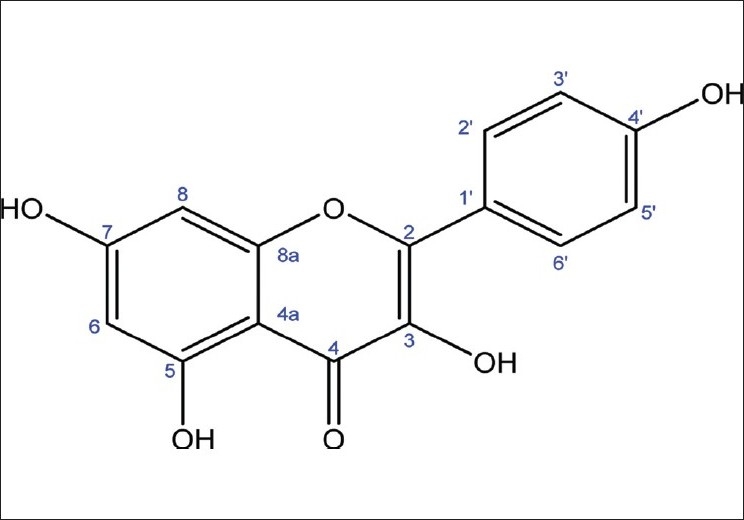
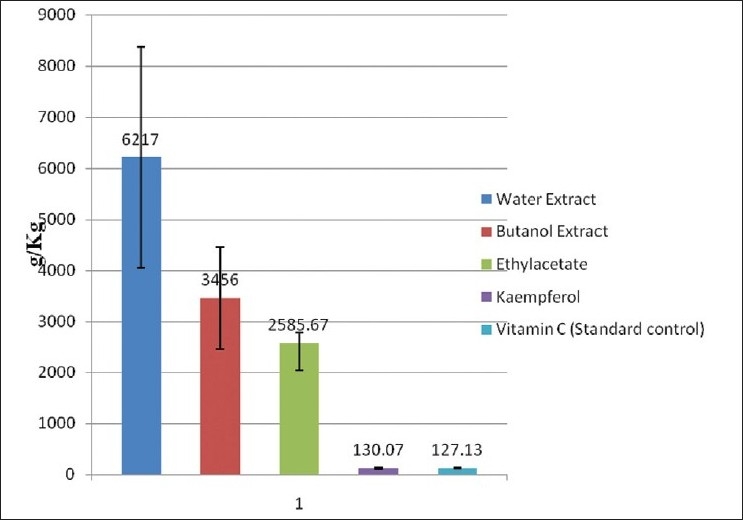
Ageratum conyzoides has been used in folklore for the treatment of a wide range of diseases. In the present investigation, the in vitro activity of ethanol, petroleum ether, ethylacetate, butanol, and water extracts of A. conyzoides were screened in some cancer cell lines using the sulphorhodamine B (SRB) assay. These cell lines include: Human non-small cell lung carcinoma (A-549), human colon adenocarcinoma (HT-29), human gastric carcinoma (SGC-7901), human golima (U-251), human breast carcinoma (MDA-MB-231), human prostate carcinoma (DU-145), human hepatic carcinoma (BEL-7402), and mouse leukemia (P-388) cancer cell lines. Furthermore, kaempferol was isolated from the ethylacetate extract and the structure was elucidated by nuclear magnetic resonance (NMR) and mass spectroscopy. The effect of DPPH antiradical activity on the extracts and kaempferol was also determined. The results showed that ethylacetate extract exhibited the highest cytotoxic activity on A-549 and P-388 cancer cells with IC(50) values of 0.68 and 0.0003 mug/ml, respectively. Kaempferol isolated from the ethylacetate extract of A. conyzoides rapidly scavenged DPPH at a concentration of 130.07 +/- 17.36 g/kg. The result therefore showed that A. conyzoides possessed anticancer and antiradical properties.
藿香蓟在民间一直被用于治疗多种疾病。在本研究中,使用磺酰罗丹明B(SRB)法在一些癌细胞系中筛选了藿香蓟的乙醇、石油醚、乙酸乙酯、丁醇和水提取物的体外活性。这些细胞系包括:人非小细胞肺癌(A-549)、人结肠腺癌(HT-29)、人胃癌(SGC-7901)、人胶质瘤(U-251)、人乳腺癌(MDA-MB-231)、人前列腺癌(DU-145)、人肝癌(BEL-7402)和小鼠白血病(P-388)癌细胞系。此外,从乙酸乙酯提取物中分离出了山奈酚,并通过核磁共振(NMR)和质谱对其结构进行了鉴定。还测定了提取物和山奈酚对DPPH抗自由基活性的影响。结果表明,乙酸乙酯提取物对A-549和P-388癌细胞表现出最高的细胞毒性活性,IC(50)值分别为0.68和0.0003微克/毫升。从藿香蓟乙酸乙酯提取物中分离出的山奈酚在浓度为130.07 +/- 17.36克/千克时能迅速清除DPPH。因此,结果表明藿香蓟具有抗癌和抗自由基特性。