Columbia University, International Centre for AIDS Care and Treatment Programs ICAP, Dar es salaam, Tanzania.
BMC Pediatr. 2010 Jun 17;10:44. doi: 10.1186/1471-2431-10-44.
In Tanzania, less than a third of HIV infected children estimated to be in need of antiretroviral therapy (ART) are receiving it. In this setting where other infections and malnutrition mimic signs and symptoms of AIDS, early diagnosis of HIV among HIV-exposed infants without specialized virologic testing can be a complex process. We aimed to introduce an Early Infant Diagnosis (EID) pilot program using HIV DNA Polymerase Chain Reaction (PCR) testing with the intent of making EID nationally available based on lessons learned in the first 6 months of implementation.
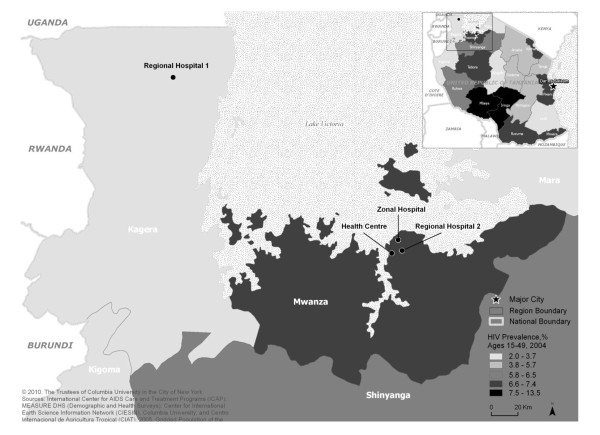
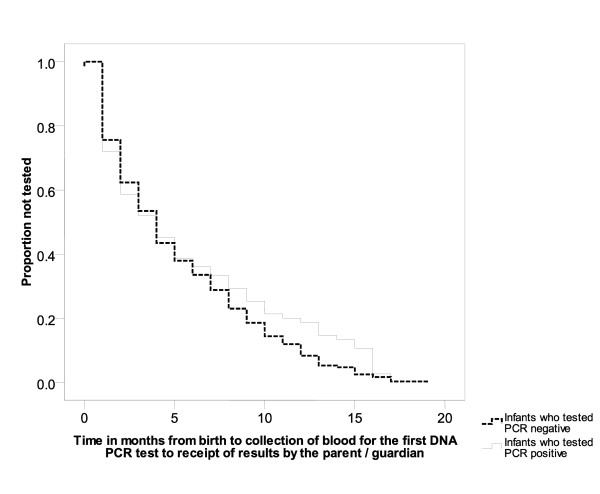
In September 2006, a molecular biology laboratory at Bugando Medical Center was established in order to perform HIV DNA PCR testing using Dried Blood Spots (DBS). Ninety-six health workers from 4 health facilities were trained in the identification and care of HIV-exposed infants, HIV testing algorithms and collection of DBS samples. Paper-based tracking systems for monitoring the program that fed into a simple electronic database were introduced at the sites and in the laboratory. Time from birth to first HIV DNA PCR testing and to receipt of test results were assessed using Kaplan-Meier curves.
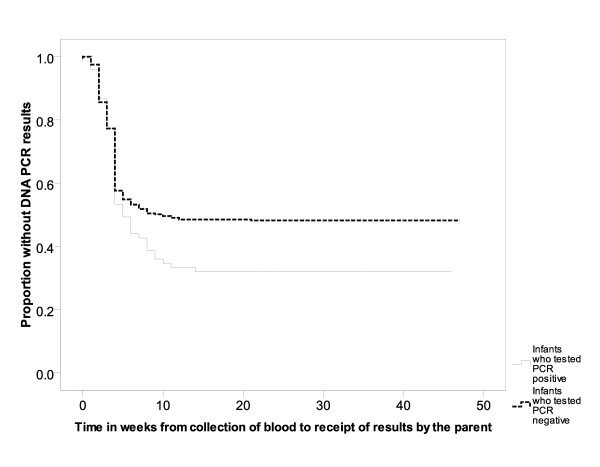
From October 2006 to March 2007, 510 HIV-exposed infants were identified from the 4 health facilities. Of these, 441(87%) infants had an HIV DNA PCR test at a median age of 4 months (IQR 1 to 8 months) and 75(17%) were PCR positive. Parents/guardians for a total of 242(55%) HIV-exposed infants returned to receive PCR test results, including 51/75 (68%) of those PCR positive, 187/361 (52%) of the PCR negative, and 4/5 (80%) of those with indeterminate PCR results. The median time between blood draw for PCR testing and receipt of test results by the parent or guardian was 5 weeks (range <1 week to 14 weeks) among children who tested PCR positive and 10 weeks (range <1 week to 21 weeks) for those that tested PCR negative.
The EID pilot program successfully introduced systems for identification of HIV-exposed infants. There was a high response as hundreds of HIV-exposed infants were registered and tested in a 6 month period. Challenges included the large proportion of parents not returning for PCR test results. Experience from the pilot phase has informed the national roll-out of the EID program currently underway in Tanzania.
在坦桑尼亚,估计有不到三分之一的艾滋病毒感染儿童需要接受抗逆转录病毒治疗(ART),但实际上只有不到三分之一的儿童接受了治疗。在这种情况下,其他感染和营养不良会模仿艾滋病的症状和体征,因此,在没有专门的病毒学检测的情况下,对艾滋病毒暴露婴儿进行早期艾滋病毒诊断可能是一个复杂的过程。我们旨在引入一个早期婴儿诊断(EID)试点计划,使用 HIV DNA 聚合酶链反应(PCR)检测,目的是在实施的头 6 个月中吸取经验教训后,使 EID 在全国范围内普及。
2006 年 9 月,在布加迪医疗中心建立了一个分子生物学实验室,以便使用干血斑(DBS)进行 HIV DNA PCR 检测。来自 4 家医疗机构的 96 名卫生工作者接受了 HIV 暴露婴儿的识别和护理、HIV 检测算法以及 DBS 样本采集方面的培训。在现场和实验室引入了纸质跟踪系统,用于监测该计划,并将其输入一个简单的电子数据库。使用 Kaplan-Meier 曲线评估从出生到首次进行 HIV DNA PCR 检测以及收到检测结果的时间。
从 2006 年 10 月至 2007 年 3 月,从 4 家医疗机构共发现了 510 名 HIV 暴露婴儿。其中,441 名(87%)婴儿在 4 个月时中位数年龄(IQR 1 至 8 个月)进行了 HIV DNA PCR 检测,其中 75 名(17%)检测结果为阳性。总共 242 名(55%)HIV 暴露婴儿的父母/监护人返回接受 PCR 检测结果,其中包括 75 名阳性 PCR 结果的 51 名(68%),361 名阴性 PCR 结果的 187 名(52%)和 5 名不确定 PCR 结果的 4 名(80%)。在接受检测的阳性儿童中,从进行 PCR 检测到父母或监护人收到检测结果的中位数时间为 5 周(<1 周至 14 周),而在接受检测的阴性儿童中,这一时间为 10 周(<1 周至 21 周)。
EID 试点计划成功引入了识别 HIV 暴露婴儿的系统。在 6 个月的时间内,有数百名 HIV 暴露婴儿被登记并接受了检测,这一计划取得了很高的响应率。面临的挑战包括大量父母未返回获取 PCR 检测结果。试点阶段的经验为目前正在坦桑尼亚开展的 EID 计划的全国推广提供了信息。