MRC Centre for Developmental Neurobiology, King's College, London, UK.
Neural Dev. 2010 Jun 22;5:16. doi: 10.1186/1749-8104-5-16.
In the developing hindbrain, cranial motor axon guidance depends on diffusible repellent factors produced by the floor plate. Our previous studies have suggested that candidate molecules for mediating this effect are Slits, Netrin-1 and Semaphorin3A (Sema3A). It is unknown to what extent these factors contribute to floor plate-derived chemorepulsion of motor axons, and the downstream signalling pathways are largely unclear.
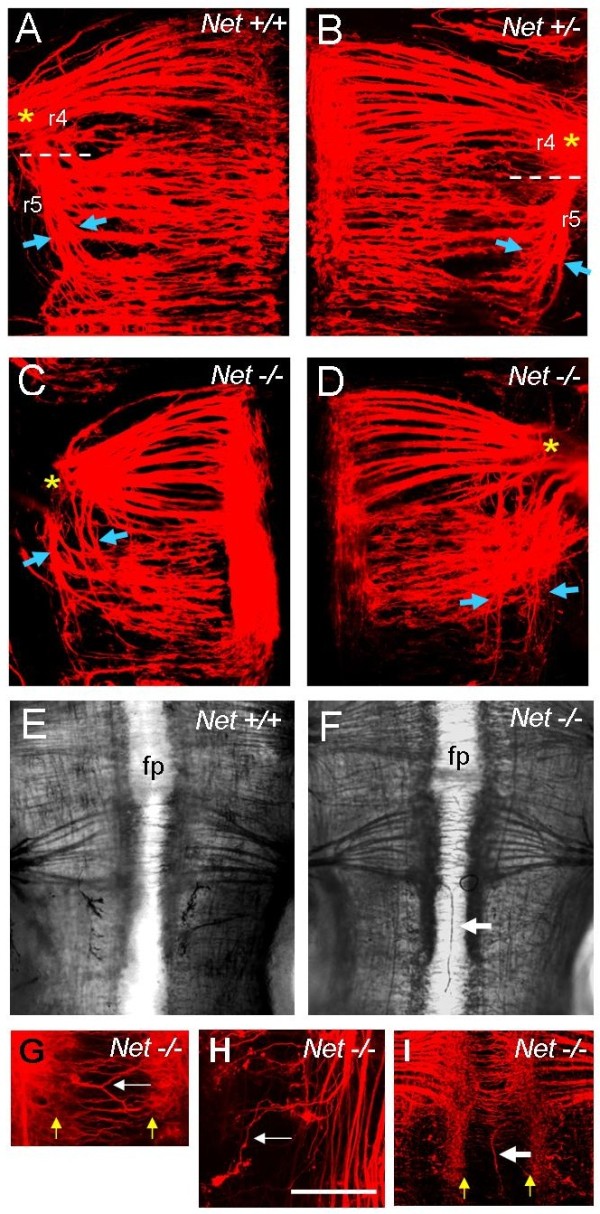
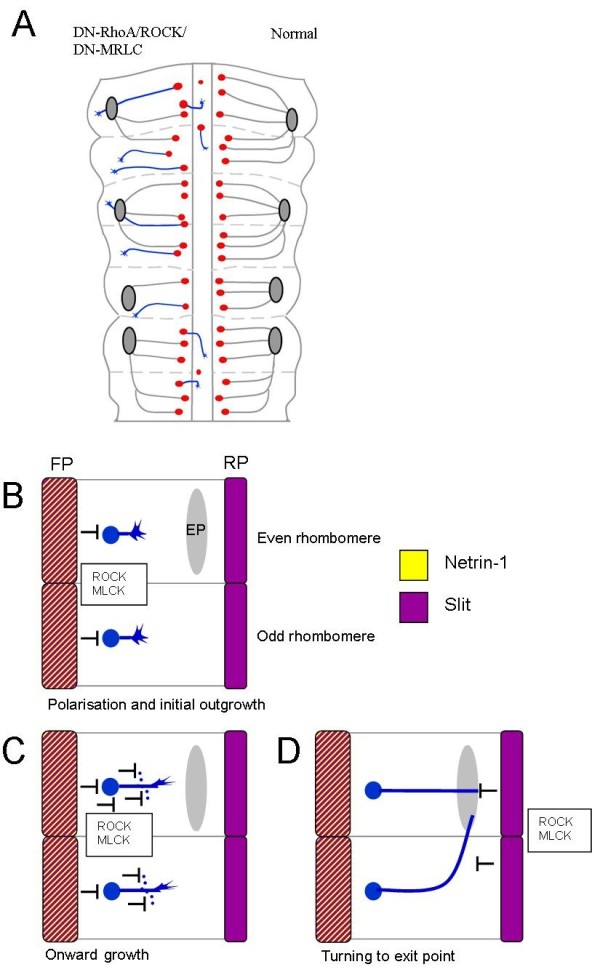
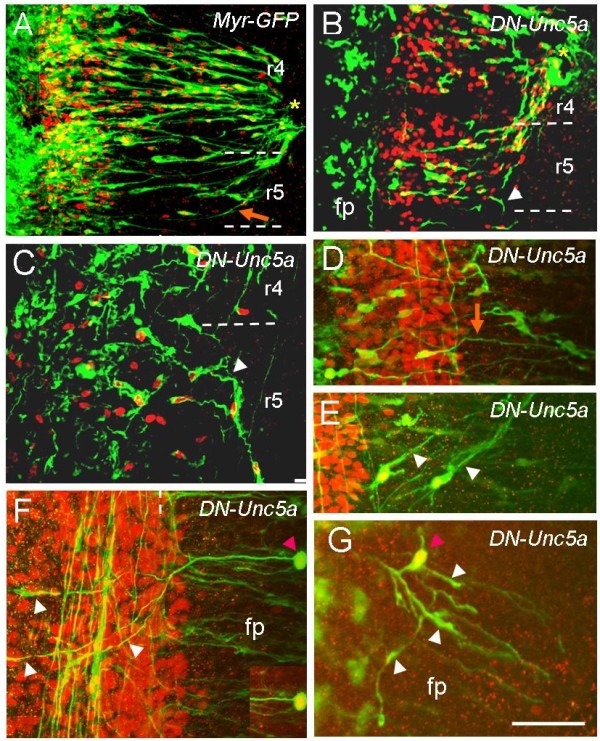
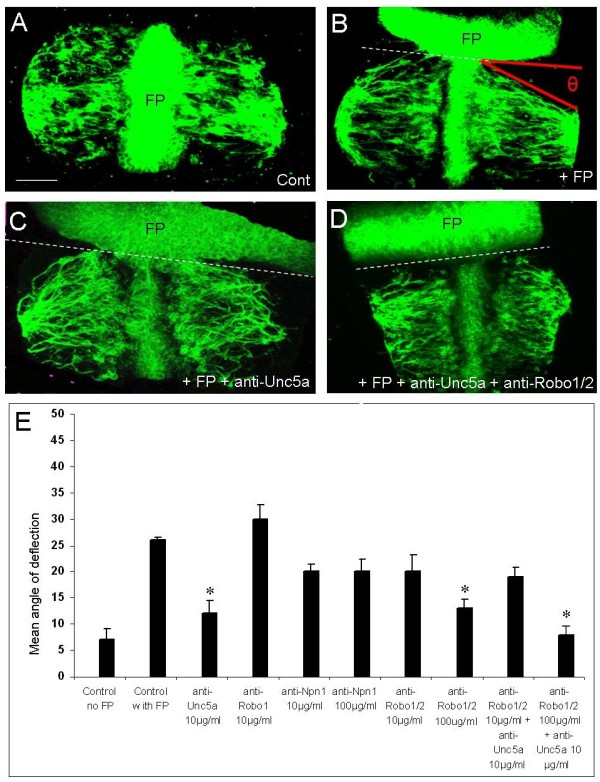
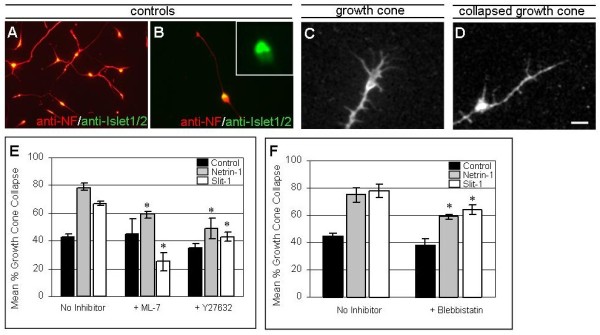
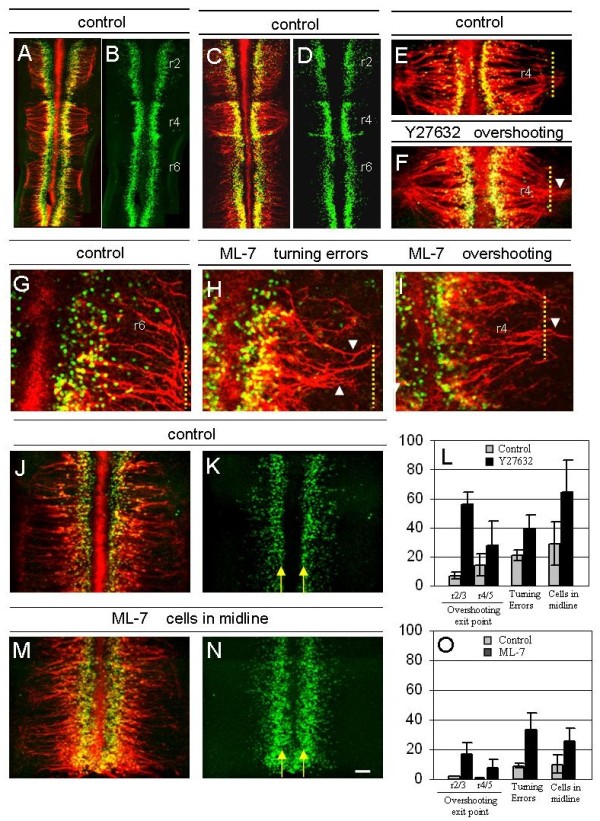
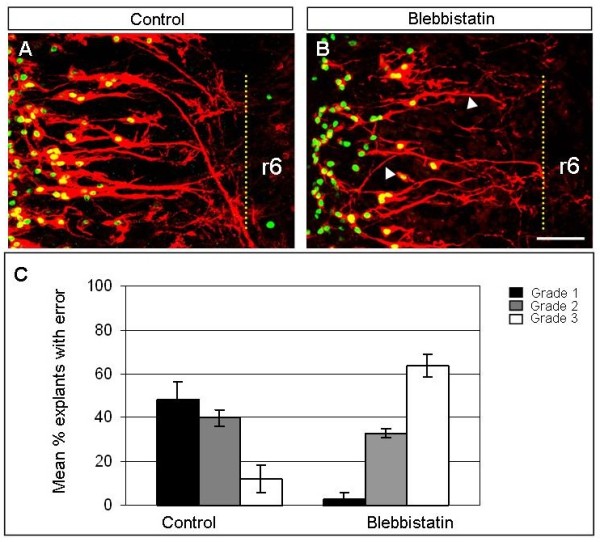
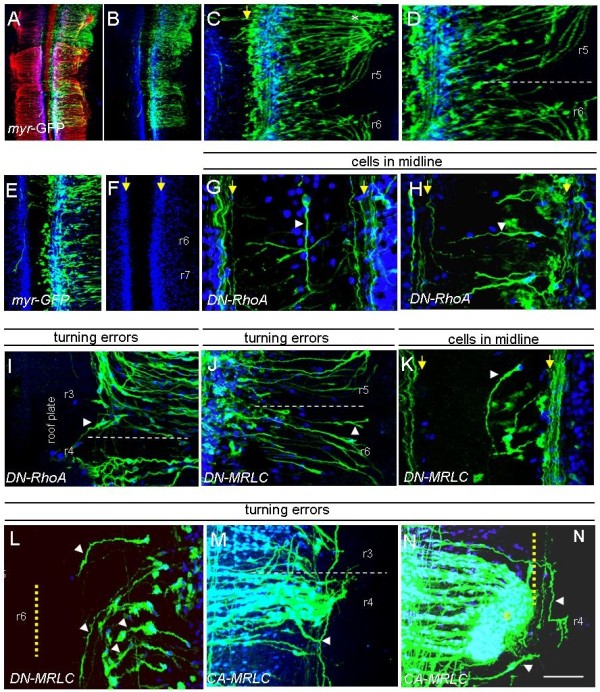
In this study, we have used a combination of in vitro and in vivo approaches to identify the components of floor plate chemorepulsion and their downstream signalling pathways. Using in vitro motor axon deflection assays, we demonstrate that Slits and Netrin-1, but not Sema3A, contribute to floor plate repulsion. We also find that the axon pathways of dorsally projecting branchiomotor neurons are disrupted in Netrin-1 mutant mice and in chick embryos expressing dominant-negative Unc5a receptors, indicating an in vivo role for Netrin-1. We further demonstrate that Slit and Netrin-1 signalling are mediated by Rho-kinase (ROCK) and myosin light chain kinase (MLCK), which regulate myosin II activity, controlling actin retrograde flow in the growth cone. We show that MLCK, ROCK and myosin II are required for Slit and Netrin-1-mediated growth cone collapse of cranial motor axons. Inhibition of these molecules in explant cultures, or genetic manipulation of RhoA or myosin II function in vivo causes characteristic cranial motor axon pathfinding errors, including the inability to exit the midline, and loss of turning towards exit points.
Our findings suggest that both Slits and Netrin-1 contribute to floor plate-derived chemorepulsion of cranial motor axons. They further indicate that RhoA/ROCK, MLCK and myosin II are components of Slit and Netrin-1 signalling pathways, and suggest that these pathways are of key importance in cranial motor axon navigation.
在发育中的后脑,颅神经轴突的导向取决于由基板产生的可扩散的排斥因子。我们之前的研究表明,介导这种效应的候选分子是 Slit、Netrin-1 和 Semaphorin3A(Sema3A)。目前尚不清楚这些因子在多大程度上促进了基板衍生的运动轴突的化学排斥作用,而且下游信号通路在很大程度上尚不清楚。
在这项研究中,我们结合了体外和体内方法来鉴定基板化学排斥的组成部分及其下游信号通路。通过体外运动轴突偏折测定,我们证明 Slit 和 Netrin-1,但不是 Sema3A,有助于基板的排斥。我们还发现,在 Netrin-1 突变小鼠和表达显性负性 Unc5a 受体的鸡胚中,背向投射的鳃运动神经元的轴突通路被破坏,这表明 Netrin-1 在体内具有作用。我们进一步证明 Slit 和 Netrin-1 信号转导是由 Rho-kinase(ROCK)和肌球蛋白轻链激酶(MLCK)介导的,它们调节肌球蛋白 II 的活性,控制生长锥中的肌动蛋白逆行流动。我们表明,Slit 和 Netrin-1 介导的颅神经运动轴突生长锥塌陷需要 MLCK、ROCK 和肌球蛋白 II。在离体培养物中抑制这些分子,或体内遗传操纵 RhoA 或肌球蛋白 II 的功能,会导致典型的颅神经运动轴突寻路错误,包括无法离开中线,以及失去转向出口点的能力。
我们的研究结果表明,Slit 和 Netrin-1 都有助于基板衍生的颅神经运动轴突的化学排斥作用。它们进一步表明,RhoA/ROCK、MLCK 和肌球蛋白 II 是 Slit 和 Netrin-1 信号通路的组成部分,并表明这些通路对颅神经运动轴突导航具有关键重要性。