Department of Behavioral Neuroscience, Oregon Health & Science University, Portland, Oregon 97239, USA.
Alcohol Clin Exp Res. 2010 Sep 1;34(9):1590-602. doi: 10.1111/j.1530-0277.2010.01244.x. Epub 2010 Jun 25.
Youth with family history of alcohol abuse have a greater risk of developing an alcohol use disorder (AUD). Brain and behavior differences may underlie this increased vulnerability. The current study examined delay discounting behavior and white matter microstructure in youth at high risk for alcohol abuse, as determined by a family history of alcoholism (FH+), and youth without such family history (FH-).
Thirty-three healthy youth (FH+ = 15, FH- = 18), ages 11 to 15 years, completed a delay discounting task and underwent diffusion tensor imaging. Tract-based spatial statistics (Smith et al., 2006), as well as follow-up region-of-interest analyses, were performed to compare fractional anisotropy (FA) between FH+ and FH- youth.
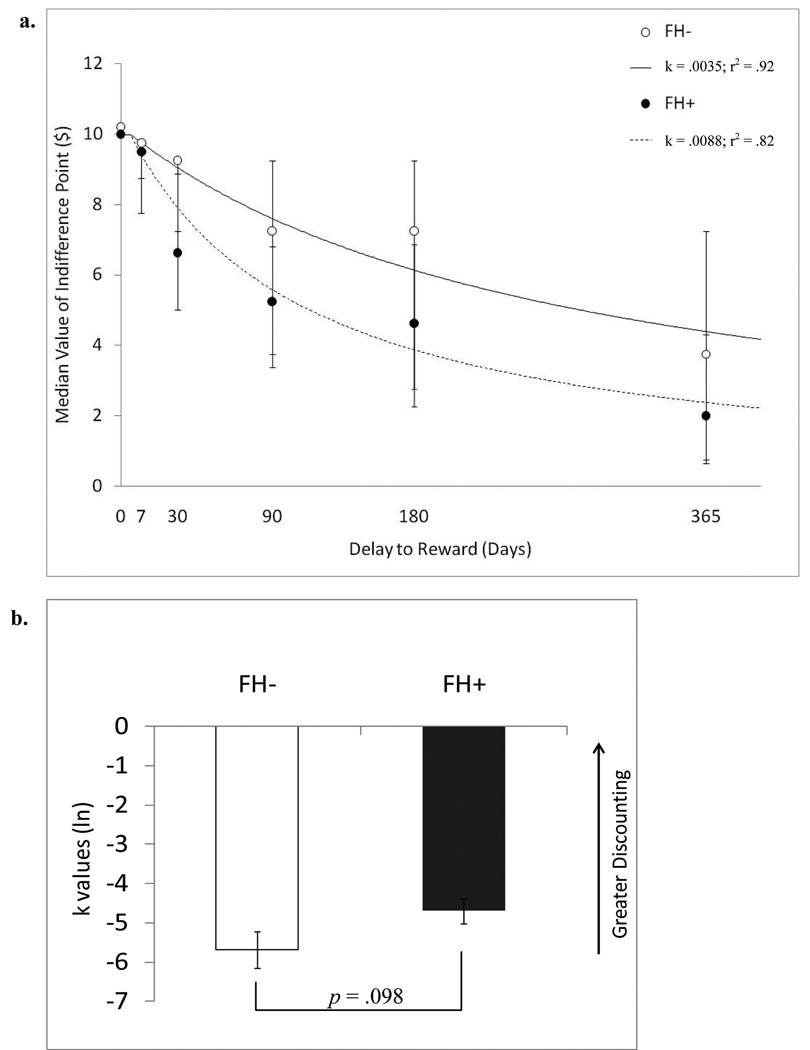
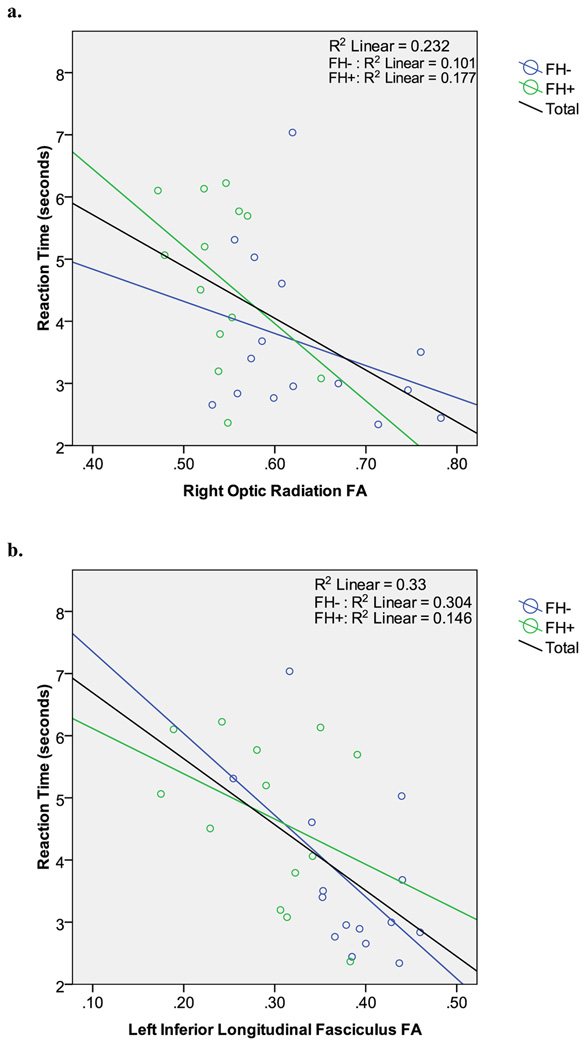
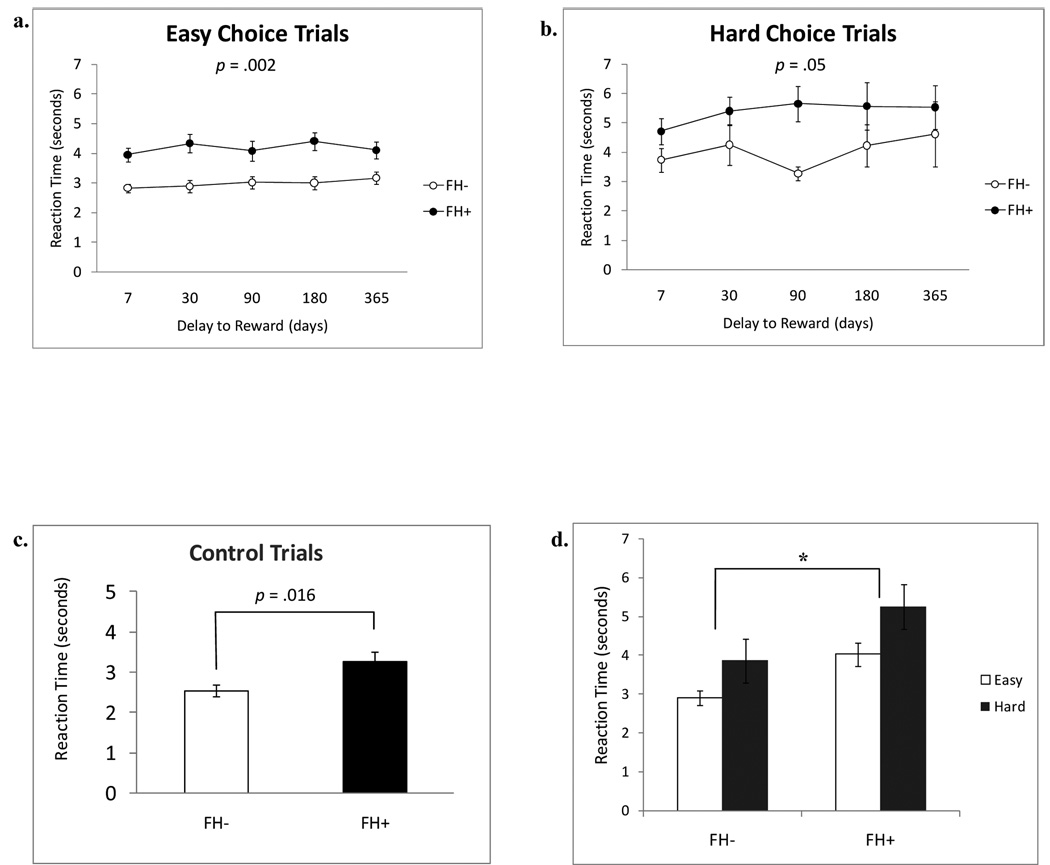
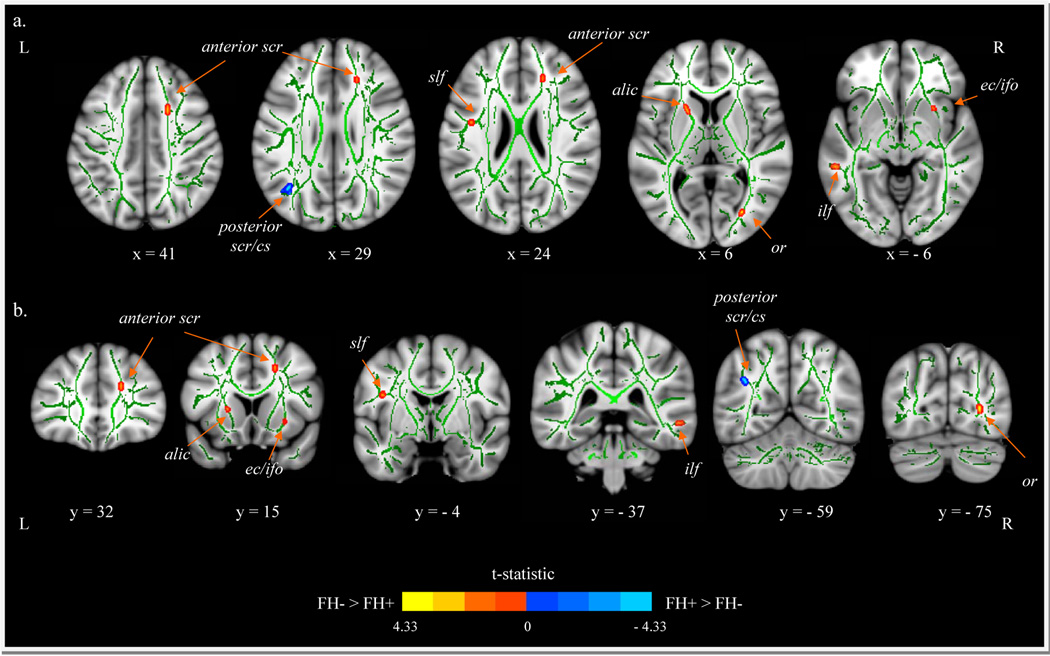
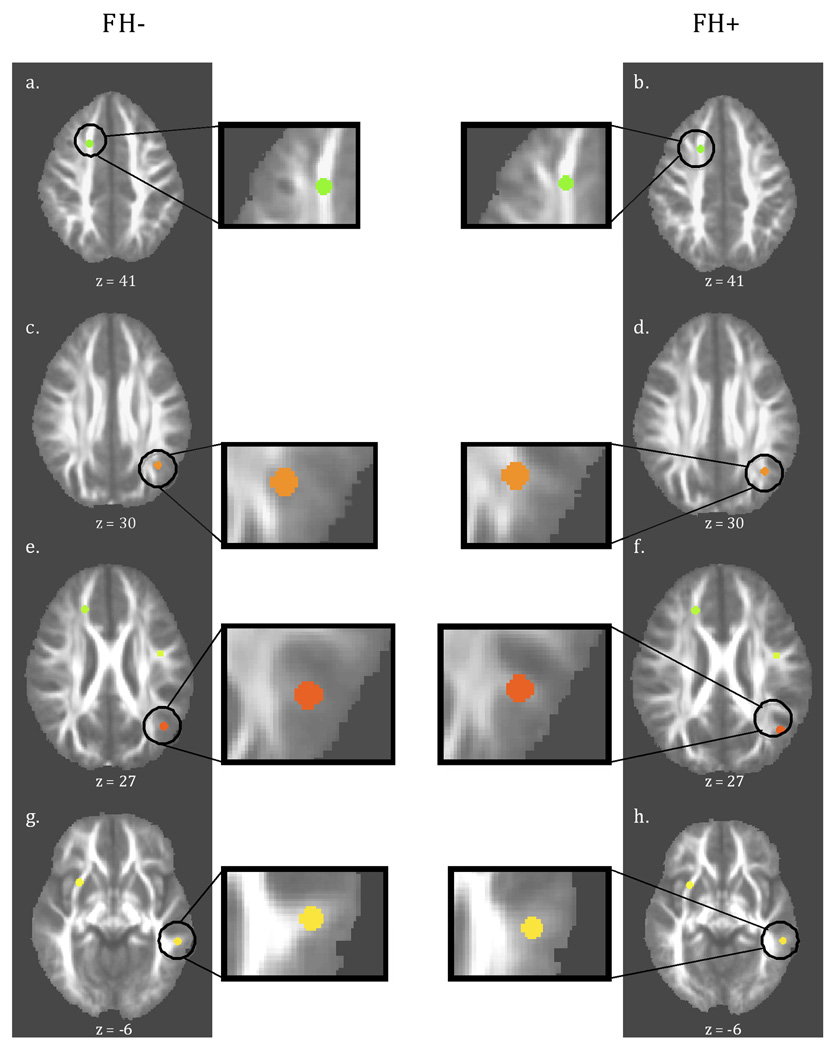
FH+ youth showed a trend toward increased discounting behavior and had significantly slower reaction times (RTs) on the delay discounting paradigm compared to FH- youth. Group differences in FA were seen in several white matter tracts. Furthermore, lower FA in the left inferior longitudinal fasciculus and the right optic radiation statistically mediated the relationship between FH status and slower RTs on the delay discounting task.
Youth with a family history of substance abuse have disrupted white matter microstructure, which likely contributes to less efficient cortical processing and may act as an intrinsic risk factor contributing to an increased susceptibility of developing AUD. In addition, FHP youth showed a trend toward greater impulsive decision making, possibly representing an inherent personal characteristic that may facilitate substance use onset and abuse in high-risk youth.
有酗酒家族史的年轻人患酒精使用障碍(AUD)的风险更大。大脑和行为的差异可能是这种易感性增加的基础。本研究通过酒精滥用家族史(FH+)和无此类家族史的年轻人(FH-),检测了高危酒精滥用青年的延迟折扣行为和白质微观结构。
33 名健康青少年(FH+ = 15,FH- = 18),年龄 11 至 15 岁,完成了延迟折扣任务并接受了弥散张量成像。采用基于体素的空间统计学(Smith 等人,2006 年)以及后续的感兴趣区域分析,比较 FH+和 FH-青年之间的分数各向异性(FA)。
FH+青年的折扣行为呈增加趋势,在延迟折扣范式上的反应时间(RT)明显慢于 FH-青年。在几个白质束中观察到 FA 的组间差异。此外,左下纵束和右视辐射的 FA 值较低,在 FH 状态与延迟折扣任务上 RT 较慢之间的关系中具有统计学意义。
有物质滥用家族史的年轻人的白质微观结构受到破坏,这可能导致皮质处理效率降低,并可能成为易患 AUD 的内在风险因素。此外,FHP 青年表现出冲动决策的趋势,这可能代表一种内在的个人特征,可能促进高危青年的物质使用开始和滥用。