Institute of Medicine, Hematology Section, University of Bergen, Haukeland University Hospital, N-5021 Bergen, Norway.
Genome Med. 2010 Jun 29;2(6):41. doi: 10.1186/gm162.
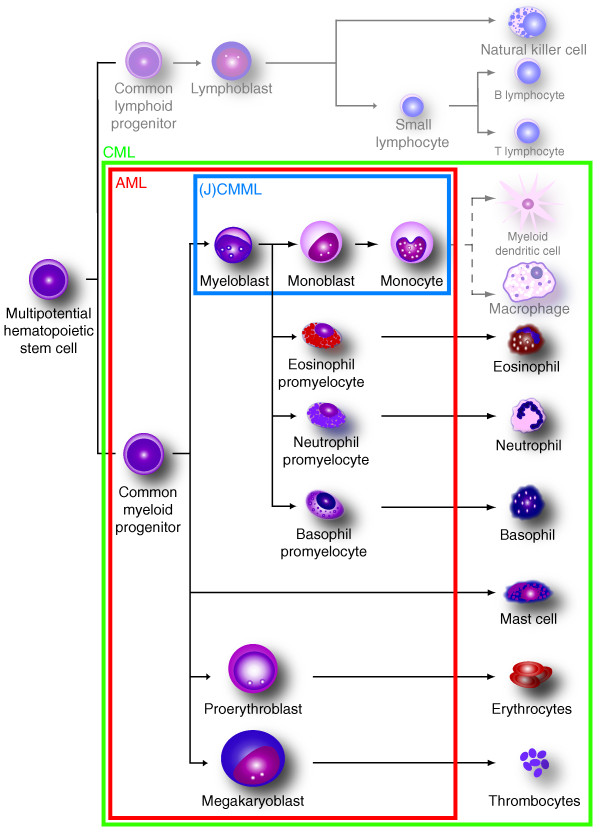
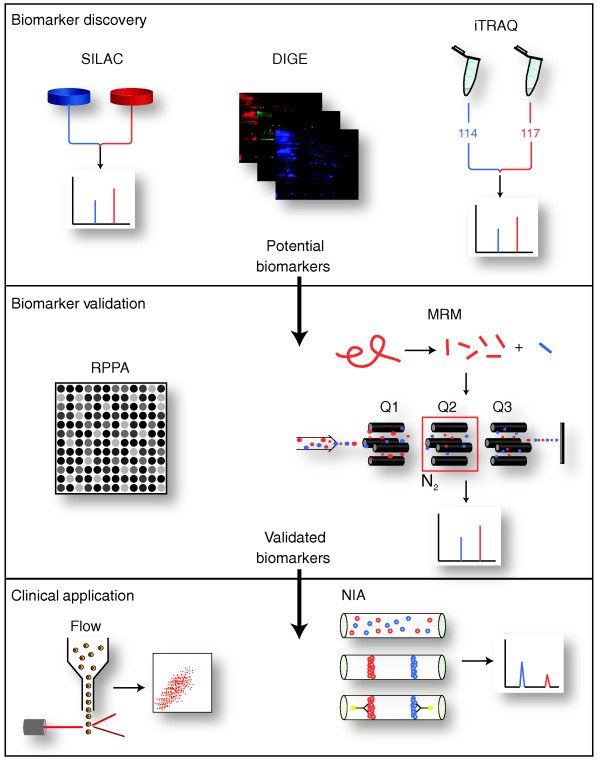
Myeloid leukemias are a heterogeneous group of diseases originating from bone marrow myeloid progenitor cells. Patients with myeloid leukemias can achieve long-term survival through targeted therapy, cure after intensive chemotherapy or short-term survival because of highly chemoresistant disease. Therefore, despite the development of advanced molecular diagnostics, there is an unmet need for efficient therapy that reflects the advanced diagnostics. Although the molecular design of therapeutic agents is aimed at interacting with specific proteins identified through molecular diagnostics, the majority of therapeutic agents act on multiple protein targets. Ongoing studies on the leukemic cell proteome will probably identify a large number of new biomarkers, and the prediction of response to therapy through these markers is an interesting avenue for future personalized medicine. Mass spectrometric protein detection is a fundamental technique in clinical proteomics, and selected tools are presented, including stable isotope labeling with amino acids in cell culture (SILAC), isobaric tags for relative and absolute quantification (iTRAQ) and multiple reaction monitoring (MRM), as well as single cell determination. We suggest that protein analysis will play not only a supplementary, but also a prominent role in future molecular diagnostics, and we outline how accurate knowledge of the molecular therapeutic targets can be used to monitor therapy response.
髓系白血病是一组起源于骨髓髓系祖细胞的异质性疾病。通过靶向治疗、强化化疗后的治愈或因疾病高度耐药而短期生存,患者可以实现长期生存。因此,尽管先进的分子诊断学不断发展,但仍需要有效的治疗方法来反映先进的诊断学。虽然治疗药物的分子设计旨在与通过分子诊断学鉴定的特定蛋白质相互作用,但大多数治疗药物作用于多个蛋白质靶标。正在进行的白血病细胞蛋白质组学研究可能会鉴定出大量新的生物标志物,通过这些标志物预测治疗反应是未来个性化医学的一个有趣途径。质谱蛋白质检测是临床蛋白质组学的一项基本技术,本文介绍了一些选定的工具,包括稳定同位素标记的氨基酸在细胞培养中的应用(SILAC)、相对和绝对定量的同重同位素标记(iTRAQ)和多重反应监测(MRM)以及单细胞测定。我们认为,蛋白质分析不仅将发挥补充作用,而且在未来的分子诊断学中也将发挥突出作用,并概述了如何准确了解分子治疗靶点可用于监测治疗反应。