Department of Sociology and Anthropology, University of Guelph, Guelph, Ontario, Canada, N1G 2W1.
Harm Reduct J. 2010 Jul 9;7:15. doi: 10.1186/1477-7517-7-15.
An important challenge in conducting social research of specific relevance to harm reduction programs is locating hidden populations of consumers of substances like cannabis who typically report few adverse or unwanted consequences of their use. Much of the deviant, pathologized perception of drug users is historically derived from, and empirically supported, by a research emphasis on gaining ready access to users in drug treatment or in prison populations with higher incidence of problems of dependence and misuse. Because they are less visible, responsible recreational users of illicit drugs have been more difficult to study.
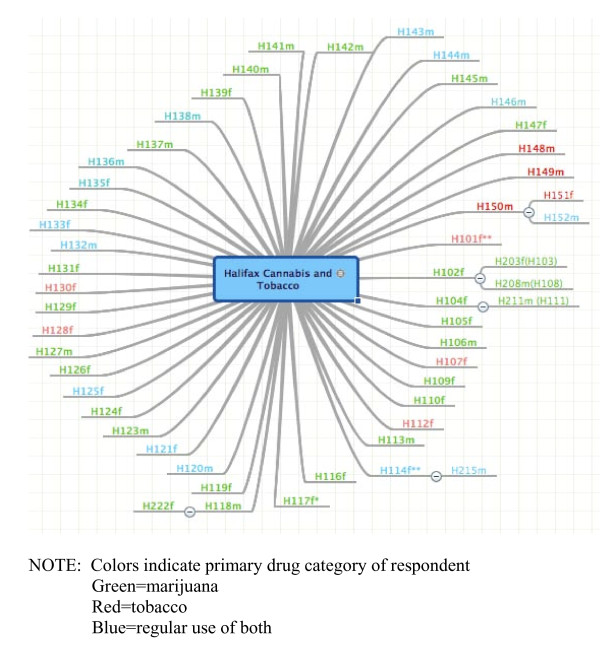
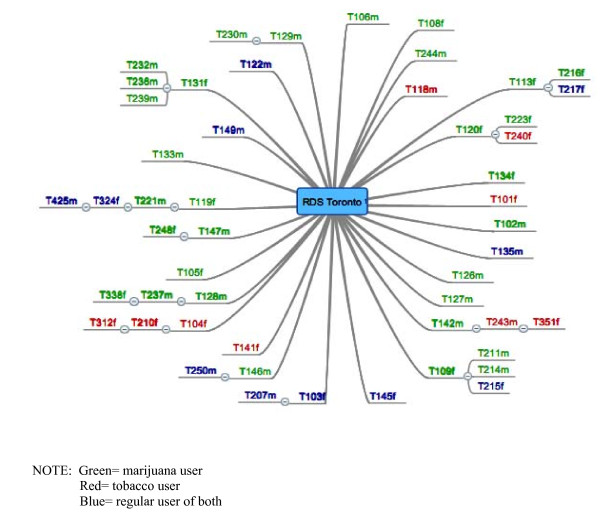
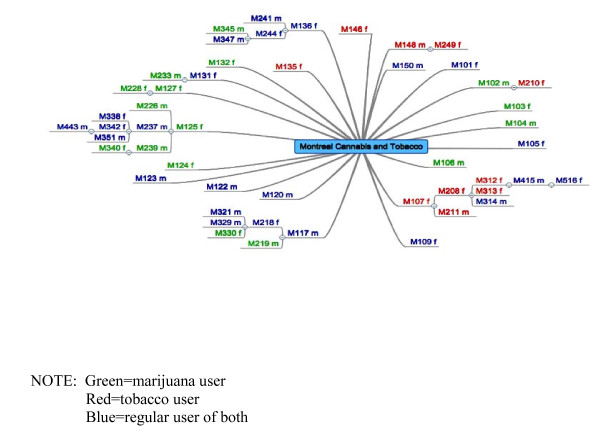
This article investigates Respondent Driven Sampling (RDS) as a method of recruiting experienced marijuana users representative of users in the general population. Based on sampling conducted in a multi-city study (Halifax, Montreal, Toronto, and Vancouver), and compared to samples gathered using other research methods, we assess the strengths and weaknesses of RDS recruitment as a means of gaining access to illicit substance users who experience few harmful consequences of their use. Demographic characteristics of the sample in Toronto are compared with those of users in a recent household survey and a pilot study of Toronto where the latter utilized nonrandom self-selection of respondents.
A modified approach to RDS was necessary to attain the target sample size in all four cities (i.e., 40 'users' from each site). The final sample in Toronto was largely similar, however, to marijuana users in a random household survey that was carried out in the same city. Whereas well-educated, married, whites and females in the survey were all somewhat overrepresented, the two samples, overall, were more alike than different with respect to economic status and employment. Furthermore, comparison with a self-selected sample suggests that (even modified) RDS recruitment is a cost-effective way of gathering respondents who are more representative of users in the general population than nonrandom methods of recruitment ordinarily produce.
Research on marijuana use, and other forms of drug use hidden in the general population of adults, is important for informing and extending harm reduction beyond its current emphasis on 'at-risk' populations. Expanding harm reduction in a normalizing context, through innovative research on users often overlooked, further challenges assumptions about reducing harm through prohibition of drug use and urges consideration of alternative policies such as decriminalization and legal regulation.
对于那些专门针对减少伤害计划的社会研究来说,一个重要的挑战是找到那些吸食大麻等物质的消费者的隐藏群体,这些消费者通常报告使用这些物质的不良或不良后果很少。历史上,对吸毒者的偏差和病态的看法很大程度上源于对吸毒者的研究,并且得到了实证的支持,这些研究强调了在药物治疗或依赖和滥用问题发生率较高的监狱人群中容易接触到吸毒者。由于他们不太显眼,负责娱乐性使用非法药物的人更难研究。
本文探讨了响应驱动抽样(RDS)作为一种招募经验丰富的大麻使用者的方法,这些使用者代表了一般人群中的使用者。基于在多城市研究(哈利法克斯、蒙特利尔、多伦多和温哥华)中进行的抽样,并与使用其他研究方法收集的样本进行比较,我们评估了 RDS 招募作为一种获得使用毒品很少产生有害后果的非法药物使用者的方法的优缺点。多伦多样本的人口统计学特征与最近的一项家庭调查和多伦多的一项试点研究中的使用者进行了比较,后者利用了对受访者的非随机自我选择。
在所有四个城市(即每个地点 40 名“使用者”)中,都需要采用一种经过修改的 RDS 方法来达到目标样本量。然而,多伦多的最终样本与在同一城市进行的一项随机家庭调查中的大麻使用者基本相似。尽管受过良好教育、已婚、白人以及女性在调查中都有些过度代表,但这两个样本在经济地位和就业方面总体上比不同之处更相似。此外,与自我选择的样本相比,(即使经过修改)RDS 招募是一种具有成本效益的方法,可以收集比通常采用的非随机招募方法更能代表一般人群中使用者的受访者。
关于大麻使用和其他隐藏在成年人一般人群中的药物使用形式的研究对于将减少伤害扩展到其目前对“高危”人群的关注之外的信息和扩展至关重要。在正常化背景下通过对经常被忽视的使用者进行创新研究来扩大减少伤害,进一步挑战了通过禁止药物使用减少伤害的假设,并敦促考虑替代政策,如非刑罪化和法律监管。