Theodosis D T, Rougon G, Poulain D A
Laboratoire de Neuroendocrinologie Morphofonctionnelle, Université de Bordeaux II.
Proc Natl Acad Sci U S A. 1991 Jul 1;88(13):5494-8. doi: 10.1073/pnas.88.13.5494.
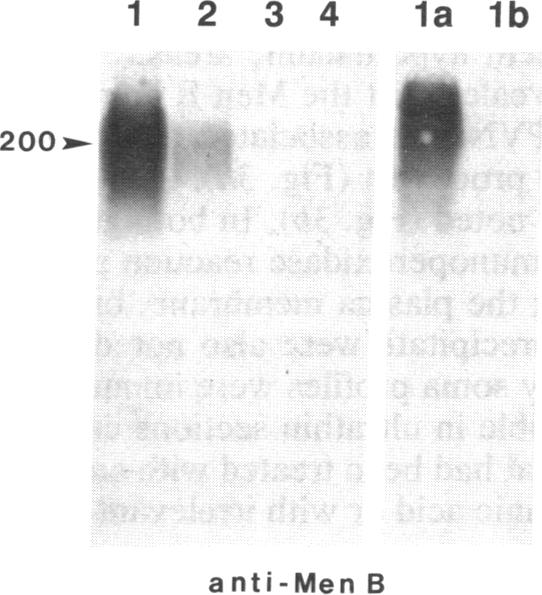
The neural cell adhesion molecule, N-CAM, changes at the cell surface during development, from a highly sialylated form [polysialic acid (PSA)-linked N-CAM, PSA-N-CAM] to several isoforms containing less sialic acid. N-CAM and its polysialic acid may serve to regulate cell apposition, thus affecting a variety of cell interactions. In the nervous system, PSA-N-CAM has until now been localized in developing tissues where it is thought to participate in the structuring of neuronal groups and tissue pattern formation. It has been proposed, however, that PSA-N-CAM may also be expressed in the adult, where it may take part in plasticity and cell reshaping. In the present study, the use of immunoblot and immunocytochemical procedures with a monoclonal antibody that specifically recognizes PSA-N-CAM revealed that the adult rat hypothalamo-neurohypophysial system, which undergoes important neuronal-glial and synaptic rearrangements in response to physiological stimuli, contains high levels of PSA-N-CAM immunoreactivity. The use of a polyclonal serum reacting with all N-CAM isoforms indicated that PSA-N-CAM is expressed together with "adult" forms of N-CAM. Light and electron microscopy demonstrated the presence of PSA-N-CAM immunoreactivity in the supraoptic and paraventricular nuclei of the hypothalamus and in the neurohypophysis; the immunoreactivity was seen in dendrites, axons, and terminals and in associated astrocytes but not in neuronal somata. We propose that the continued expression of PSA-N-CAM confers to magnocellular neurons and their astrocytes the ability to reversibly change their morphology in adulthood. In addition, our observations suggest that evidence for polysialylation may serve to identify other neuronal systems capable of morphological plasticity in the adult central nervous system.
神经细胞黏附分子N-CAM在发育过程中会在细胞表面发生变化,从高度唾液酸化的形式[多唾液酸(PSA)连接的N-CAM,PSA-N-CAM]转变为几种含唾液酸较少的亚型。N-CAM及其多唾液酸可能用于调节细胞贴附,从而影响多种细胞间相互作用。在神经系统中,迄今为止,PSA-N-CAM一直定位于发育中的组织,据认为它参与神经元群的构建和组织模式形成。然而,有人提出,PSA-N-CAM在成体中也可能表达,在成体中它可能参与可塑性和细胞重塑。在本研究中,使用一种特异性识别PSA-N-CAM的单克隆抗体进行免疫印迹和免疫细胞化学检测发现,成年大鼠下丘脑-神经垂体系统在受到生理刺激时会发生重要的神经元-胶质细胞和突触重排,该系统含有高水平的PSA-N-CAM免疫反应性。使用与所有N-CAM亚型反应的多克隆血清表明,PSA-N-CAM与“成年”形式的N-CAM共同表达。光镜和电镜显示,下丘脑的视上核和室旁核以及神经垂体中存在PSA-N-CAM免疫反应性;在树突、轴突、终末以及相关星形胶质细胞中可见免疫反应性,但在神经元胞体中未见。我们提出,PSA-N-CAM的持续表达赋予了大细胞神经元及其星形胶质细胞在成年期可逆地改变其形态的能力。此外,我们的观察结果表明,多唾液酸化的证据可能有助于识别成年中枢神经系统中其他具有形态可塑性的神经元系统。