Department of Vaccinology and Applied Microbiology, Helmholtz Centre for Infection Research, Braunschweig, Germany.
PLoS One. 2010 Jun 30;5(6):e11400. doi: 10.1371/journal.pone.0011400.
Modified vaccinia virus Ankara (MVA), a highly attenuated strain of vaccinia virus, has been used as vaccine delivery vector in preclinical and clinical studies against infectious diseases and malignancies. Here, we investigated whether an MVA which does not encode any antigen (Ag) could be exploited as adjuvant per se.
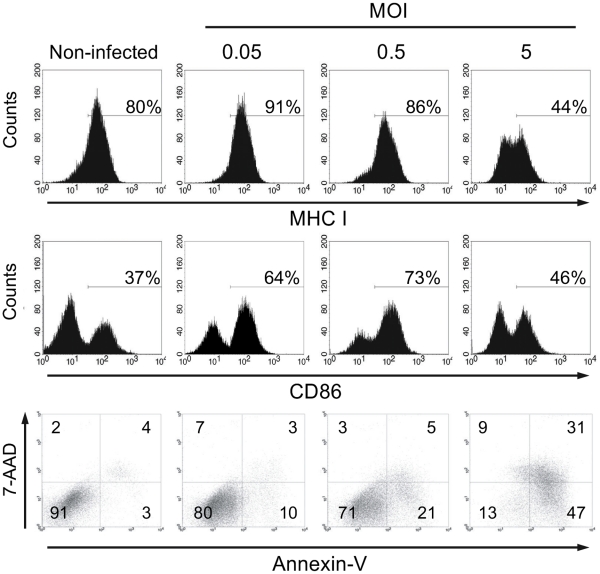
METHODOLOGY/PRINCIPAL FINDINGS: We showed that dendritic cells infected in vitro with non-recombinant (nr) MVA expressed maturation and activation markers and were able to efficiently present exogenously pulsed Ag to T cells. In contrast to the dominant T helper (Th) 1 biased responses elicited against Ags produced by recombinant MVA vectors, the use of nrMVA as adjuvant for the co-administered soluble Ags resulted in a long lasting mixed Th1/Th2 responses.
CONCLUSIONS/SIGNIFICANCE: These findings open new ways to potentiate and modulate the immune responses to vaccine Ags depending on whether they are co-administered with MVA or encoded by recombinant viruses.
改良安卡拉痘苗病毒(MVA)是一种高度减毒的痘苗病毒株,已在传染病和恶性肿瘤的临床前和临床研究中被用作疫苗传递载体。在这里,我们研究了不编码任何抗原(Ag)的 MVA 是否可以本身被用作佐剂。
方法/主要发现:我们表明,体外感染非重组(nr)MVA 的树突状细胞表达成熟和激活标志物,并能够有效将外源性脉冲 Ag 呈递给 T 细胞。与针对重组 MVA 载体产生的抗原引起的优势 T 辅助(Th)1 偏向反应相反,将 nrMVA 用作共给药可溶性抗原的佐剂会导致持久的混合 Th1/Th2 反应。
结论/意义:这些发现为根据是否与 MVA 共同给药或由重组病毒编码来增强和调节疫苗抗原的免疫反应开辟了新的途径。