Department of Cell Biology and Neurosciences, National Institute of Health, Rome, Italy.
PLoS One. 2010 Jul 13;5(7):e11559. doi: 10.1371/journal.pone.0011559.
Terminally differentiated (TD) cells permanently exit the mitotic cycle while acquiring specialized characteristics. Although TD cells can be forced to reenter the cell cycle by different means, they cannot be made to stably proliferate, as attempts to induce their replication constantly result in cell death or indefinite growth arrest. There is currently no biological explanation for this failure.
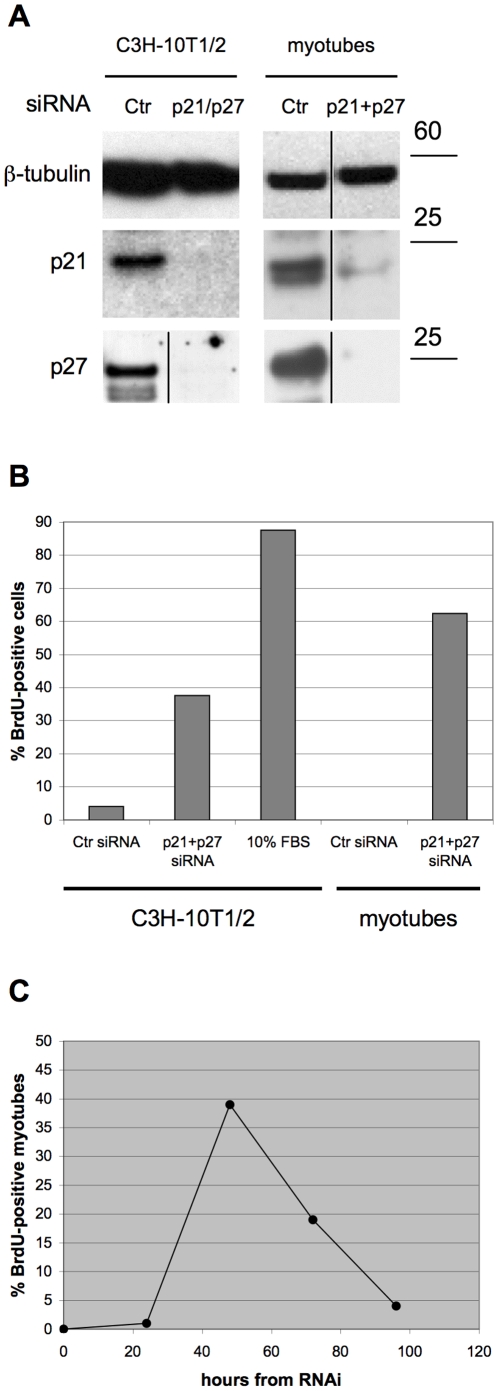
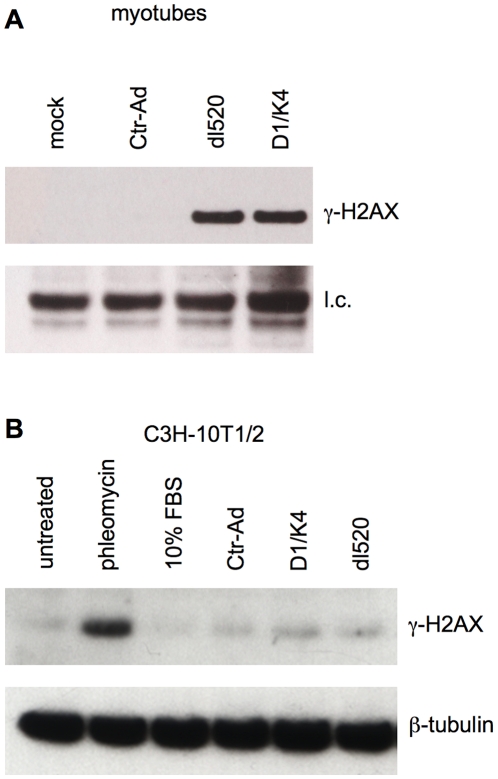
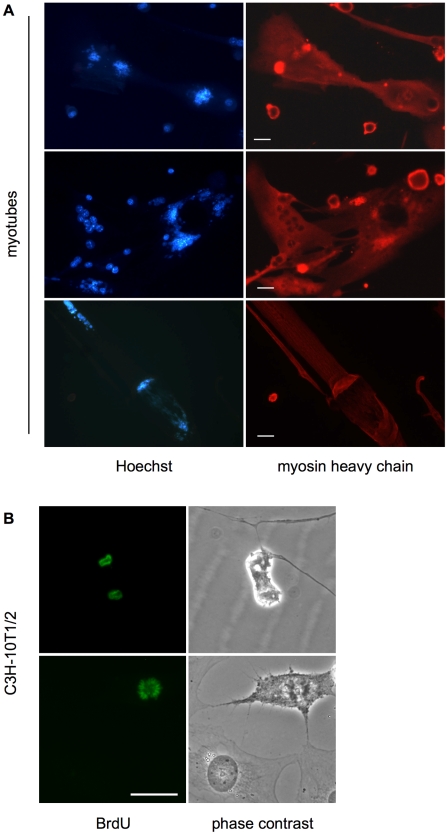
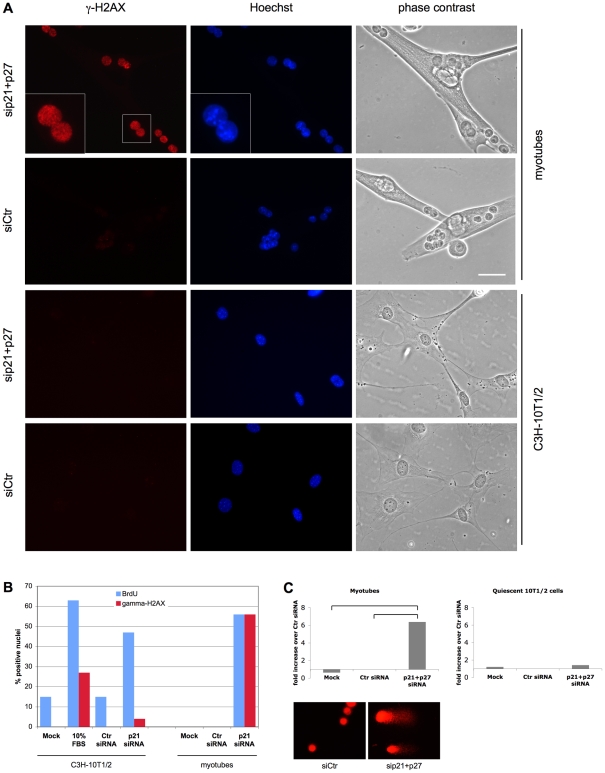
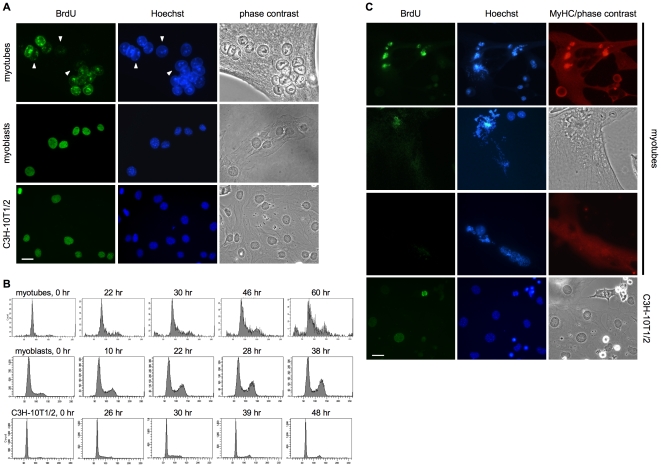
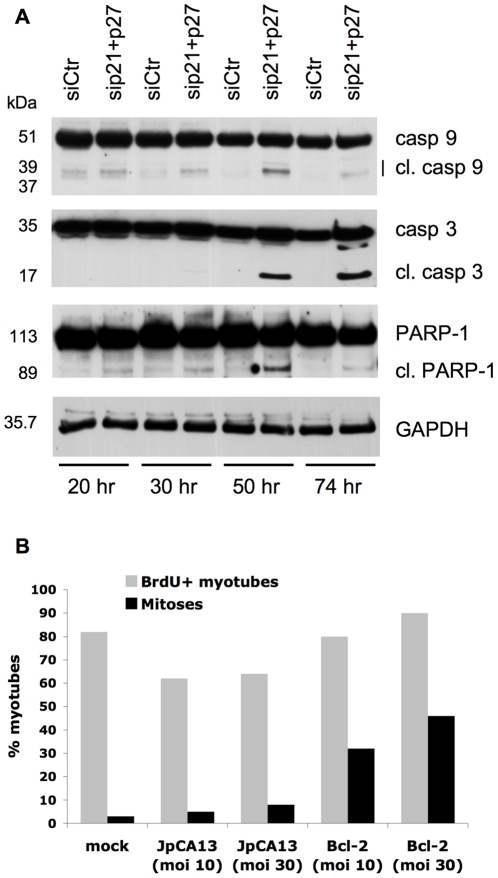
Here we show that TD mouse myotubes, reactivated by depletion of the p21 and p27 cell cycle inhibitors, are unable to complete DNA replication and sustain heavy DNA damage, which triggers apoptosis or results in mitotic catastrophe. In striking contrast, quiescent, non-TD fibroblasts and myoblasts, reactivated in the same way, fully replicate their DNA, do not suffer DNA damage, and proliferate even in the absence of growth factors. Similar results are obtained when myotubes and fibroblasts are reactivated by forced expression of E1A or cyclin D1 and cdk4.
We conclude that the inability of myotubes to complete DNA replication must be ascribed to peculiar features inherent in their TD state, rather than to the reactivation method. On reviewing the literature concerning reactivation of other TD cell types, we propose that similar mechanisms underlie the general inability of all kinds of TD cells to proliferate in response to otherwise mitogenic stimuli. These results define an unexpected basis for the well known incompetence of mammalian postmitotic cells to proliferate. Furthermore, this trait might contribute to explain the inability of these cells to play a role in tissue repair, unlike their counterparts in extensively regenerating species.
终末分化(TD)细胞在获得特化特征的同时永久退出有丝分裂周期。尽管可以通过不同的方法迫使 TD 细胞重新进入细胞周期,但它们不能稳定增殖,因为诱导其复制的尝试总是导致细胞死亡或无限期生长停滞。目前,对于这种失败,还没有生物学解释。
在这里,我们表明,通过耗尽细胞周期抑制剂 p21 和 p27 重新激活的 TD 小鼠肌管无法完成 DNA 复制并承受大量 DNA 损伤,这会触发细胞凋亡或导致有丝分裂灾难。与此形成鲜明对比的是,以相同方式重新激活的静止、非 TD 成纤维细胞和肌母细胞能够完全复制其 DNA,不会遭受 DNA 损伤,甚至在没有生长因子的情况下也会增殖。当肌管和成纤维细胞通过强制表达 E1A 或 cyclin D1 和 cdk4 重新激活时,也会得到类似的结果。
我们得出结论,肌管无法完成 DNA 复制的原因必须归因于其 TD 状态固有的特殊特征,而不是重新激活的方法。在回顾关于其他 TD 细胞类型重新激活的文献时,我们提出,类似的机制是所有类型的 TD 细胞在应对有丝分裂刺激时普遍无法增殖的基础。这些结果定义了哺乳动物有丝分裂后细胞增殖能力不足的一个意想不到的基础。此外,这种特性可能有助于解释这些细胞在组织修复中无法发挥作用的原因,而不同于在广泛再生物种中的对应细胞。