Department of Horticulture, Michigan State University, East Lansing, USA.
BMC Plant Biol. 2010 Jul 22;10:152. doi: 10.1186/1471-2229-10-152.
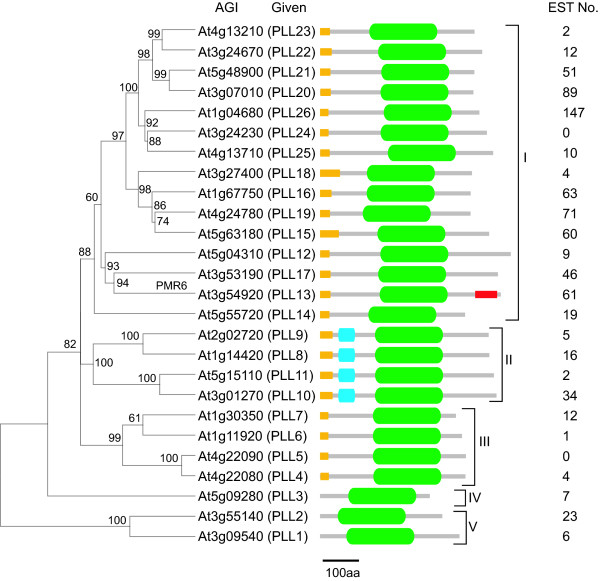
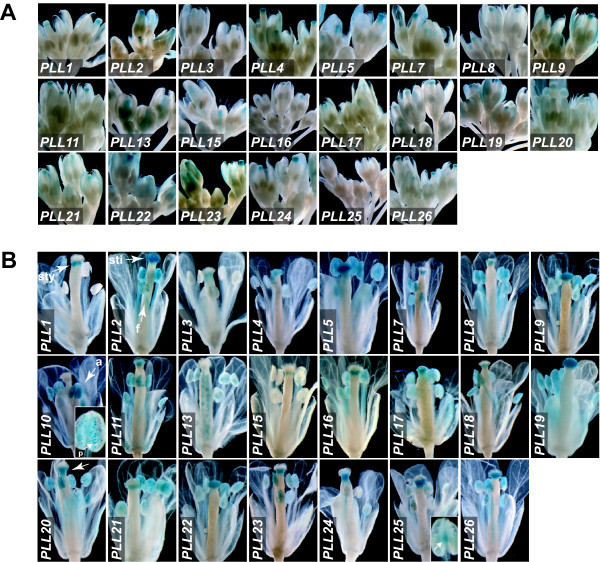
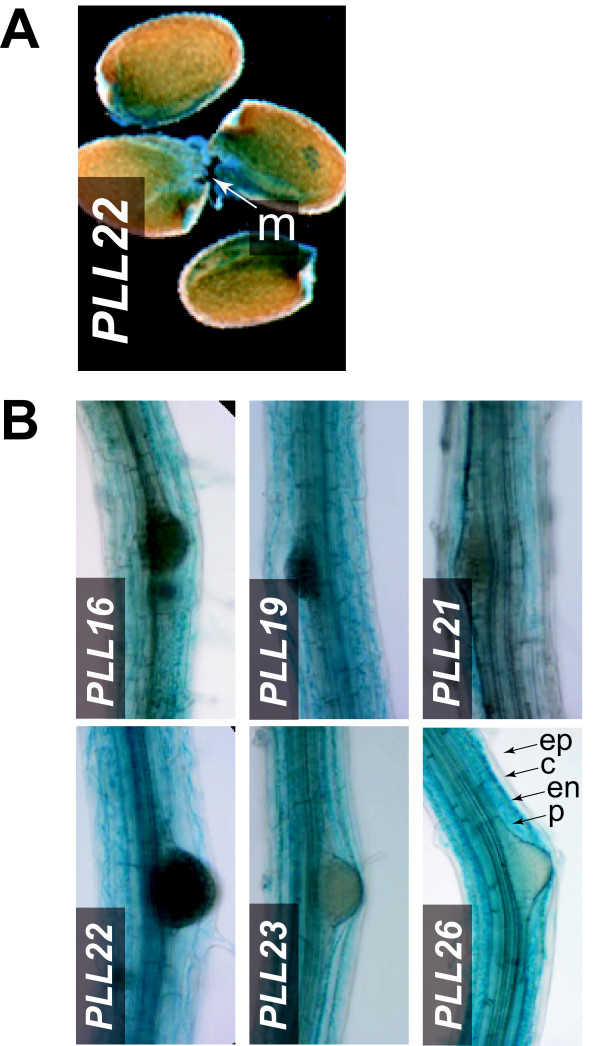
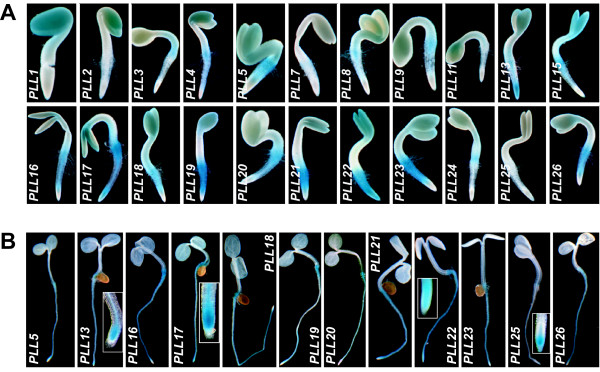
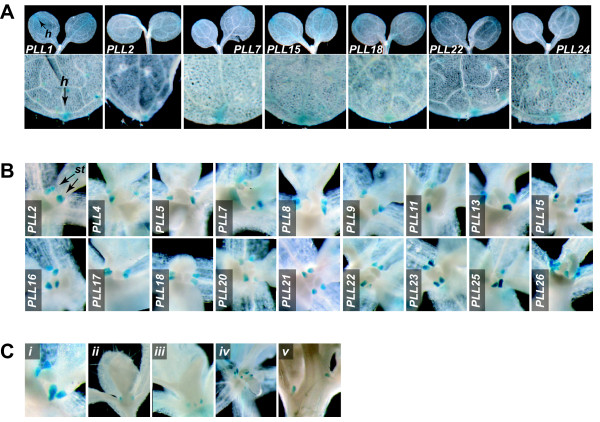
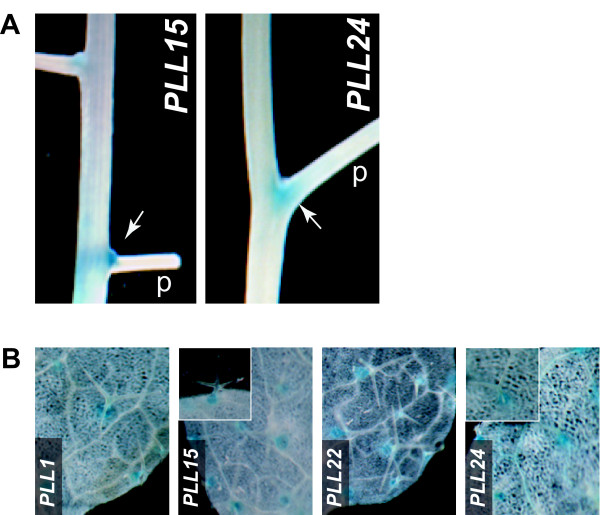
Pectate lyases depolymerize pectins by catalyzing the eliminative cleavage of alpha-1,4-linked galacturonic acid. Pectate lyase-like (PLL) genes make up among the largest and most complex families in plants, but their cellular and organismal roles have not been well characterized, and the activity of these genes has been assessed only at the level of entire organs or plant parts, potentially obscuring important sub-organ or cell-type-specific activities. As a first step to understand the potential functional diversity of PLL genes in plants and specificity of individual genes, we utilized a reporter gene approach to document the spatial and temporal promoter activity for 23 of the 26 members of the Arabidopsis thaliana (Arabidopsis) PLL gene family throughout development, focusing on processes involving cell separation.
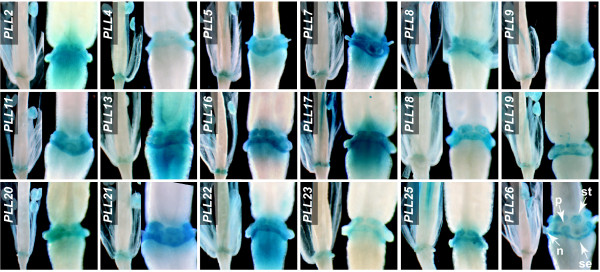
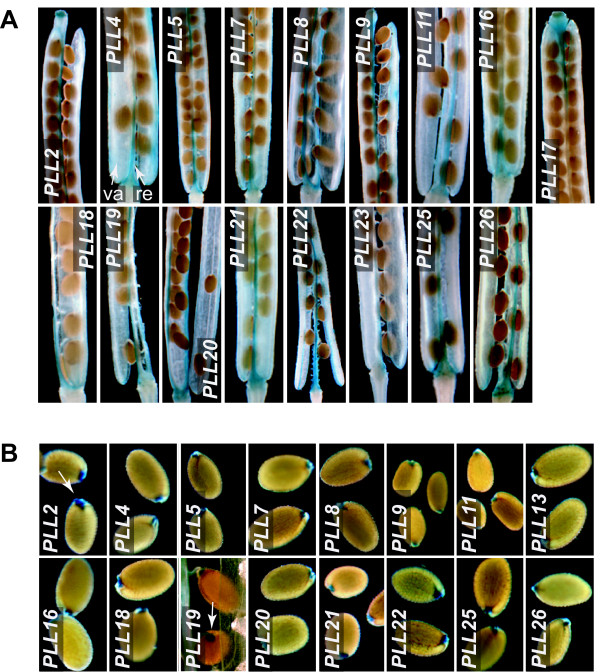
Numerous PLL promoters directed activity in localized domains programmed for cell separation, such as the abscission zones of the sepal, petal, stamen, and seed, as well as the fruit dehiscence zone. Several drove activity in cell types expected to facilitate separation, including the style and root endodermal and cortical layers during lateral root emergence. However, PLL promoters were active in domains not obviously programmed for separation, including the stipule, hydathode and root axis. Nearly all PLL promoters showed extensive overlap of activity in most of the regions analyzed.
Our results document potential for involvement of PLL genes in numerous aspects of growth and development both dependent and independent of cell separation. Although the complexity of the PLL gene family allows for enormous potential for gene specialization through spatial or temporal regulation, the high degree of overlap of activity among the PLL promoters suggests extensive redundancy. Alternatively, functional specialization might be determined at the post-transcriptional or protein level.
果胶裂解酶通过催化α-1,4 键连接的半乳糖醛酸的消除裂解来解聚果胶。果胶裂解酶样(PLL)基因构成植物中最大和最复杂的家族之一,但它们的细胞和生物体作用尚未得到很好的描述,并且这些基因的活性仅在整个器官或植物部分的水平上进行了评估,这可能掩盖了重要的亚器官或细胞类型特异性活性。作为了解植物中 PLL 基因潜在功能多样性和个别基因特异性的第一步,我们利用报告基因方法记录了拟南芥(Arabidopsis)26 个 PLL 基因家族成员中的 23 个在整个发育过程中的时空启动子活性,重点关注涉及细胞分离的过程。
许多 PLL 启动子在为细胞分离编程的局部区域驱动活性,例如萼片、花瓣、雄蕊和种子的离区,以及果实开裂区。一些在预期有助于分离的细胞类型中驱动活性,包括侧根出现时的花柱和根内皮层和皮层。然而,PLL 启动子在明显未编程用于分离的区域中也具有活性,包括托叶、水孔和根轴。几乎所有 PLL 启动子在分析的大部分区域都表现出广泛的活性重叠。
我们的结果记录了 PLL 基因参与生长和发育的许多方面的潜力,包括依赖于和不依赖于细胞分离的方面。尽管 PLL 基因家族的复杂性允许通过空间或时间调节实现基因专业化的巨大潜力,但 PLL 启动子之间活性的高度重叠表明存在广泛的冗余。或者,功能专业化可能在转录后或蛋白质水平上决定。