Immunology Institute, Mount Sinai School of Medicine, New York, New York, USA.
Mucosal Immunol. 2010 Nov;3(6):633-44. doi: 10.1038/mi.2010.40. Epub 2010 Jul 21.
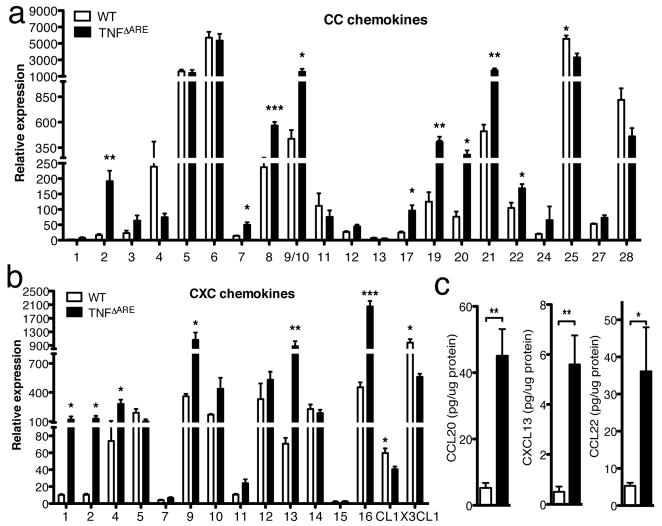
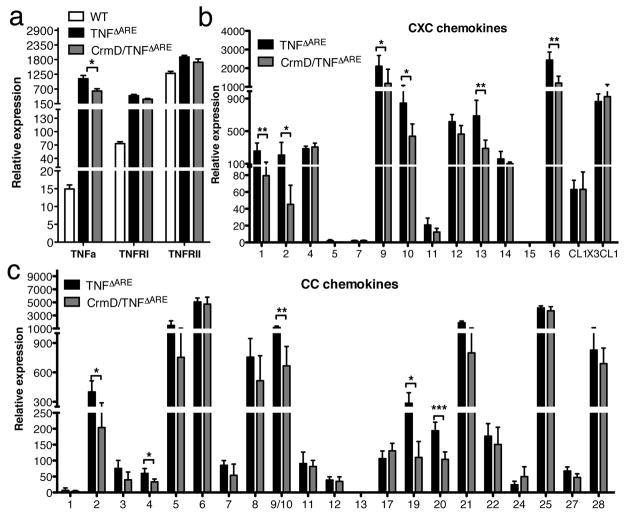
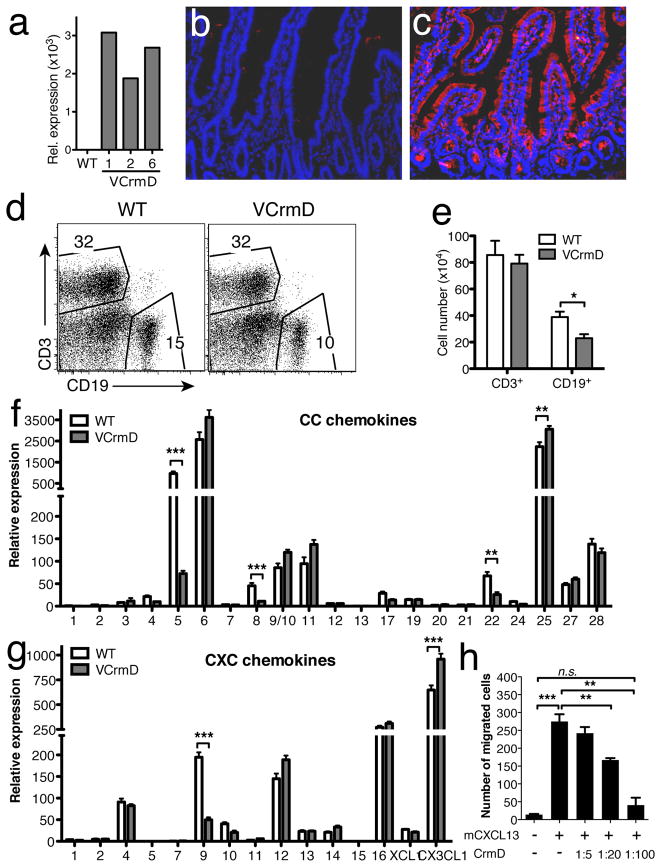
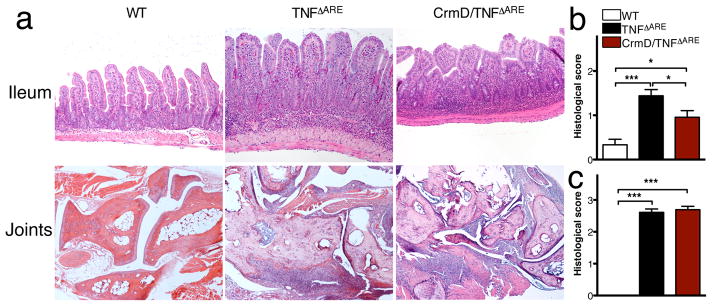
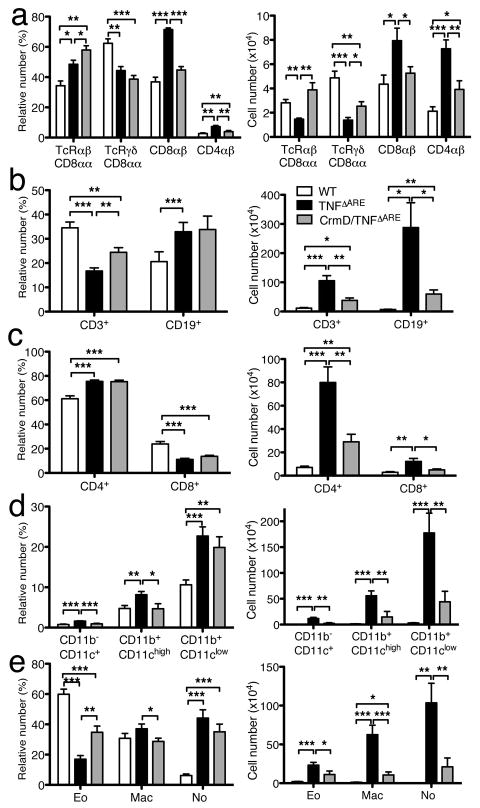
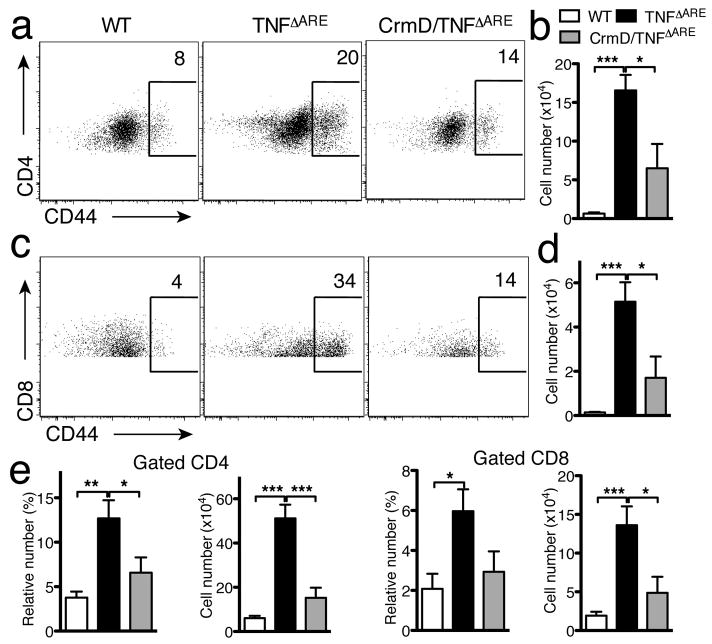
Tumor necrosis factor α (TNFα) is a key pathogenic factor in Crohn's disease and rheumatoid arthritis. TNF(ΔARE) mice express high levels of TNFα and present Crohn's-like ileitis and arthritis. Alterations in the chemokine network could underline the TNF-driven ileitis. The aim of this study was to evaluate the role of TNF and chemokines in ileitis using ectromelia virus cytokine response modifier D (CrmD), a protein that binds TNFα and a limited number of chemokines. We generated transgenic mice expressing CrmD in intestinal epithelial cells (vCrmD mice) and crossed them with the TNF(ΔARE) mice to test whether CrmD could affect TNF-driven inflammatory processes. During homeostasis, only the number of B cells in the lamina propria was reduced by CrmD expression. Interestingly, CrmD expression in the intestine markedly attenuated the inflammatory infiltrates in the ileum of TNF(ΔARE) mice, but did not affect development of arthritis. Our results suggest that CrmD affects development of ileitis by locally affecting both TNF and chemokine function in the ileum.
肿瘤坏死因子 α(TNFα)是克罗恩病和类风湿关节炎的关键致病因素。TNF(ΔARE)小鼠表达高水平的 TNFα,并表现出类似克罗恩病的回肠炎和关节炎。趋化因子网络的改变可能是 TNF 驱动的回肠炎的基础。本研究旨在使用埃博拉病毒细胞因子反应调节剂 D(CrmD)评估 TNF 和趋化因子在回肠炎中的作用,CrmD 是一种能结合 TNFα 和少数几种趋化因子的蛋白。我们生成了在肠上皮细胞中表达 CrmD 的转基因小鼠(vCrmD 小鼠),并将它们与 TNF(ΔARE)小鼠杂交,以测试 CrmD 是否能影响 TNF 驱动的炎症过程。在稳态下,只有 CrmD 表达降低了固有层中的 B 细胞数量。有趣的是,CrmD 在肠道中的表达显著减轻了 TNF(ΔARE)小鼠回肠中的炎症浸润,但并未影响关节炎的发展。我们的结果表明,CrmD 通过局部影响 TNF 和趋化因子在回肠中的功能来影响回肠炎的发展。