Environmental Genetics and Molecular Toxicology Division, Department of Environmental Health, University of Cincinnati College of Medicine, Cincinnati, OH 45267-0056, USA.
Biochem Biophys Res Commun. 2010 Sep 3;399(4):492-7. doi: 10.1016/j.bbrc.2010.07.094. Epub 2010 Jul 30.
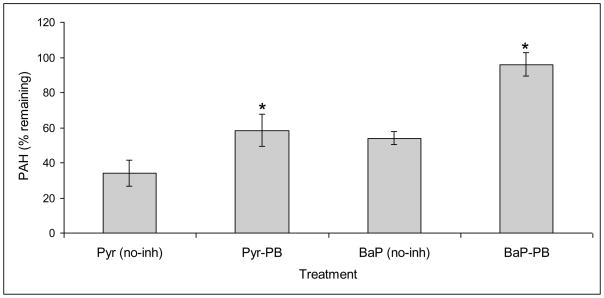
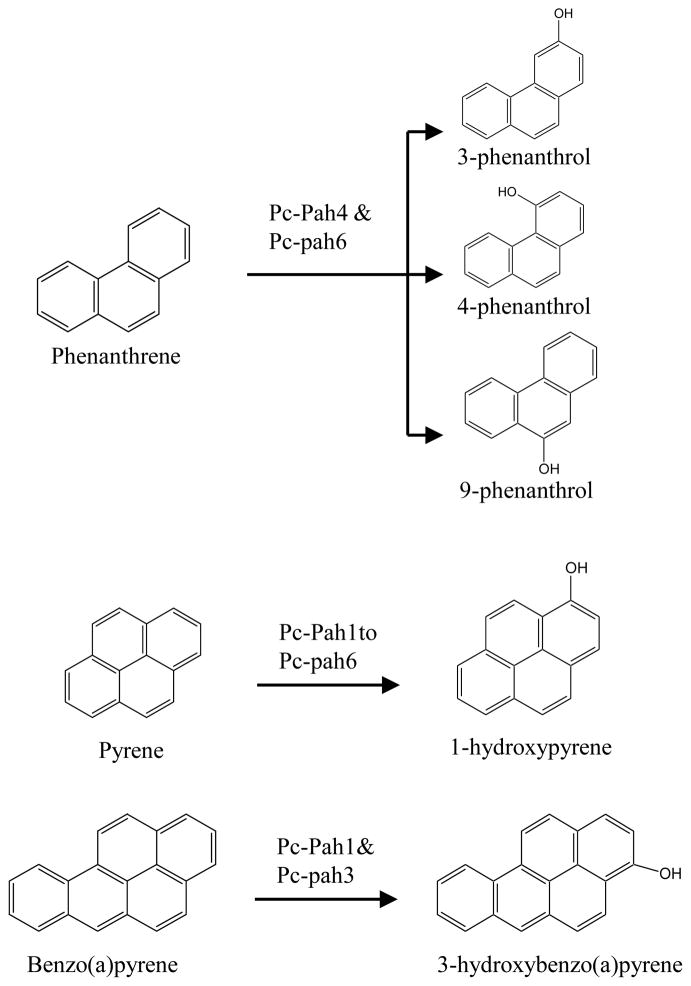
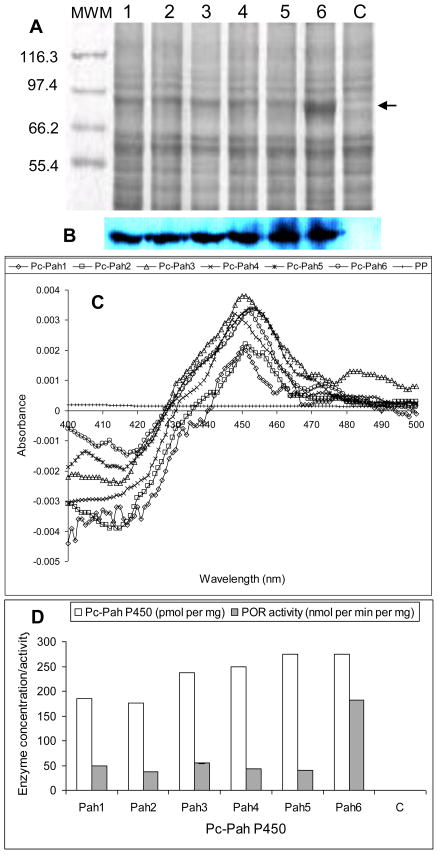
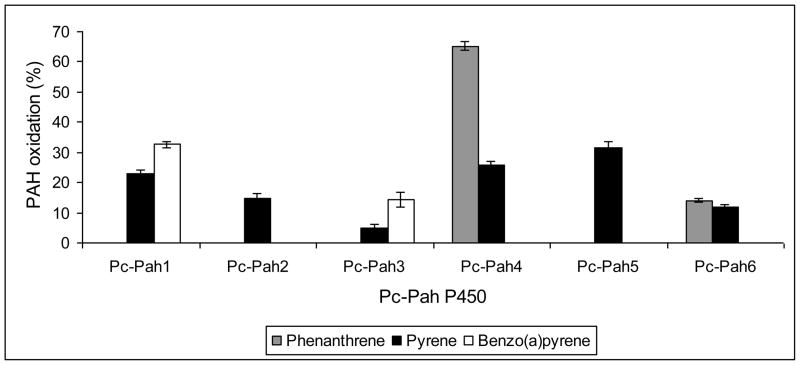
Fungi, particularly the white rot basidiomycetes, have an extraordinary capability to degrade and/or mineralize (to CO(2)) the recalcitrant fused-ring high molecular weight (4 aromatic-rings) polycyclic aromatic hydrocarbons (HMW PAHs). Despite over 30years of research demonstrating involvement of P450 monooxygenation reactions in fungal metabolism of HMW PAHs, specific P450 monooxygenases responsible for oxidation of these compounds are not yet known. Here we report the first comprehensive identification and functional characterization of P450 monooxygenases capable of oxidizing different ring-size PAHs in the model white rot fungus Phanerochaete chrysosporium using a successful genome-to-function strategy. In a genome-wide P450 microarray screen, we identified six PAH-responsive P450 genes (Pc-pah1-Pc-pah6) inducible by PAHs of varying ring size, namely naphthalene, phenanthrene, pyrene, and benzo(a)pyrene (BaP). Using a co-expression strategy, cDNAs of the six Pc-Pah P450s were cloned and expressed in Pichia pastoris in conjunction with the homologous P450 oxidoreductase (Pc-POR). Each of the six recombinant P450 monooxygenases showed PAH-oxidizing activity albeit with varying substrate specificity towards PAHs (3-5 rings). All six P450s oxidized pyrene (4-ring) into two monohydroxylated products. Pc-Pah1 and Pc-Pah3 oxidized BaP (5-ring) to 3-hydroxyBaP whereas Pc-Pah4 and Pc-Pah6 oxidized phenanthrene (3-ring) to 3-, 4-, and 9-phenanthrol. These PAH-oxidizing P450s (493-547 aa) are structurally diverse and novel considering their low overall homology (12-23%) to mammalian counterparts. To our knowledge, this is the first report on specific fungal P450 monooxygenases with catalytic activity toward environmentally persistent and highly toxic HMW PAHs.
真菌,特别是白腐担子菌,具有非凡的能力,可以降解和/或矿化(转化为 CO(2))难降解的融合环高分子量(4 个芳环)多环芳烃(HMW PAHs)。尽管已有 30 多年的研究表明 P450 单加氧酶反应参与了真菌对 HMW PAHs 的代谢,但负责这些化合物氧化的特定 P450 单加氧酶仍不得而知。在这里,我们使用成功的从基因组到功能的策略,报告了第一个能够氧化模型白腐真菌黄孢原毛平革菌中不同环大小的 PAH 的 P450 单加氧酶的全面鉴定和功能特征。在全基因组 P450 微阵列筛选中,我们鉴定了六个对不同环大小的 PAH(萘、菲、芘和苯并[a]芘(BaP))有反应的 PAH 诱导 P450 基因(Pc-pah1-Pc-pah6)。使用共表达策略,将六个 Pc-Pah P450 的 cDNA 克隆并在巴斯德毕赤酵母中与同源 P450 氧化还原酶(Pc-POR)共表达。六个重组 P450 单加氧酶中的每一个都表现出 PAH 氧化活性,尽管对 PAHs(3-5 个环)的底物特异性不同。所有六个 P450 都将芘(4 个环)氧化成两种单羟基产物。Pc-Pah1 和 Pc-Pah3 将 BaP(5 个环)氧化成 3-羟基 BaP,而 Pc-Pah4 和 Pc-Pah6 将菲(3 个环)氧化成 3-、4-和 9-菲醇。这些 PAH 氧化 P450(493-547 aa)结构多样,与哺乳动物对应物的总体同源性(12-23%)较低,因此是新颖的。据我们所知,这是第一个报道具有催化活性的特定真菌 P450 单加氧酶对环境持久性和高毒性 HMW PAHs 的报道。