Department of Pharmacology and Toxicology, Preventive Medicine, University of Alabama at Birmingham, Birmingham, Alabama 35294, USA.
Environ Health Perspect. 2010 Nov;118(11):1614-9. doi: 10.1289/ehp.1002148.
Bisphenol A (BPA) is a ubiquitous environmental chemical with reported endocrine-disrupting properties.
Our goal in this study was to determine whether prenatal exposure to BPA predisposes the adult rat mammary gland to carcinogenesis.
Pregnant rats were treated orally with 0, 25, or 250 microg BPA/kg body weight (BW) from gestation day (GD) 10 to GD21. For tumorigenesis experiments, prenatally exposed female offspring received a single gavage of 7,12-dimethylbenz(a)anthracene (DMBA; 30 mg/kg BW) on postnatal day (PND) 50, or PND100.
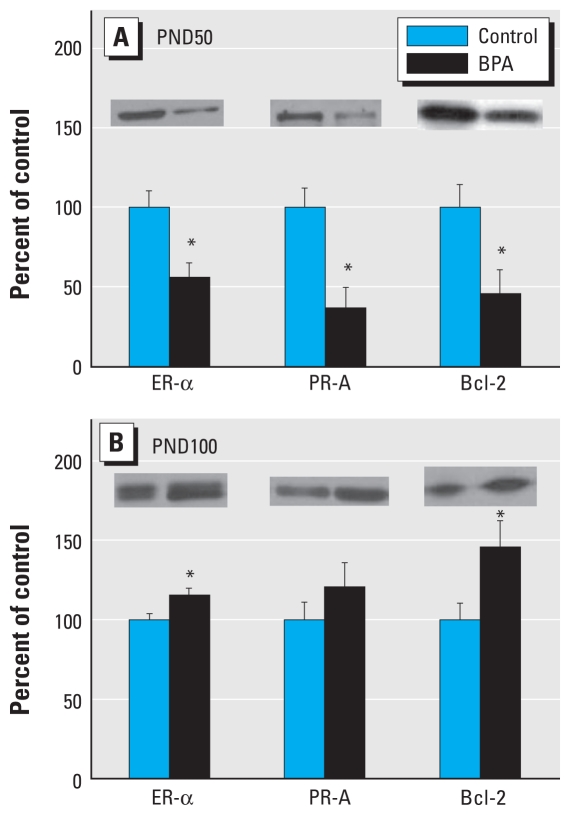
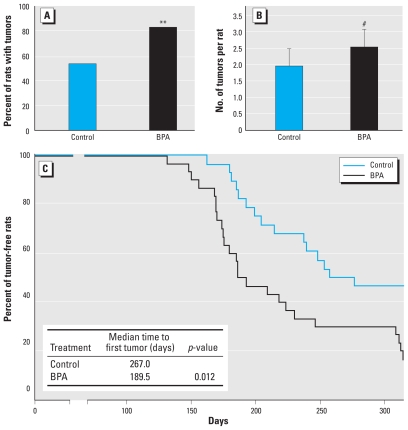
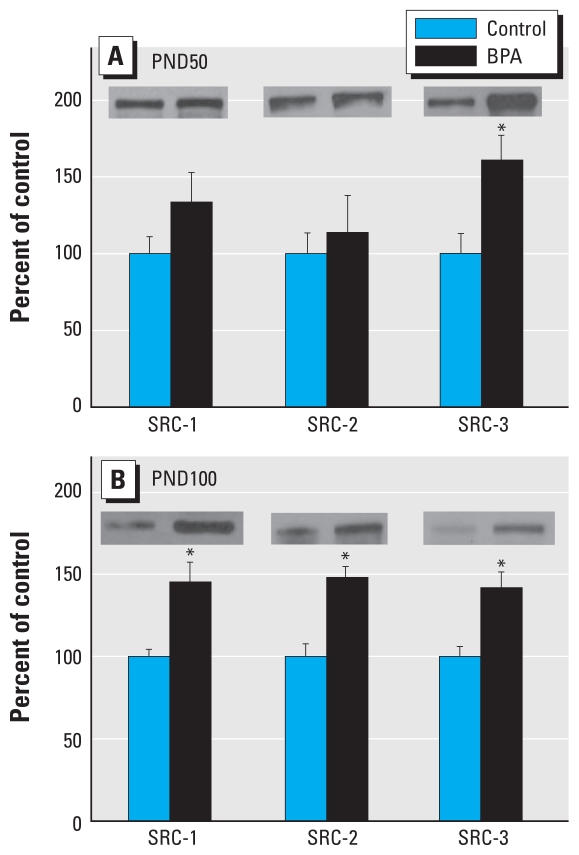
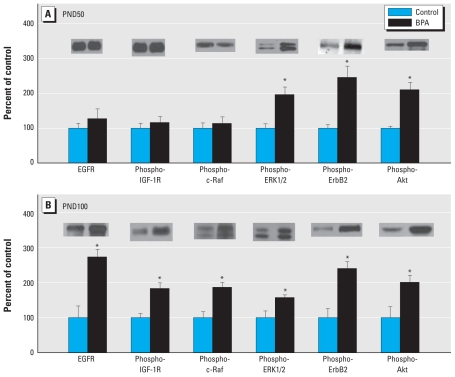
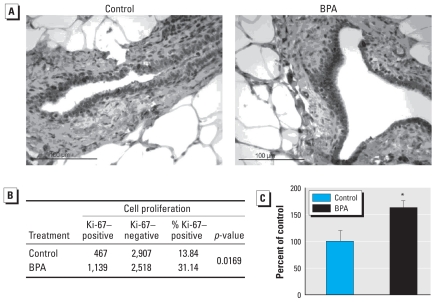
Prenatal exposure of the dam to 250 microg BPA/kg BW combined with a single exposure of female offspring to DMBA on PND100, but not on PND50, significantly increased tumor incidence while decreasing tumor latency compared with the control group. Prenatal exposure of the dam to 250 microg BPA/kg BW, in the absence of DMBA to the female offspring, increased cell proliferation and elicited differential effects at the protein level at PND100 compared with PND50. Differentially regulated proteins in the mammary gland included estrogen receptor-alpha, progesterone receptor-A, Bcl-2, steroid receptor coactivators, epidermal growth factor receptor, phospho-insulinlike growth factor 1 receptor, and phospho-Raf.
Our study demonstrates that oral prenatal exposure to BPA increases mammary cancer susceptibility in offspring and shifts the window of susceptibility for DMBA-induced tumorigenesis in the rat mammary gland from PND50 to PND100. These changes are accompanied by differential effects of prenatal BPA exposure on the expression of key proteins involved in cell proliferation.
双酚 A(BPA)是一种普遍存在的环境化学物质,据报道具有内分泌干扰特性。
本研究的目的是确定产前暴露于 BPA 是否使成年大鼠乳腺易患癌。
从妊娠第 10 天(GD)至第 21 天(GD),给怀孕的大鼠口服 0、25 或 250μg/kg 体重(BW)的 BPA。为了进行致癌实验,产前暴露的雌性后代在产后第 50 天(PND)或 PND100 时接受单次灌胃 7,12-二甲基苯并(a)蒽(DMBA;30mg/kg BW)。
与对照组相比,母体产前暴露于 250μg/kg BW 的 BPA 与雌性后代在 PND100 时单次暴露于 DMBA 相结合,显著增加了肿瘤发生率,同时降低了肿瘤潜伏期。与 PND50 相比,母体产前暴露于 250μg/kg BW 的 BPA 而不给雌性后代 DMBA,在 PND100 时增加了细胞增殖并在蛋白质水平上产生了不同的影响。乳腺中差异调节的蛋白质包括雌激素受体-α、孕激素受体-A、Bcl-2、类固醇受体共激活剂、表皮生长因子受体、磷酸胰岛素样生长因子 1 受体和磷酸-Raf。
我们的研究表明,口服产前暴露于 BPA 增加了后代的乳腺癌易感性,并将 DMBA 诱导的大鼠乳腺肿瘤发生的易感性窗口从 PND50 转移到 PND100。这些变化伴随着产前 BPA 暴露对参与细胞增殖的关键蛋白质表达的差异影响。