Department of Biology, San Diego State University, San Diego, California, USA.
PLoS One. 2010 Aug 4;5(8):e11927. doi: 10.1371/journal.pone.0011927.
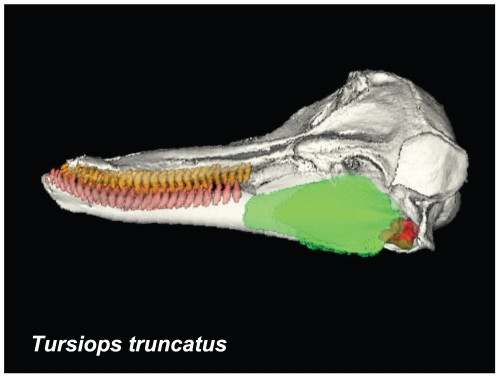
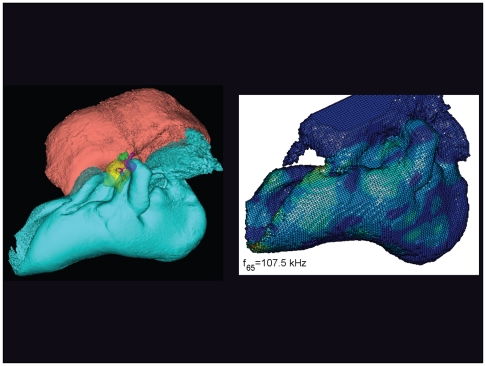
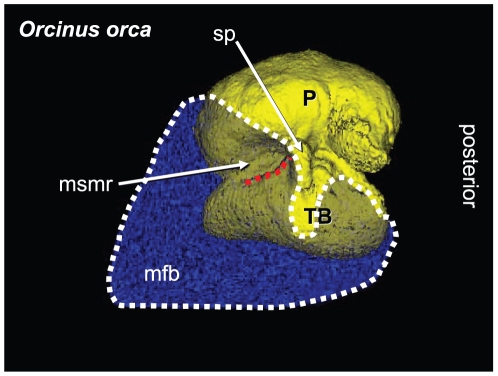
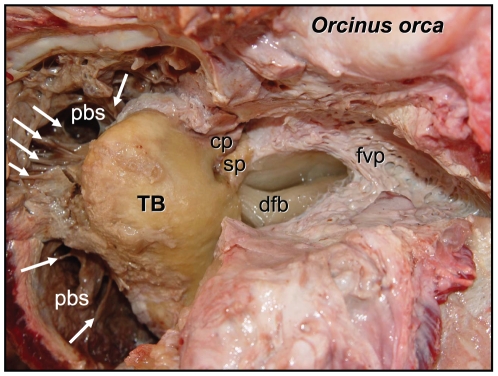
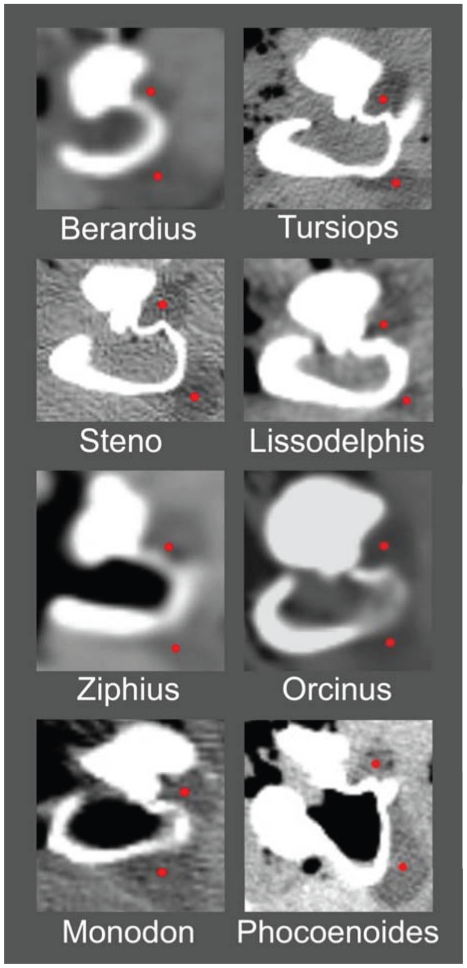
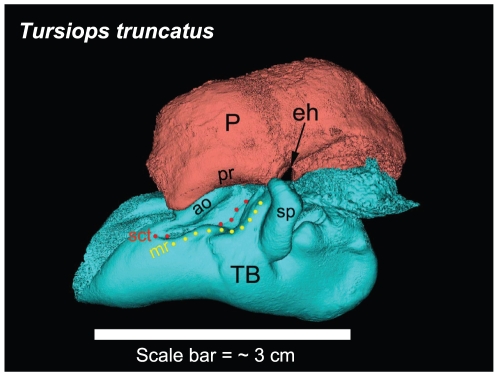
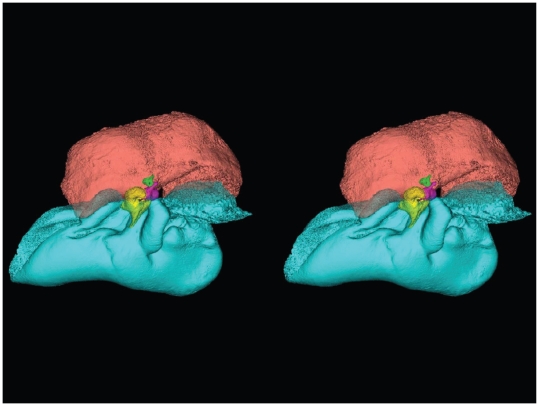
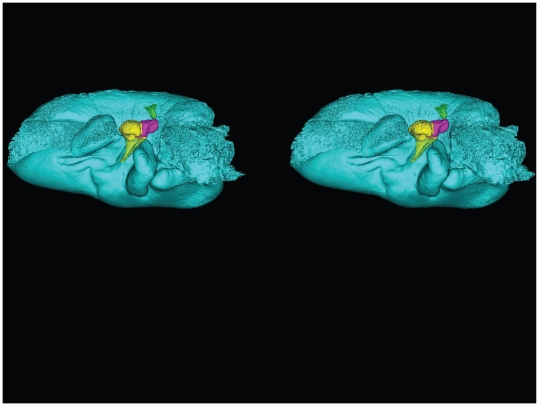
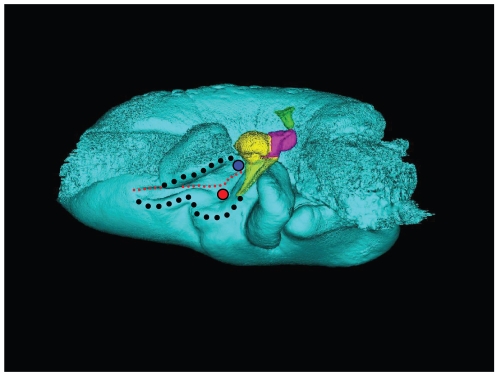
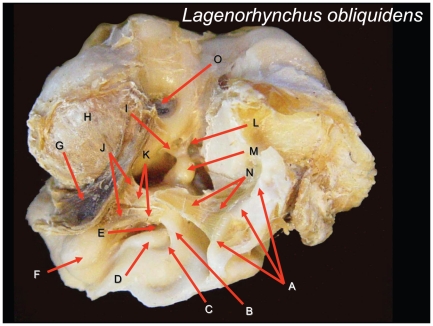
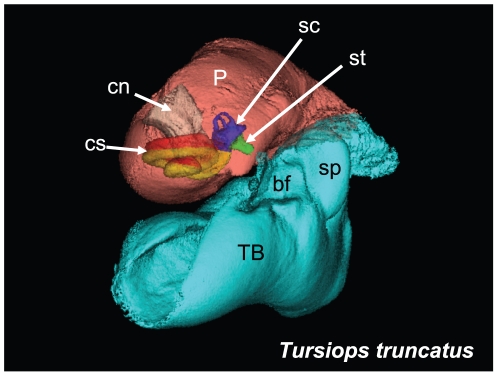
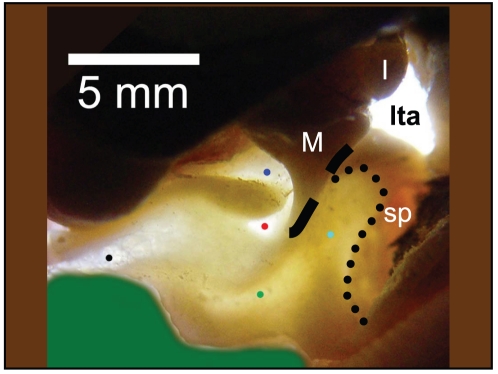
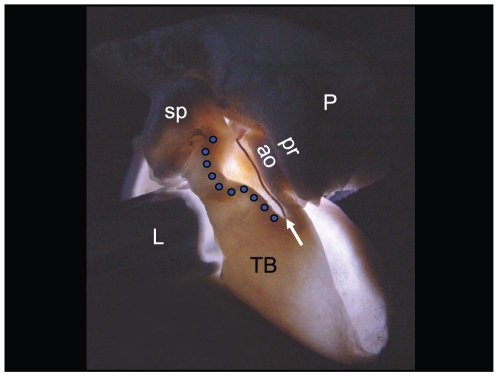
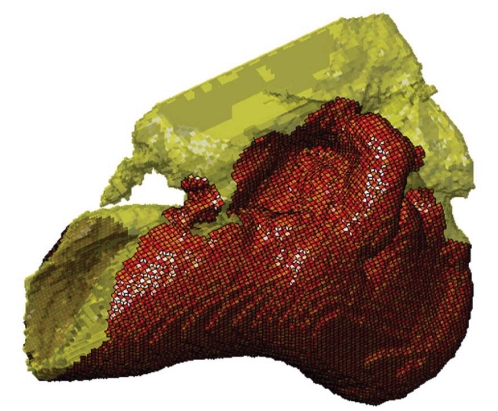
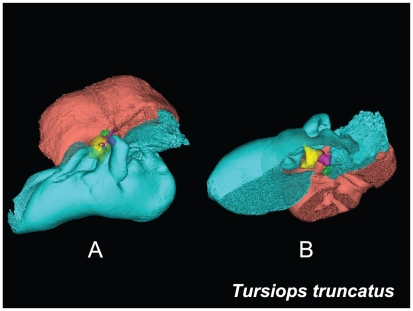
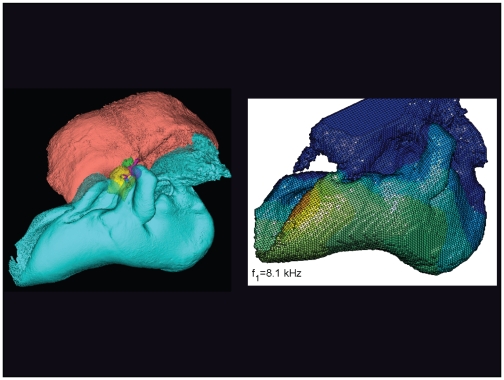
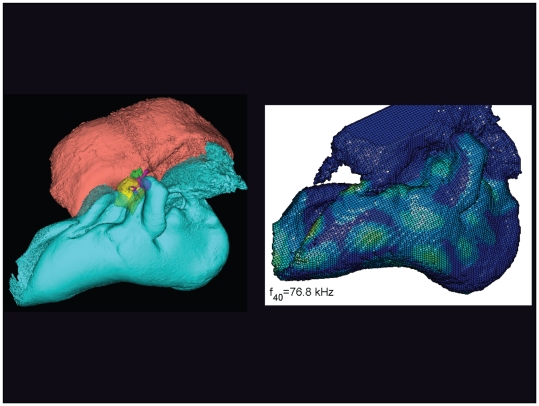
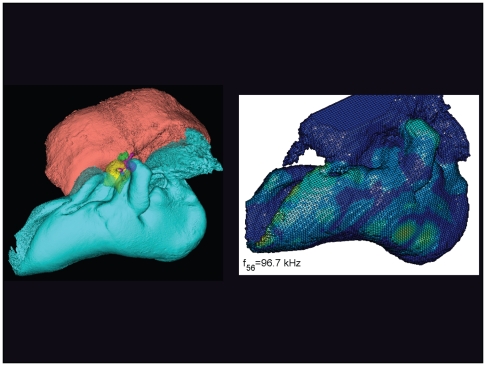
Global concern over the possible deleterious effects of noise on marine organisms was catalyzed when toothed whales stranded and died in the presence of high intensity sound. The lack of knowledge about mechanisms of hearing in toothed whales prompted our group to study the anatomy and build a finite element model to simulate sound reception in odontocetes. The primary auditory pathway in toothed whales is an evolutionary novelty, compensating for the impedance mismatch experienced by whale ancestors as they moved from hearing in air to hearing in water. The mechanism by which high-frequency vibrations pass from the low density fats of the lower jaw into the dense bones of the auditory apparatus is a key to understanding odontocete hearing. Here we identify a new acoustic portal into the ear complex, the tympanoperiotic complex (TPC) and a plausible mechanism by which sound is transduced into the bony components. We reveal the intact anatomic geometry using CT scanning, and test functional preconceptions using finite element modeling and vibrational analysis. We show that the mandibular fat bodies bifurcate posteriorly, attaching to the TPC in two distinct locations. The smaller branch is an inconspicuous, previously undescribed channel, a cone-shaped fat body that fits into a thin-walled bony funnel just anterior to the sigmoid process of the TPC. The TPC also contains regions of thin translucent bone that define zones of differential flexibility, enabling the TPC to bend in response to sound pressure, thus providing a mechanism for vibrations to pass through the ossicular chain. The techniques used to discover the new acoustic portal in toothed whales, provide a means to decipher auditory filtering, beam formation, impedance matching, and transduction. These tools can also be used to address concerns about the potential deleterious effects of high-intensity sound in a broad spectrum of marine organisms, from whales to fish.
当齿鲸在高强度声音存在的情况下搁浅和死亡时,人们对噪声可能对海洋生物产生有害影响的全球关注被催化了。由于对齿鲸听觉机制的了解有限,我们的研究小组开始研究其解剖结构,并构建有限元模型来模拟齿鲸的声音接收。齿鲸的主要听觉途径是一种进化上的新颖结构,补偿了鲸鱼祖先从空气中听觉过渡到水中听觉时所经历的阻抗不匹配。高频振动从下颌低密度脂肪传递到听觉器官致密骨骼的机制是理解齿鲸听觉的关键。在这里,我们确定了一个新的声音传入内耳复合体的声学门户,即鼓室-岩锥复合体(TPC),以及声音传入骨结构的可能机制。我们使用 CT 扫描来识别完整的解剖几何形状,并使用有限元建模和振动分析来测试功能假设。我们表明,下颌脂肪体向后分叉,以两个不同的位置附着在 TPC 上。较小的分支是一个不起眼的、以前未被描述的通道,是一个锥形的脂肪体,适合于 TPC 前突的西格玛形突之前的薄壁骨漏斗。TPC 还包含薄的半透明骨区域,定义了不同的柔韧性区域,使 TPC 能够弯曲以响应声压,从而提供了一个使振动通过听小骨链的机制。在齿鲸中发现新的声学门户所使用的技术,为解释听觉滤波、波束形成、阻抗匹配和转换提供了一种手段。这些工具还可以用于解决关于高强度声音对从鲸鱼到鱼类等广泛海洋生物潜在有害影响的担忧。