Department of Psychiatry, University of Wisconsin-Madison, Madison, Wisconsin 53719, USA.
Nature. 2010 Aug 12;466(7308):864-8. doi: 10.1038/nature09282.
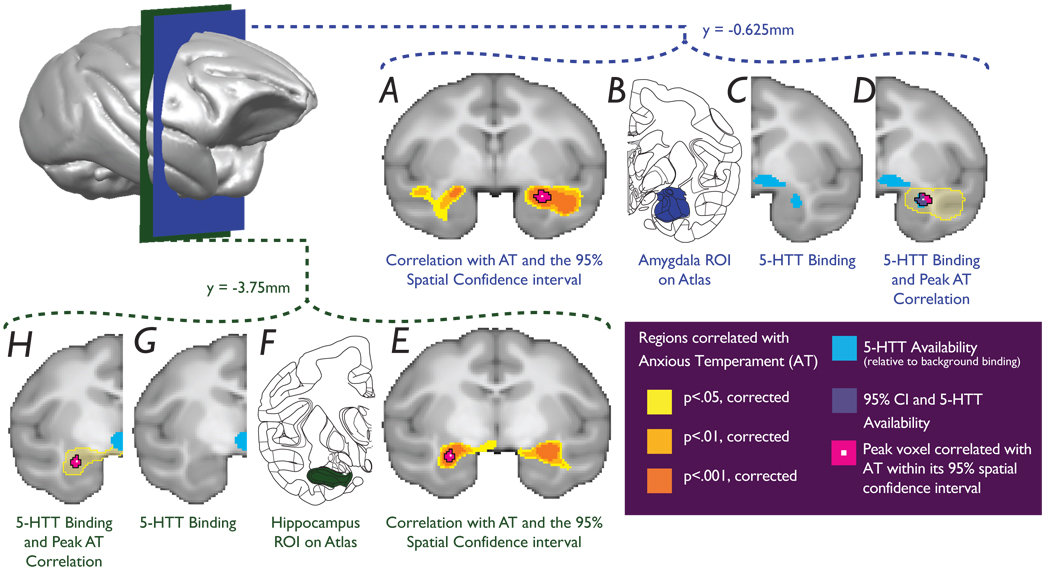
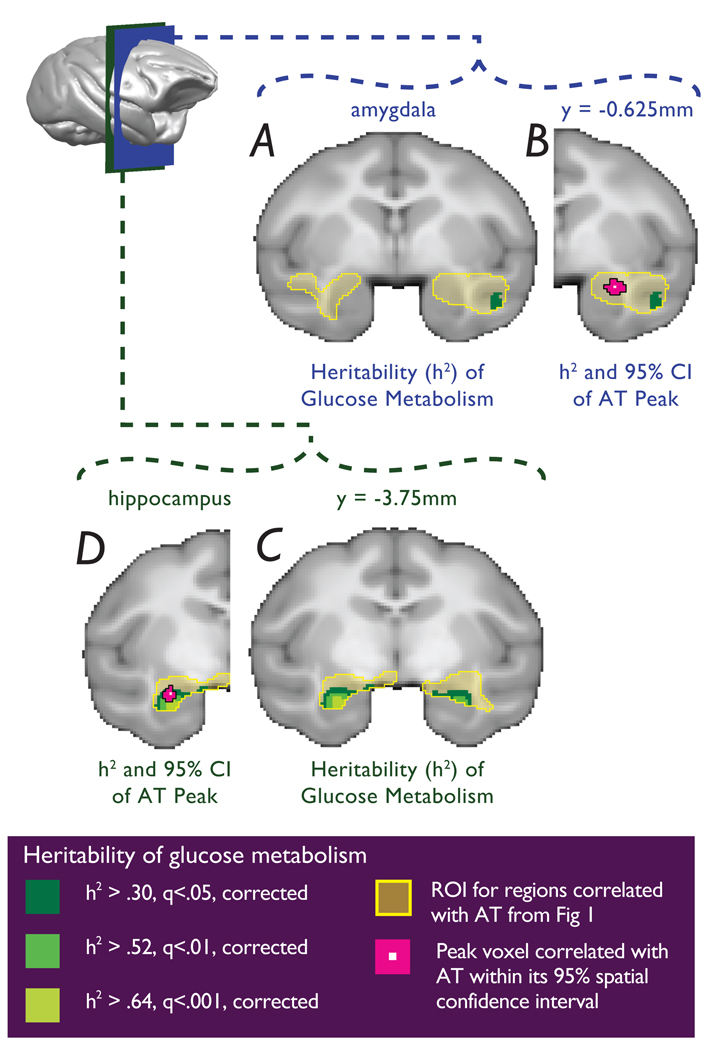
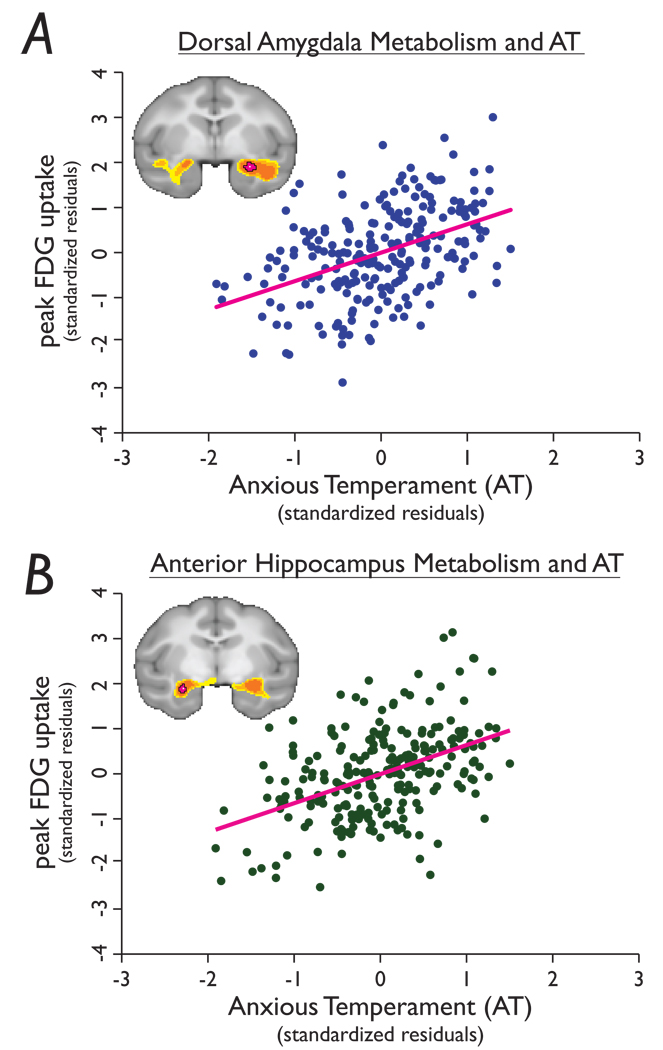
Anxious temperament (AT) in human and non-human primates is a trait-like phenotype evident early in life that is characterized by increased behavioural and physiological reactivity to mildly threatening stimuli. Studies in children demonstrate that AT is an important risk factor for the later development of anxiety disorders, depression and comorbid substance abuse. Despite its importance as an early predictor of psychopathology, little is known about the factors that predispose vulnerable children to develop AT and the brain systems that underlie its expression. To characterize the neural circuitry associated with AT and the extent to which the function of this circuit is heritable, we studied a large sample of rhesus monkeys phenotyped for AT. Using 238 young monkeys from a multigenerational single-family pedigree, we simultaneously assessed brain metabolic activity and AT while monkeys were exposed to the relevant ethological condition that elicits the phenotype. High-resolution (18)F-labelled deoxyglucose positron-emission tomography (FDG-PET) was selected as the imaging modality because it provides semi-quantitative indices of absolute glucose metabolic rate, allows for simultaneous measurement of behaviour and brain activity, and has a time course suited for assessing temperament-associated sustained brain responses. Here we demonstrate that the central nucleus region of the amygdala and the anterior hippocampus are key components of the neural circuit predictive of AT. We also show significant heritability of the AT phenotype by using quantitative genetic analysis. Additionally, using voxelwise analyses, we reveal significant heritability of metabolic activity in AT-associated hippocampal regions. However, activity in the amygdala region predictive of AT is not significantly heritable. Furthermore, the heritabilities of the hippocampal and amygdala regions significantly differ from each other. Even though these structures are closely linked, the results suggest differential influences of genes and environment on how these brain regions mediate AT and the ongoing risk of developing anxiety and depression.
人类和非人类灵长类动物的焦虑气质(AT)是一种表型特征,在生命早期就明显存在,其特征是对轻度威胁性刺激的行为和生理反应增加。儿童研究表明,AT 是焦虑症、抑郁症和共病物质滥用后发展的重要风险因素。尽管它作为精神病理学的早期预测指标很重要,但人们对易患 AT 的弱势儿童的倾向因素以及构成其表达基础的大脑系统知之甚少。为了描述与 AT 相关的神经回路及其功能的遗传程度,我们研究了大量表现出 AT 的恒河猴。使用来自多代单一家系的 238 只幼猴,我们同时评估了大脑代谢活性和 AT,同时猴子暴露在引发表型的相关行为条件下。选择高分辨率(18)F 标记脱氧葡萄糖正电子发射断层扫描(FDG-PET)作为成像方式,因为它提供绝对葡萄糖代谢率的半定量指标,允许同时测量行为和大脑活动,并且具有适合评估与气质相关的持续大脑反应的时间过程。在这里,我们证明了杏仁核中央核区和前海马体是预测 AT 的神经回路的关键组成部分。我们还通过定量遗传分析显示了 AT 表型的显著遗传性。此外,使用体素分析,我们揭示了与 AT 相关的海马区代谢活性的显著遗传性。然而,预测 AT 的杏仁核区域的活动没有显著的遗传性。此外,海马体和杏仁核区域的遗传性显著不同。尽管这些结构密切相关,但结果表明基因和环境对这些大脑区域如何介导 AT 以及发展焦虑和抑郁的持续风险的影响不同。