L'Oréal Recherche, Clichy, France.
PLoS One. 2010 Aug 10;5(8):e12059. doi: 10.1371/journal.pone.0012059.
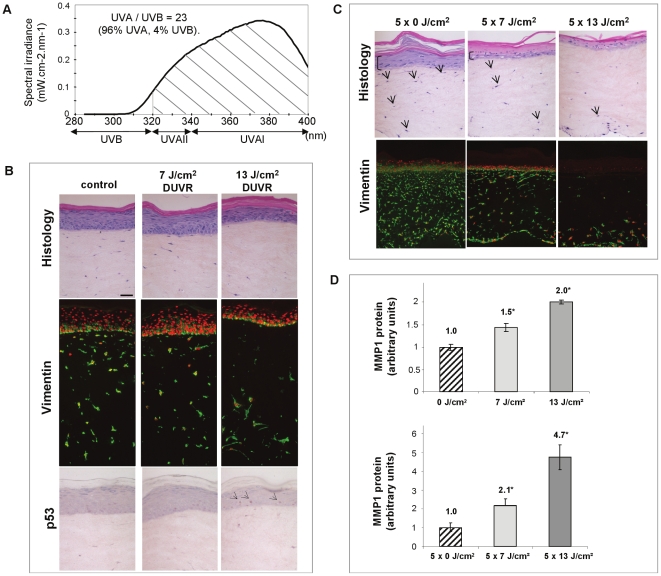
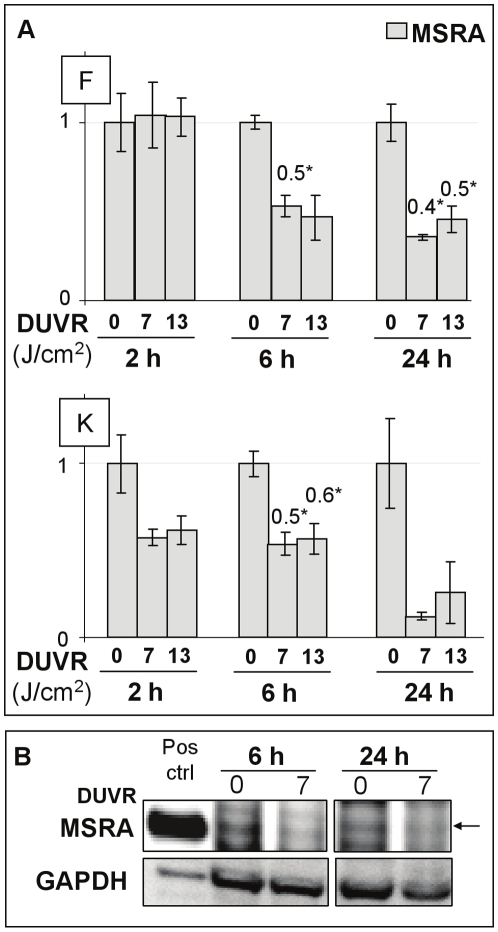
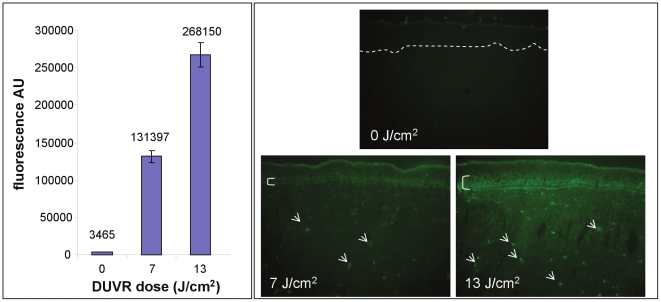
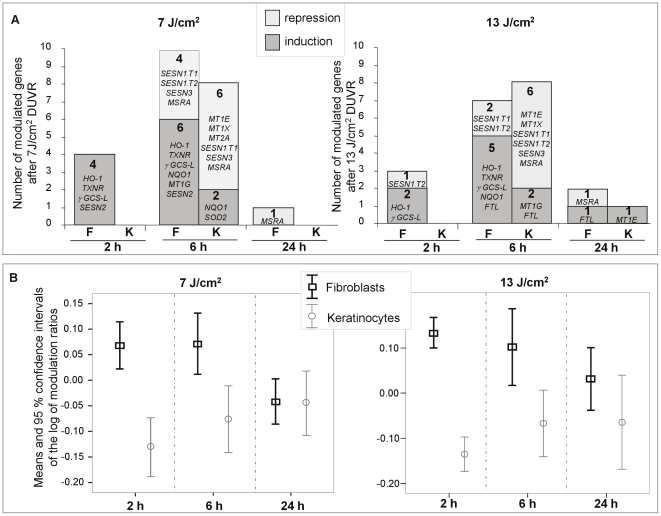
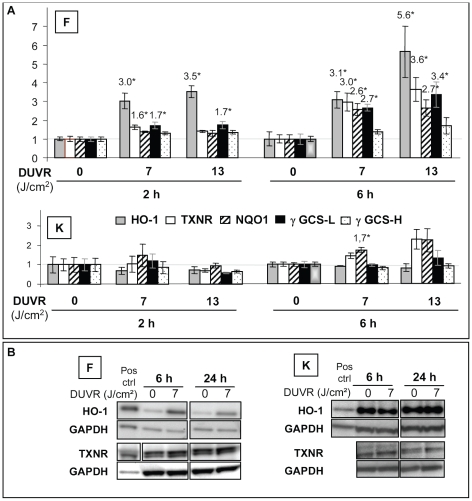
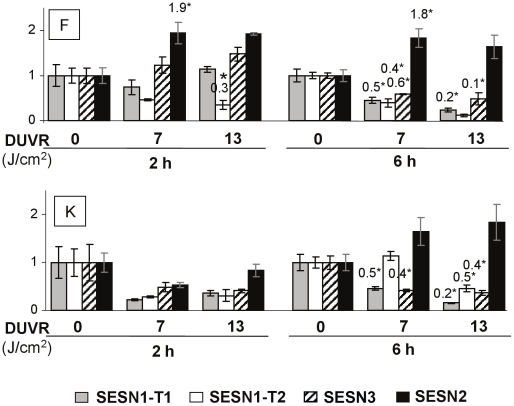
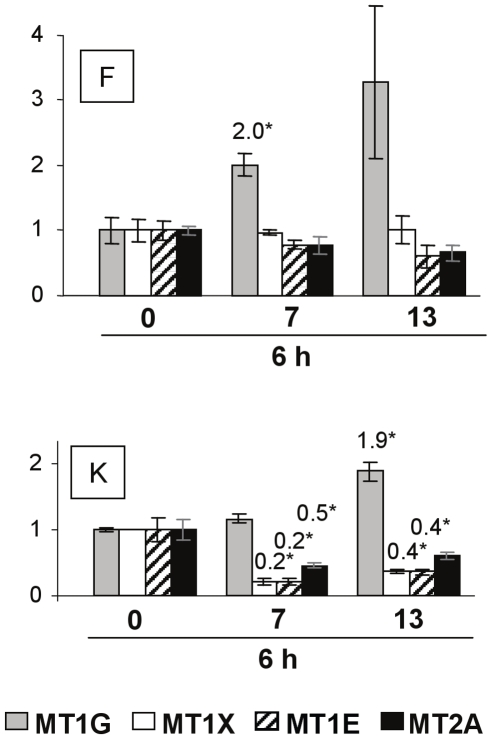
Experiments characterizing the biological effects of sun exposure have usually involved solar simulators. However, they addressed the worst case scenario i.e. zenithal sun, rarely found in common outdoor activities. A non-extreme ultraviolet radiation (UV) spectrum referred as "daily UV radiation" (DUVR) with a higher UVA (320-400 nm) to UVB (280-320 nm) irradiance ratio has therefore been defined. In this study, the biological impact of an acute exposure to low physiological doses of DUVR (corresponding to 10 and 20% of the dose received per day in Paris mid-April) on a 3 dimensional reconstructed skin model, was analysed. In such conditions, epidermal and dermal morphological alterations could only be detected after the highest dose of DUVR. We then focused on oxidative stress response induced by DUVR, by analyzing the modulation of mRNA level of 24 markers in parallel in fibroblasts and keratinocytes. DUVR significantly modulated mRNA levels of these markers in both cell types. A cell type differential response was noticed: it was faster in fibroblasts, with a majority of inductions and high levels of modulation in contrast to keratinocyte response. Our results thus revealed a higher sensitivity in response to oxidative stress of dermal fibroblasts although located deeper in the skin, giving new insights into the skin biological events occurring in everyday UV exposure.
暴露于阳光下的生物学效应的实验通常涉及太阳模拟器。然而,它们涉及的是最极端的情况,即很少在常见的户外活动中发现的天顶阳光。因此,定义了一种非极端紫外线辐射(UV)光谱,称为“日常 UV 辐射”(DUVR),其 UVA(320-400nm)与 UVB(280-320nm)的辐照度比更高。在这项研究中,分析了急性暴露于低生理剂量的 DUVR(相当于 4 月中旬巴黎每天接受剂量的 10%和 20%)对三维重建皮肤模型的生物学影响。在这种情况下,只有在最高剂量的 DUVR 后才能检测到表皮和真皮形态的改变。然后,我们通过分析成纤维细胞和角质形成细胞中 24 个标志物的 mRNA 水平的同时调节,来研究 DUVR 诱导的氧化应激反应。DUVR 显著调节了这两种细胞类型中这些标志物的 mRNA 水平。注意到细胞类型的差异反应:与角质形成细胞反应相比,成纤维细胞中的反应更快,诱导和调节水平更高。因此,我们的研究结果揭示了尽管位于皮肤深处,但真皮成纤维细胞对氧化应激的反应更高,这为日常紫外线照射下皮肤的生物学事件提供了新的见解。