Department of Cell and Developmental Biology, Biocenter, University of Würzburg, Würzburg, Germany.
PLoS One. 2010 Aug 10;5(8):e12072. doi: 10.1371/journal.pone.0012072.
LINC complexes are nuclear envelope bridging protein structures formed by interaction of SUN and KASH proteins. They physically connect the nucleus with the peripheral cytoskeleton and are critically involved in a variety of dynamic processes, such as nuclear anchorage, movement and positioning and meiotic chromosome dynamics. Moreover, they are shown to be essential for maintaining nuclear shape.
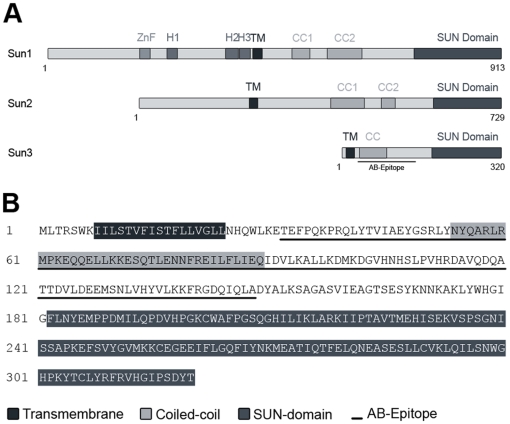
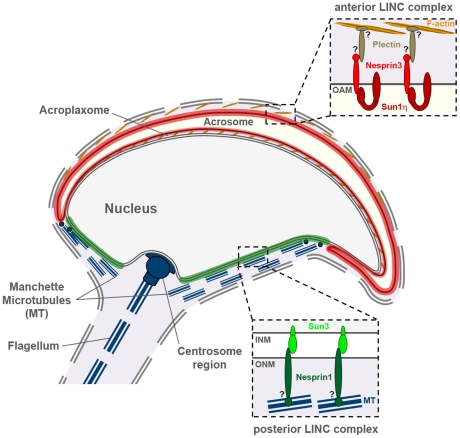
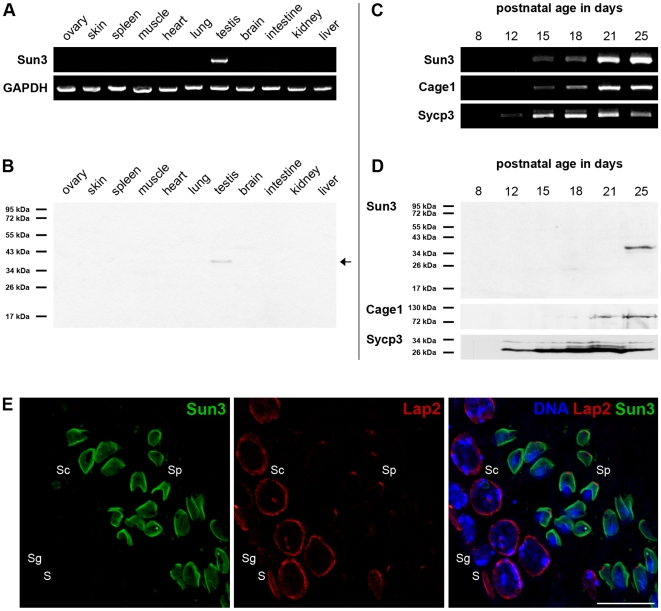
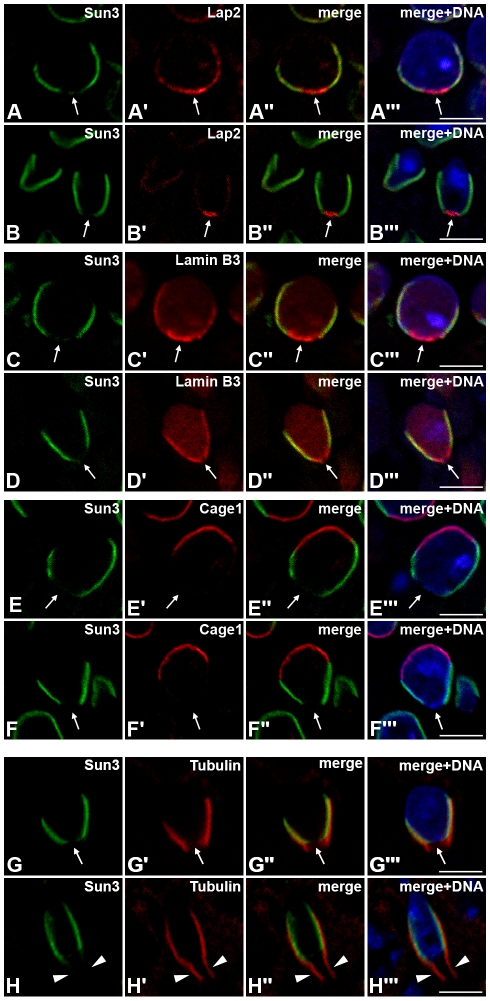
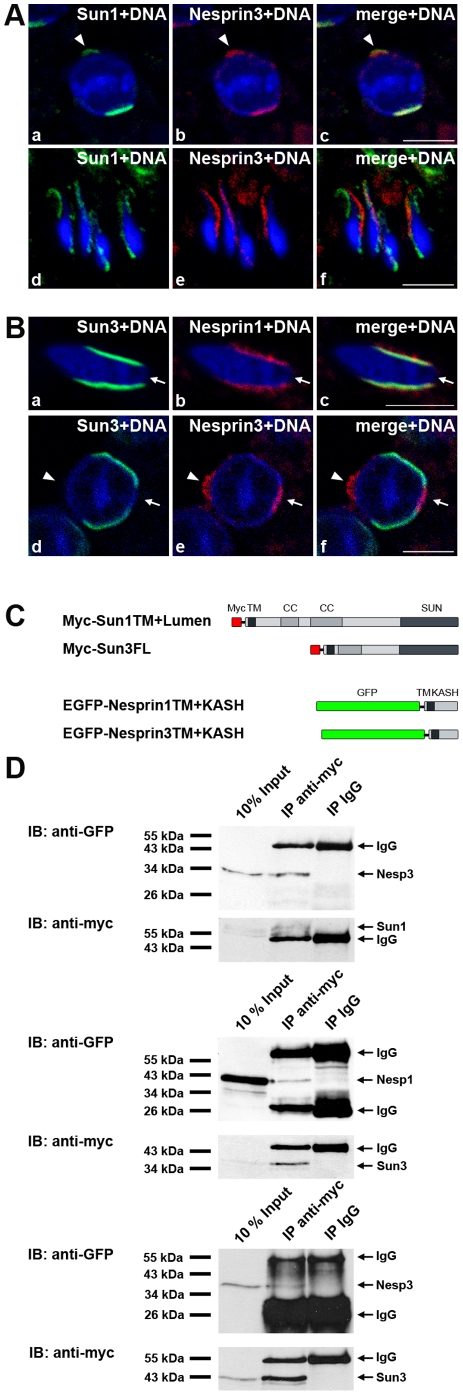
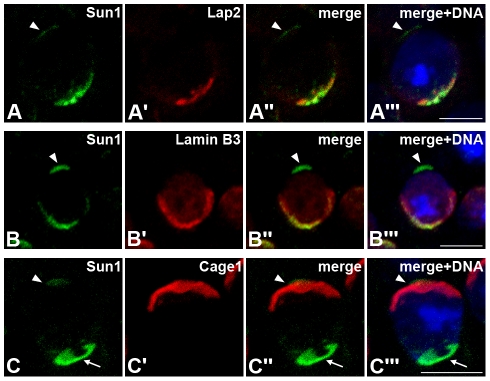
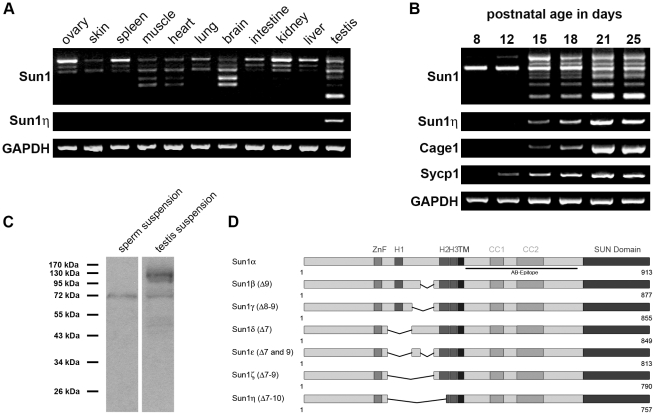
Based on detailed expression analysis and biochemical approaches, we show here that during mouse sperm development, a terminal cell differentiation process characterized by profound morphogenic restructuring, two novel distinctive LINC complexes are established. They consist either of spermiogenesis-specific Sun3 and Nesprin1 or Sun1eta, a novel non-nuclear Sun1 isoform, and Nesprin3. We could find that these two LINC complexes specifically polarize to opposite spermatid poles likely linking to sperm-specific cytoskeletal structures. Although, as shown in co-transfection/immunoprecipitation experiments, SUN proteins appear to arbitrarily interact with various KASH partners, our study demonstrates that they actually are able to confine their binding to form distinct LINC complexes.
Formation of the mammalian sperm head involves assembly and different polarization of two novel spermiogenesis-specific LINC complexes. Together, our findings suggest that theses LINC complexes connect the differentiating spermatid nucleus to surrounding cytoskeletal structures to enable its well-directed shaping and elongation, which in turn is a critical parameter for male fertility.
LINC 复合物是由 SUN 和 KASH 蛋白相互作用形成的核膜桥接蛋白结构。它们将细胞核与周围的细胞骨架物理连接,并在多种动态过程中发挥关键作用,如核锚定、运动和定位以及减数分裂染色体动力学。此外,它们被证明对于维持核形状至关重要。
基于详细的表达分析和生化方法,我们在这里表明,在小鼠精子发生过程中,一个以深刻形态重塑为特征的终末细胞分化过程中,建立了两个新的独特的 LINC 复合物。它们要么由精子发生特异性的 Sun3 和 Nesprin1 组成,要么由 Sun1eta(一种新型非核 Sun1 同工型)和 Nesprin3 组成。我们可以发现,这两个 LINC 复合物特异性地极化到相对的精子细胞极,可能与精子特异性细胞骨架结构相连。尽管如共转染/免疫沉淀实验所示,SUN 蛋白似乎任意地与各种 KASH 伴侣相互作用,但我们的研究表明,它们实际上能够将其结合限制在形成独特的 LINC 复合物中。
哺乳动物精子头的形成涉及两个新的精子发生特异性 LINC 复合物的组装和不同极化。总之,我们的发现表明,这些 LINC 复合物将分化的精细胞核连接到周围的细胞骨架结构上,以实现其定向塑造和伸长,这反过来又是男性生育能力的关键参数。