Division of Virology, Department of Infectious Diseases, St. Jude Children's Research Hospital, Memphis, TN 38105, USA.
Influenza Other Respir Viruses. 2010 Sep;4(5):307-11. doi: 10.1111/j.1750-2659.2010.00155.x.
A novel influenza A (H1N1) virus was isolated from humans in North America and has developed into the first pandemic of the 21st century. Reports of a global shortage of antiviral drugs, the evolution of drug-resistant influenza virus variants, and a 6-month delay in vaccine availability underline the need to develop new therapeutics that may be widely distributed during future pandemics.
In an effort to discover alternatives to the conventional therapeutic strategies available, we screened several classes of immunomodulatory agents possessing the potential to mitigate the effects of influenza virus-induced immunopathology.
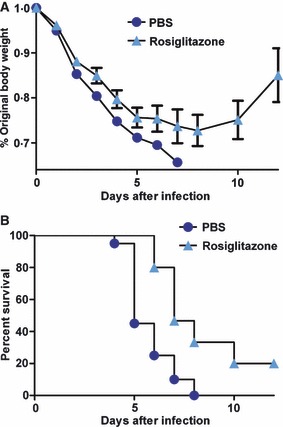
Here, we provide preliminary evidence that two classes of drugs, peroxisome proliferator-activated receptor-gamma agonists and AMP-activated protein kinase agonists, provide protection in mice infected with highly pathogenic and pandemic strains of influenza virus.
The extensive production in the developed world, combined with the significant degree of protection described here, establishes these drugs as a potential therapeutic option that may be broadly implemented to combat serious disease caused by future influenza epidemics or pandemics.
一种新型甲型 H1N1 流感病毒从北美人群中分离出来,已发展成为 21 世纪的首次大流行。全球抗病毒药物短缺的报告、耐药流感病毒变异株的出现以及疫苗供应延迟 6 个月,都突显了开发新疗法的必要性,这些疗法可能在未来的大流行中得到广泛应用。
为了寻找替代现有常规治疗策略的方法,我们筛选了几类具有减轻流感病毒诱导的免疫病理作用潜力的免疫调节剂。
在这里,我们提供了初步证据,表明两类药物,过氧化物酶体增殖物激活受体-γ 激动剂和 AMP 激活的蛋白激酶激动剂,可在感染高致病性和大流行株流感病毒的小鼠中提供保护。
这些药物在发达国家广泛生产,并且在这里描述的保护程度显著,因此它们成为一种潜在的治疗选择,可以广泛应用于对抗未来流感流行或大流行引起的严重疾病。