Department of Biochemistry, Indian Institute of Science, Bangalore, 560012 Karnataka, India.
Malar J. 2010 Aug 19;9:236. doi: 10.1186/1475-2875-9-236.
Molecular chaperones have been shown to be important in the growth of the malaria parasite Plasmodium falciparum and inhibition of chaperone function by pharmacological agents has been shown to abrogate parasite growth. A recent study has demonstrated that clinical isolates of the parasite have distinct physiological states, one of which resembles environmental stress response showing up-regulation of specific molecular chaperones.
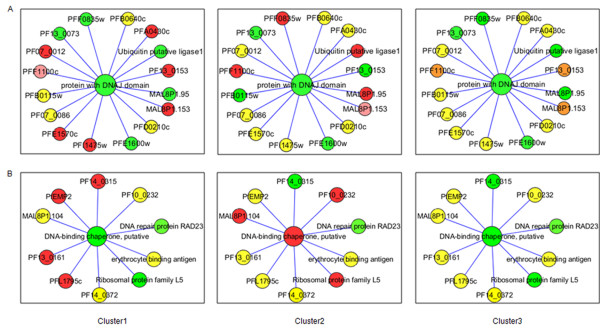
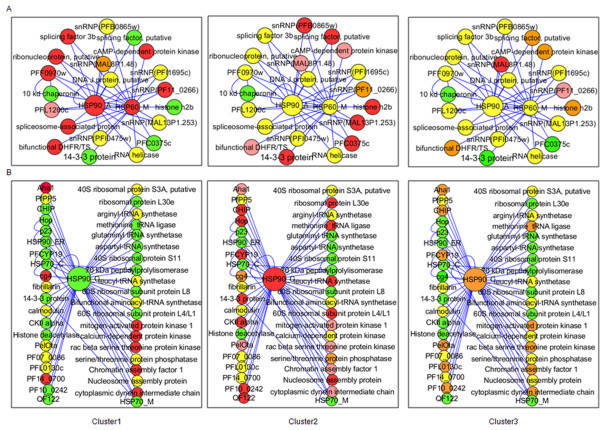
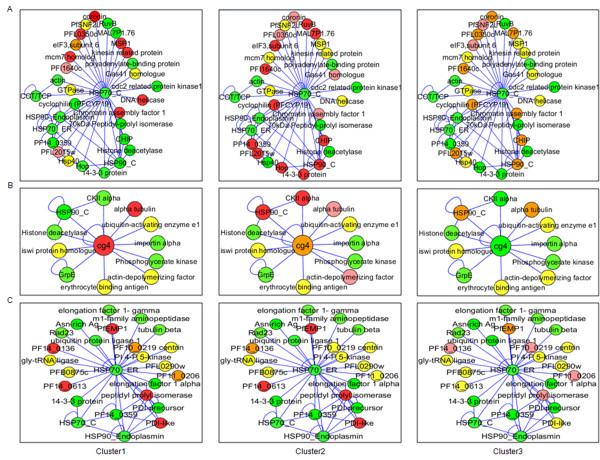
Chaperone networks operational in the distinct physiological clusters in clinical malaria parasites were constructed using cytoscape by utilizing their clinical expression profiles.
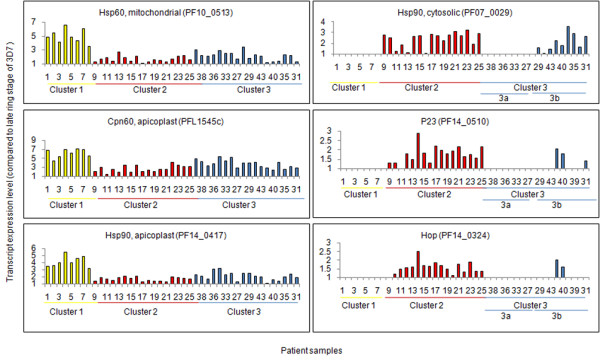
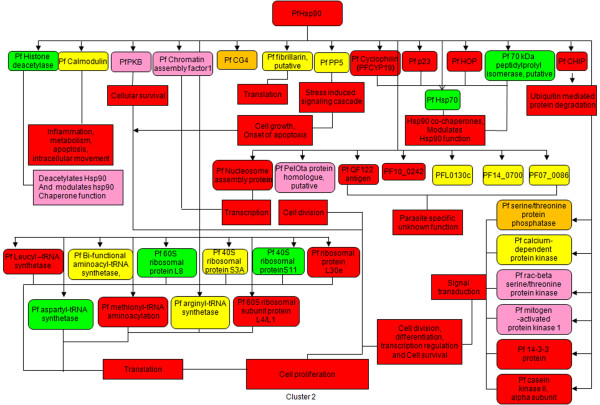
Molecular chaperones show distinct profiles in the previously defined physiologically distinct states. Further, expression profiles of the chaperones from different cellular compartments correlate with specific patient clusters. While cluster 1 parasites, representing a starvation response, show up-regulation of organellar chaperones, cluster 2 parasites, which resemble active growth based on glycolysis, show up-regulation of cytoplasmic chaperones. Interestingly, cytoplasmic Hsp90 and its co-chaperones, previously implicated as drug targets in malaria, cluster in the same group. Detailed analysis of chaperone expression in the patient cluster 2 reveals up-regulation of the entire Hsp90-dependent pro-survival circuitries. In addition, cluster 2 also shows up-regulation of Plasmodium export element (PEXEL)-containing Hsp40s thought to have regulatory and host remodeling roles in the infected erythrocyte.
In all, this study demonstrates an intimate involvement of parasite-encoded chaperones, PfHsp90 in particular, in defining pathogenesis of malaria.
分子伴侣在疟原虫恶性疟(Plasmodium falciparum)的生长过程中起着重要作用,通过药理手段抑制伴侣功能已被证实可阻止寄生虫生长。最近的一项研究表明,寄生虫的临床分离株具有明显的生理状态,其中一种类似于环境应激反应,表现为特定分子伴侣的上调。
利用临床表达谱,通过 Cytoscape 构建了在临床疟疾寄生虫不同生理群集中起作用的伴侣网络。
分子伴侣在先前定义的生理上明显不同的状态中呈现出不同的特征。此外,不同细胞区室的伴侣的表达谱与特定的患者群相关。虽然代表饥饿反应的簇 1 寄生虫显示细胞器伴侣的上调,但类似于糖酵解的活跃生长的簇 2 寄生虫显示细胞质伴侣的上调。有趣的是,先前被认为是疟疾药物靶点的细胞质 Hsp90 及其共伴侣聚集在同一组。在患者簇 2 中对伴侣表达的详细分析显示,整个 Hsp90 依赖性生存途径的上调。此外,簇 2 还显示出含有 PfHsp40 的疟原虫输出元件(PEXEL)的上调,据认为这些伴侣在感染的红细胞中具有调节和宿主重塑作用。
总之,这项研究表明寄生虫编码的伴侣,特别是 PfHsp90,密切参与疟疾发病机制的定义。