Le May Nicolas, Egly Jean-Marc, Coin Frédéric
Department of Functional Genomics, IGBMC, CNRS/INSERM/Université de Strasbourg, BP 163, 67404 Illkirch Cedex, Strasbourg, France.
J Nucleic Acids. 2010 Jul 25;2010:616342. doi: 10.4061/2010/616342.
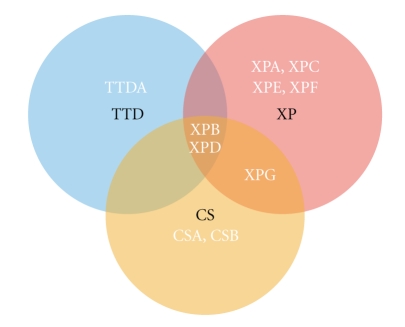
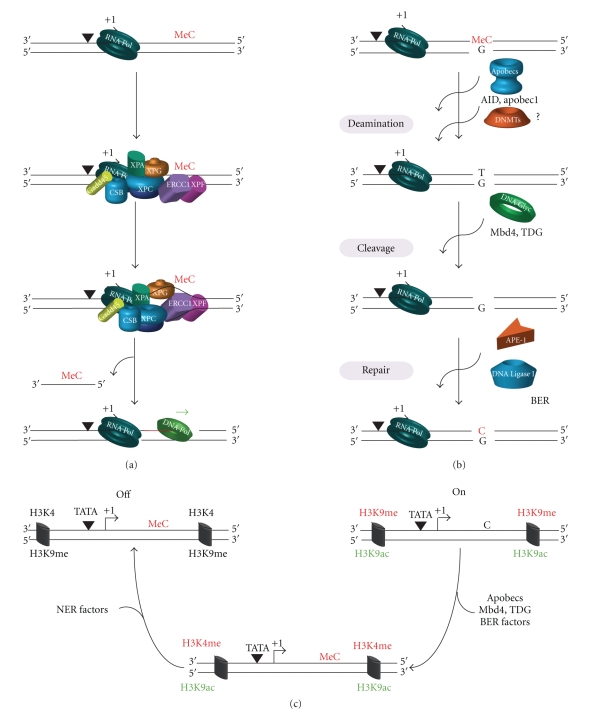
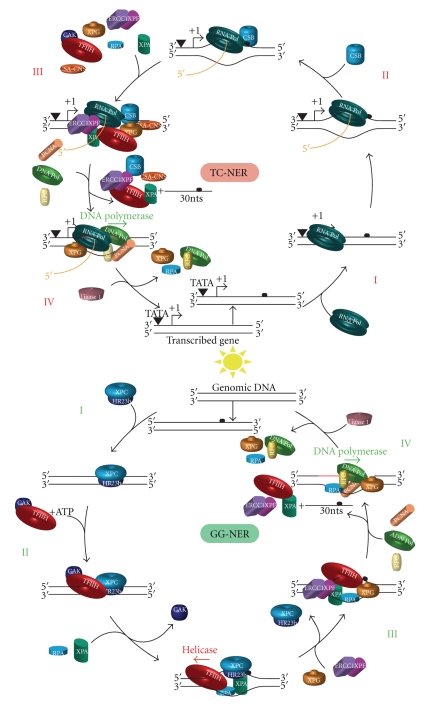
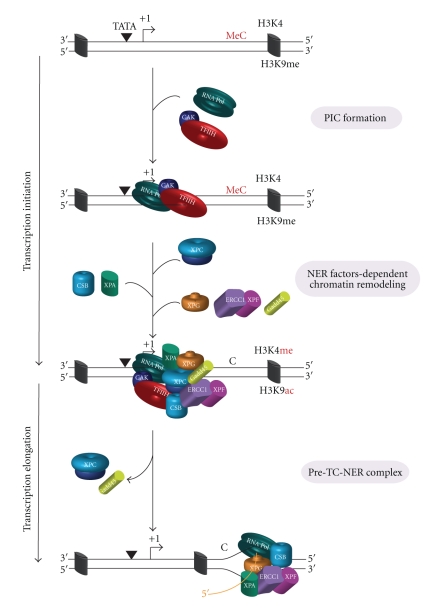
Nucleotide excision repair (NER) is a major DNA repair pathway in eukaryotic cells. NER removes structurally diverse lesions such as pyrimidine dimers, arising upon UV irradiation or bulky chemical adducts, arising upon exposure to carcinogens and some chemotherapeutic drugs. NER defects lead to three genetic disorders that result in predisposition to cancers, accelerated aging, neurological and developmental defects. During NER, more than 30 polypeptides cooperate to recognize, incise, and excise a damaged oligonucleotide from the genomic DNA. Recent papers reveal an additional and unexpected role for the NER factors. In the absence of a genotoxic attack, the promoters of RNA polymerases I- and II-dependent genes recruit XPA, XPC, XPG, and XPF to initiate gene expression. A model that includes the growth arrest and DNA damage 45alpha protein (Gadd45alpha) and the NER factors, in order to maintain the promoter of active genes under a hypomethylated state, has been proposed but remains controversial. This paper focuses on the double life of the NER factors in DNA repair and transcription and describes the possible roles of these factors in the RNA synthesis process.
核苷酸切除修复(NER)是真核细胞中的一种主要DNA修复途径。NER可修复多种结构损伤,如紫外线照射后产生的嘧啶二聚体,或接触致癌物及某些化疗药物后产生的大分子化学加合物。NER缺陷会导致三种遗传性疾病,使人易患癌症、加速衰老、出现神经和发育缺陷。在NER过程中,30多种多肽协同作用,从基因组DNA中识别、切割并切除受损的寡核苷酸。近期的论文揭示了NER因子的一种额外且意想不到的作用。在没有基因毒性攻击的情况下,RNA聚合酶I和II依赖基因的启动子会招募XPA、XPC、XPG和XPF来启动基因表达。有人提出了一个模型,该模型包括生长停滞和DNA损伤45α蛋白(Gadd45α)和NER因子,以维持活性基因的启动子处于低甲基化状态,但该模型仍存在争议。本文重点关注NER因子在DNA修复和转录中的双重作用,并描述这些因子在RNA合成过程中可能发挥的作用。