Department of Gastroenterology and Hepatology, Ghent University Hospital, Ghent, Belgium.
Mol Cancer. 2010 Aug 20;9:219. doi: 10.1186/1476-4598-9-219.
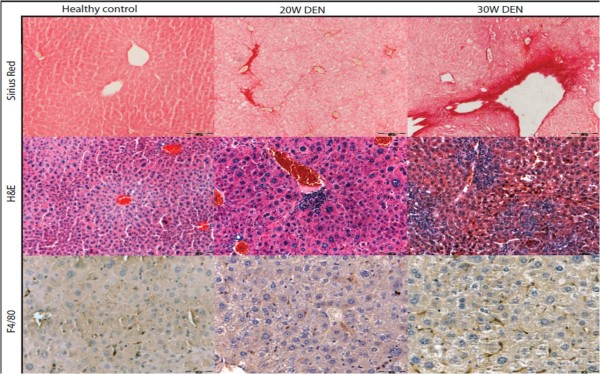
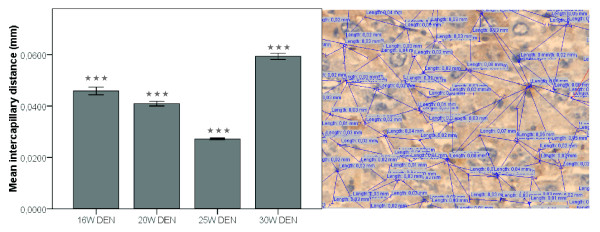
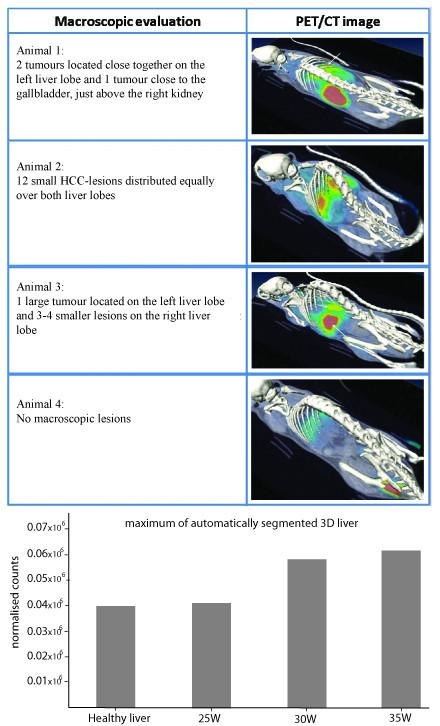
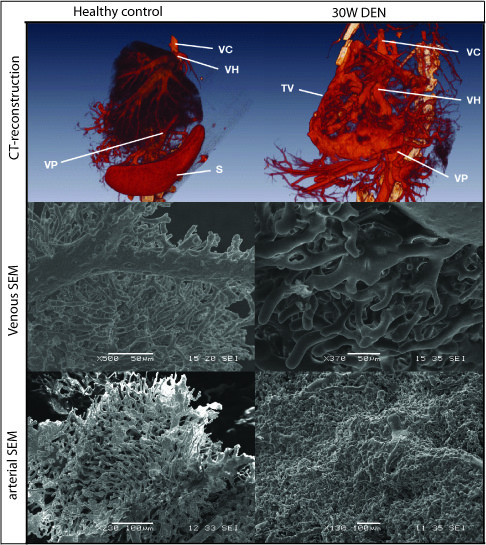
The increasing incidence of hepatocellular carcinoma in Western countries has led to an expanding interest of scientific research in this field. Therefore, a vast need of experimental models that mimic the natural pathogenesis of hepatocellular carcinoma (HCC) in a short time period is present. The goal of our study was (1) to develop an efficient mouse model for HCC research, in which tumours develop in a natural background of fibrosis and (2) to assess the time-dependent angiogenic changes in the pathogenesis of HCC.
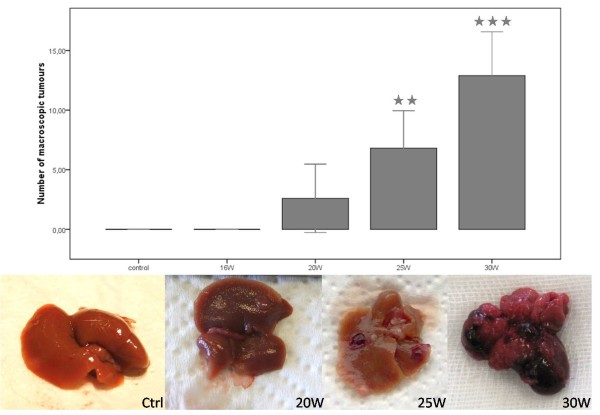
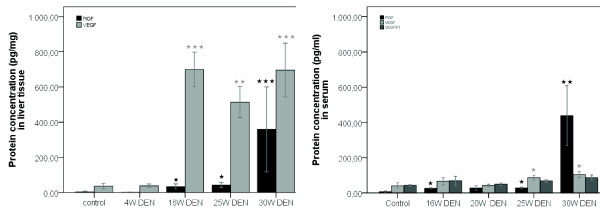
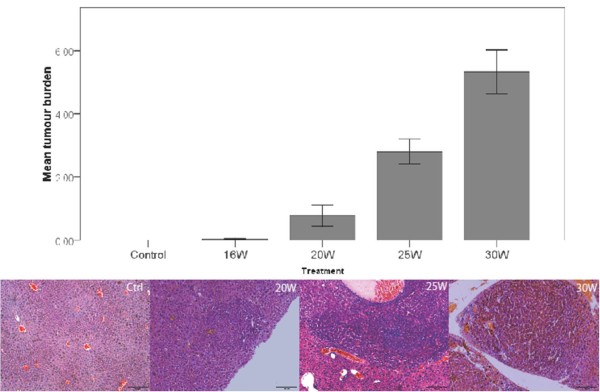
Weekly intraperitoneal injections with the hepatocarcinogenic compound N-nitrosodiethylamine was applied as induction method and samples were taken at several time points to assess the angiogenic changes during the progression of HCC.
The N-nitrosodiethylamine-induced mouse model provides well vascularised orthotopic tumours after 25 weeks. It is a representative model for human HCC and can serve as an excellent platform for the development of new therapeutic targets.
在西方国家,肝细胞癌的发病率不断上升,这导致科学界对该领域的研究兴趣日益浓厚。因此,目前非常需要能够在短时间内模拟肝细胞癌(HCC)自然发病过程的实验模型。我们的研究目的是:(1)建立一种有效的 HCC 研究用小鼠模型,其中肿瘤在纤维化的自然背景下形成;(2)评估 HCC 发病过程中随时间变化的血管生成变化。
每周腹腔内注射致癌化合物 N-亚硝基二乙胺作为诱导方法,并在多个时间点取样,以评估 HCC 进展过程中的血管生成变化。
N-亚硝基二乙胺诱导的小鼠模型在 25 周后提供了血管丰富的原位肿瘤。它是一种具有代表性的人 HCC 模型,可以作为开发新治疗靶点的优秀平台。