Genomic Medicine Institute, Cleveland Clinic, 9500 Euclid Avenue, Cleveland, OH 44195, USA.
Hum Mol Genet. 2010 Nov 15;19(22):4319-29. doi: 10.1093/hmg/ddq354. Epub 2010 Aug 20.
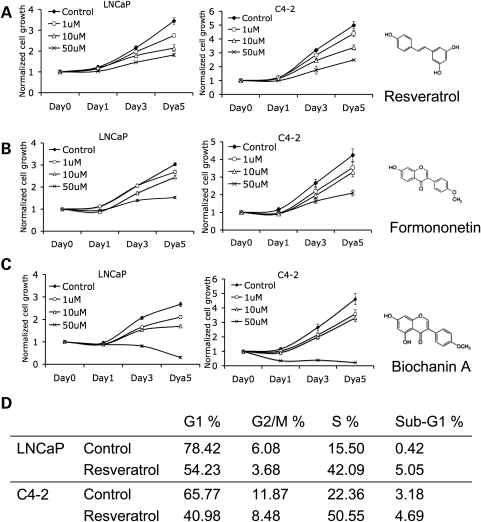
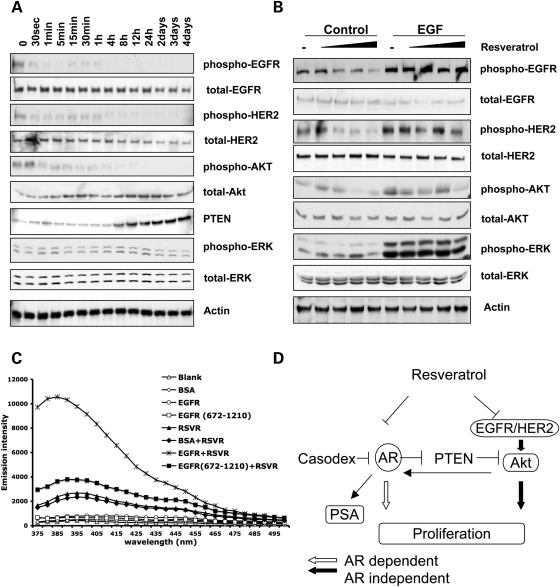
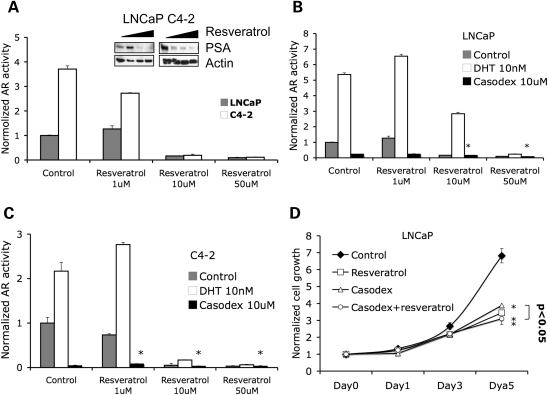
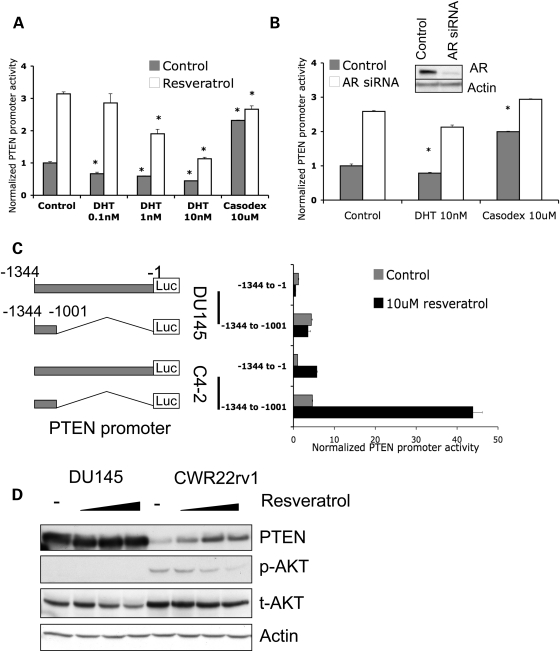
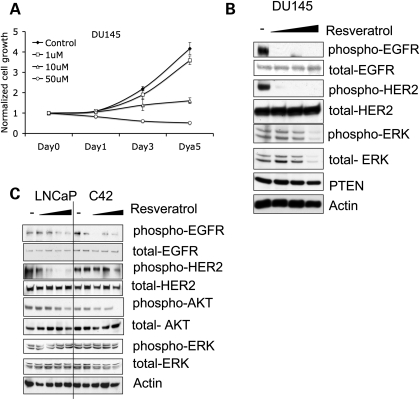
The tumor suppressor gene PTEN (phosphatase and tensin homolog deleted on chromosome 10) and the androgen receptor (AR) play important roles in tumor development and progression in prostate carcinogenesis. Among many functions, PTEN negatively regulates the cytoplasmic phosphatidylinositol-3-kinase/AKT anti-apoptotic pathway; and nuclear PTEN affects the cell cycle by also negatively regulating the MAPK pathway via cyclin D. Decreased PTEN expression is correlated with prostate cancer progression. Over-expression of AR and upregulation of AR transcriptional activity are often observed in the later stages of prostate cancer. Recent studies indicate that PTEN regulates AR activity and stability. However, the mechanism of how AR regulates PTEN has never been studied. Furthermore, resveratrol, a phytoalexin enriched in red grapes, strawberries and peanuts, has been shown to inhibit AR transcriptional activity in prostate cancer cells. In this study, we use prostate cancer cell lines to test the hypothesis that resveratrol inhibits cellular proliferation in both AR-dependent and -independent mechanisms. We show that resveratrol inhibits AR transcriptional activity in both androgen-dependent and -independent prostate cancer cells. Additionally, resveratrol stimulates PTEN expression through AR inhibition. In contrast, resveratrol directly binds epidermal growth factor receptor (EGFR) rapidly inhibiting EGFR phosphorylation, resulting in decreased AKT phosphorylation, in an AR-independent manner. Thus, resveratrol may act as potential adjunctive treatment for late-stage hormone refractory prostate cancer. More importantly, for the first time, our study demonstrates the mechanism by which AR regulates PTEN expression at the transcription level, indicating the direct link between a nuclear receptor and the PI3K/AKT pathway.
抑癌基因 PTEN(10 号染色体缺失的磷酸酶和张力蛋白同源物)和雄激素受体(AR)在前列腺癌发生中的肿瘤发展和进展中发挥重要作用。在许多功能中,PTEN 负调控细胞质磷脂酰肌醇-3-激酶/AKT 抗凋亡途径;核 PTEN 通过也负调控 MAPK 途径通过细胞周期蛋白 D 影响细胞周期。PTEN 表达降低与前列腺癌进展相关。AR 的过度表达和 AR 转录活性的上调通常在前列腺癌的后期观察到。最近的研究表明,PTEN 调节 AR 活性和稳定性。然而,AR 调节 PTEN 的机制从未被研究过。此外,白藜芦醇,一种富含于红葡萄、草莓和花生中的植物抗毒素,已被证明可抑制前列腺癌细胞中的 AR 转录活性。在这项研究中,我们使用前列腺癌细胞系来测试白藜芦醇是否通过 AR 抑制以 AR 依赖和非依赖机制抑制细胞增殖的假设。我们表明白藜芦醇抑制雄激素依赖性和非依赖性前列腺癌细胞中的 AR 转录活性。此外,白藜芦醇通过 AR 抑制刺激 PTEN 表达。相比之下,白藜芦醇通过非 AR 依赖性方式迅速与表皮生长因子受体(EGFR)结合,从而抑制 EGFR 磷酸化,导致 AKT 磷酸化减少。因此,白藜芦醇可能作为晚期激素难治性前列腺癌的潜在辅助治疗。更重要的是,我们的研究首次证明了 AR 在转录水平调节 PTEN 表达的机制,表明核受体与 PI3K/AKT 途径之间存在直接联系。