Junior Doctors Advisory Team, NHS North West Strategic Health Authority, Manchester, M1 3BN, UK.
QJM. 2010 Dec;103(12):929-40. doi: 10.1093/qjmed/hcq139. Epub 2010 Aug 25.
NHS North West aimed to fully implement the European Working Time Directive (EWTD) 1 year ahead of the August 2009 national deadline. Significant debate has taken place concerning the implications of the EWTD for patient safety. This study aims to directly address this issue by comparing parameters of patient safety in NHS North West to those nationally prior to EWTD implementation, and during 'North West-only' EWTD implementation.
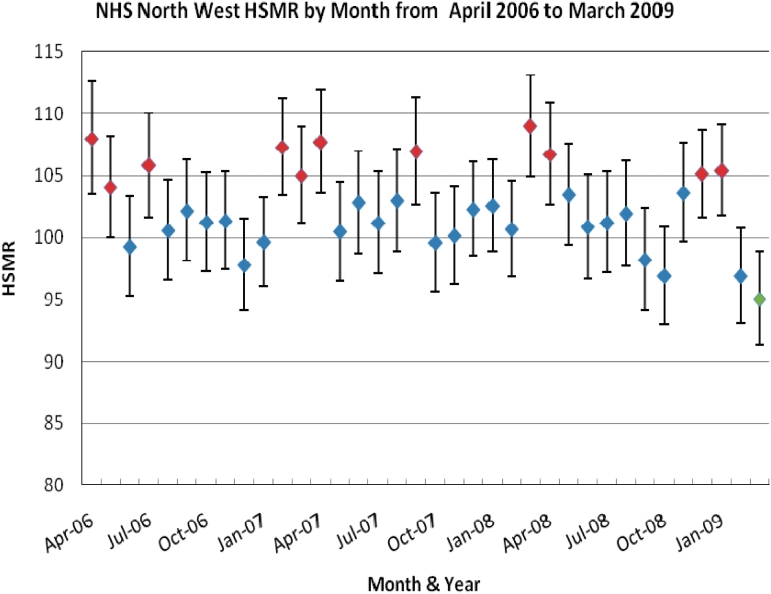
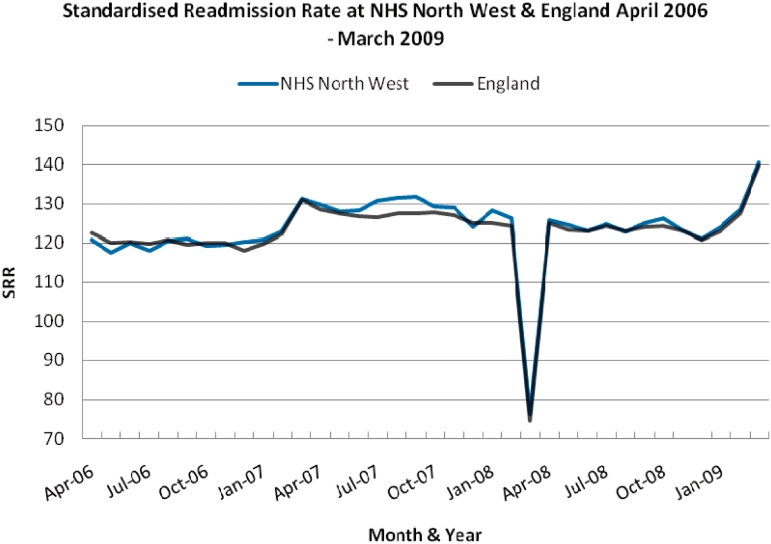
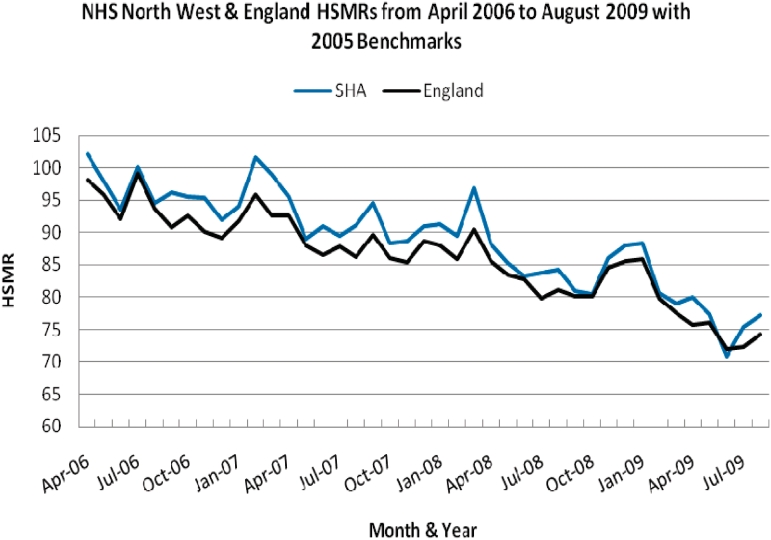
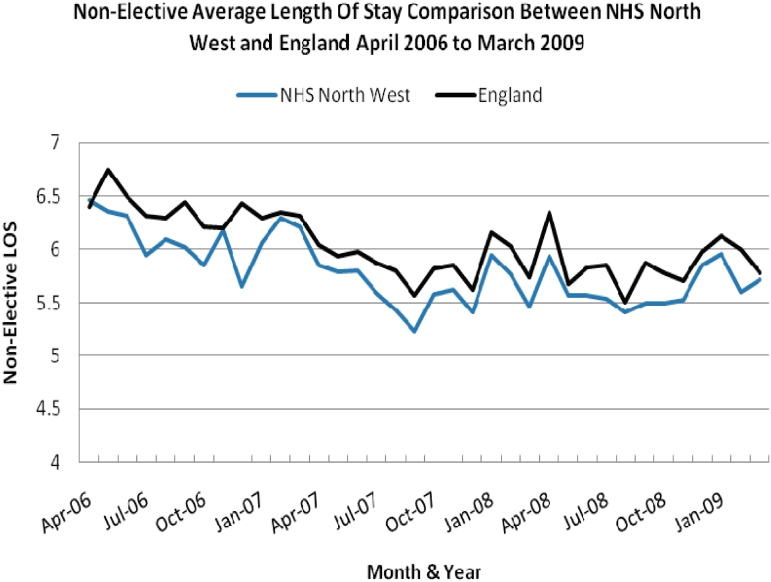
Hospital standardised mortality ratio (HSMR), average length of stay (ALOS) and standardised readmission rate (SRR) in acute trusts across all specialties were calculated retrospectively throughout NHS North West for the three financial years from 2006/2007 to 2008/2009. These figures were compared to national data for the same parameters.
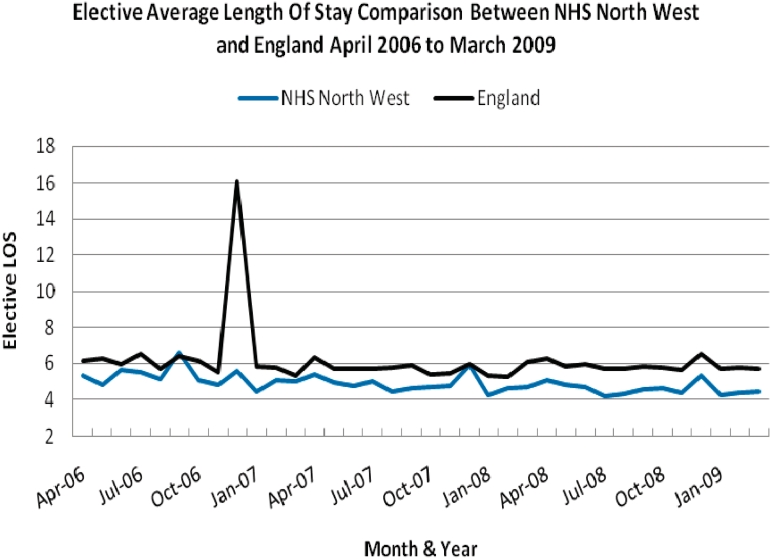
The analysis of HSMR, ALOS and SRR reveal no significant difference in trend across three financial years when NHS North West is compared to England. HSMR and SRR within NHS North West continued to improve at a similar rate to the England average after August 2008. The ALOS analysis shows that NHS North West performed better than the national average for the majority of the study period, with no significant change in this pattern in the period following August 2008. When the HSMRs for NHS North West and England are compared against a fixed benchmark year (2005), the data shows a continuing decrease. The NHS North West figures follow the national trend closely at all times.
The data presented in this study quantitatively demonstrates, for the first time, that implementation of the EWTD in NHS North West in August 2008 had no obvious adverse impact on key outcomes associated with patient safety and quality of care. Continued efforts will be required to address the challenge posed nationally by the restricted working hour's schedule.
NHS 西北地区旨在比 2009 年 8 月全国截止日期提前一年全面实施欧洲工作时间指令(EWTD)。关于 EWTD 对患者安全的影响,已经进行了大量的辩论。本研究旨在通过比较 NHS 西北地区在实施 EWTD 之前和仅在西北地区实施 EWTD 期间与全国范围内的患者安全参数,直接解决这一问题。
在 NHS 西北地区的所有专业中,对急性信托医院的标准化死亡率(HSMR)、平均住院时间(ALOS)和标准化再入院率(SRR)进行了回顾性计算,计算范围为 2006/2007 至 2008/2009 三个财政年度。将这些数字与全国相同参数的数据进行了比较。
HSMR、ALOS 和 SRR 的分析表明,与英格兰相比,NHS 西北地区在三个财政年度的趋势没有显著差异。2008 年 8 月后,NHS 西北地区的 HSMR 和 SRR 继续以与英格兰平均水平相似的速度提高。ALOS 分析表明,在研究期间的大部分时间里,NHS 西北地区的表现优于全国平均水平,2008 年 8 月后,这一模式没有明显变化。当将 NHS 西北地区和英格兰的 HSMR 与固定基准年(2005 年)进行比较时,数据显示持续下降。NHS 西北地区的数据始终密切跟踪全国趋势。
本研究首次以定量方式表明,2008 年 8 月在 NHS 西北地区实施 EWTD 对与患者安全和护理质量相关的关键结果没有明显的不利影响。需要继续努力应对全国范围内工作时间限制所带来的挑战。