Department of Medicine II Gastroenterology and Hepatology, Medical University of Innsbruck, Innsbruck, Austria.
J Hepatol. 2010 Dec;53(6):1101-7. doi: 10.1016/j.jhep.2010.04.039. Epub 2010 Aug 4.
BACKGROUND & AIMS: Aceruloplasminemia is a rare autosomal recessive neurodegenerative disease associated with brain and liver iron accumulation which typically presents with movement disorders, retinal degeneration, and diabetes mellitus. Ceruloplasmin is a multi-copper ferroxidase that is secreted into plasma and facilitates cellular iron export and iron binding to transferrin.
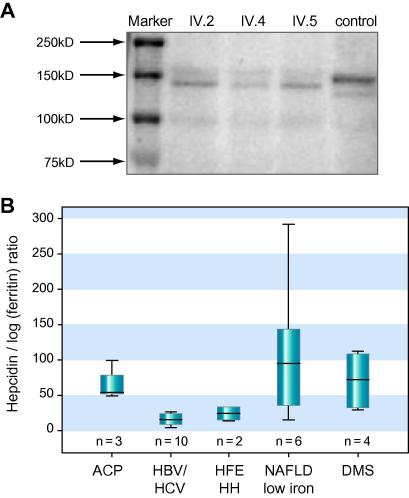
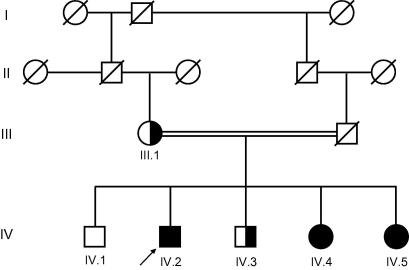
A novel homozygous ceruloplasmin gene mutation, c.2554+1G>T, was identified as the cause of aceruloplasminemia in three affected siblings. Two siblings presented with movement disorders and diabetes. Complementary DNA sequencing showed that this mutation causes skipping of exon 14 and deletion of amino acids 809-852 while preserving the open reading frame. Western blotting of liver extracts and sera of affected patients showed retention of the abnormal protein in the liver. Aceruloplasminemia was associated with severe brain and liver iron overload, where hepatic mRNA expression of the iron hormone hepcidin was increased, corresponding to the degree of iron overload. Hepatic iron concentration normalized after 3 and 5months of iron chelation therapy with deferasirox, which was also associated with reduced insulin demands. During short term treatment there was no clinical or imaging evidence for significant effects on brain iron overload.
Aceruloplasminemia can show an incomplete clinical penetrance but is invariably associated with iron accumulation in the liver and in the brain. Iron accumulation in aceruloplasminemia is a result of defective cellular iron export, where hepcidin regulation is appropriate for the degree of iron overload. Iron chelation with deferasirox was effective in mobilizing hepatic iron but has no effect on brain iron.
亚铁氧化酶缺乏症是一种罕见的常染色体隐性遗传性神经退行性疾病,与脑和肝铁蓄积有关,其特征通常为运动障碍、视网膜变性和糖尿病。亚铁氧化酶是一种多铜氧化酶,分泌到血浆中,促进细胞铁输出和铁与转铁蛋白结合。
我们鉴定了三个受影响的兄弟姐妹中一种新的亚铁氧化酶基因杂合突变 c.2554+1G>T,该突变是亚铁氧化酶缺乏症的病因。两个兄弟姐妹表现为运动障碍和糖尿病。互补 DNA 测序表明,该突变导致外显子 14 跳跃和氨基酸 809-852 缺失,同时保留开放阅读框。受影响患者的肝提取物和血清的 Western 印迹显示,异常蛋白在肝脏中被保留。亚铁氧化酶缺乏症与严重的脑和肝铁过载有关,肝脏铁激素铁调素的 mRNA 表达增加,与铁过载程度相对应。用去铁酮进行 3 个月和 5 个月的铁螯合治疗后,肝铁浓度正常化,同时胰岛素需求减少。在短期治疗期间,没有临床或影像学证据表明对脑铁过载有显著影响。
亚铁氧化酶缺乏症可能表现为不完全的临床外显率,但总是与肝和脑内铁蓄积有关。亚铁氧化酶缺乏症中的铁蓄积是由于细胞铁输出缺陷所致,铁调素的调节与铁过载程度相适应。用去铁酮进行铁螯合治疗在动员肝铁方面是有效的,但对脑铁没有影响。