Department of Pathology, Duke University Medical Center, Durham, North Carolina, United States of America.
PLoS One. 2010 Aug 17;5(8):e12220. doi: 10.1371/journal.pone.0012220.
Inflammatory bowel disease (IBD) is hypothesized to result from stimulation of immune responses against resident intestinal bacteria within a genetically susceptible host. Mast cells may play a critical role in IBD pathogenesis, since they are typically located just beneath the intestinal mucosal barrier and can be activated by bacterial antigens.
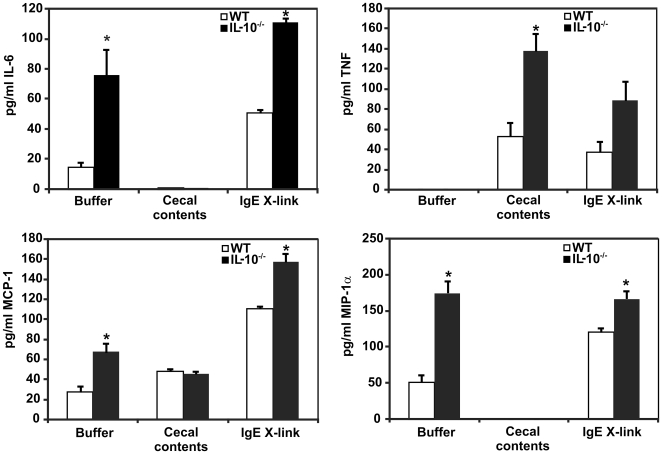
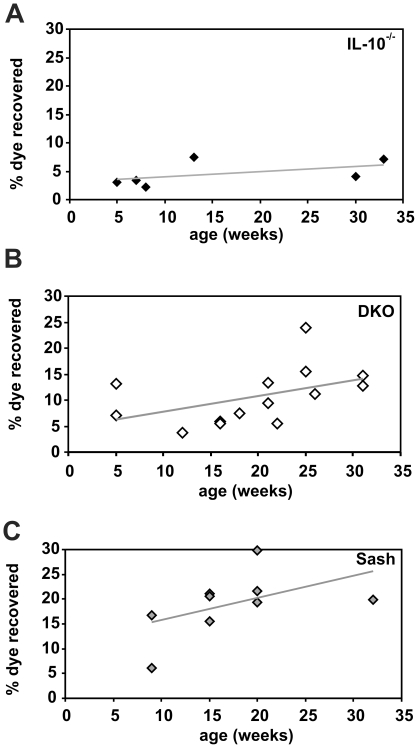
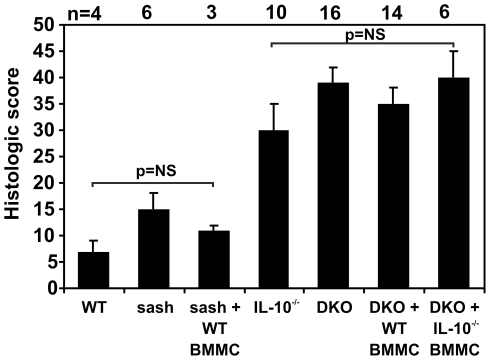
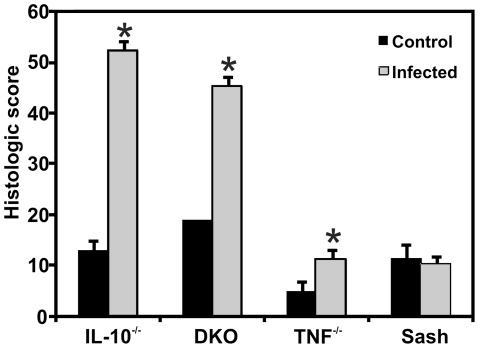
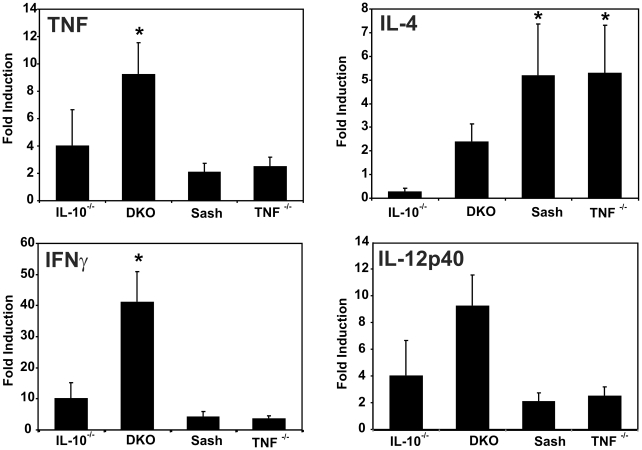
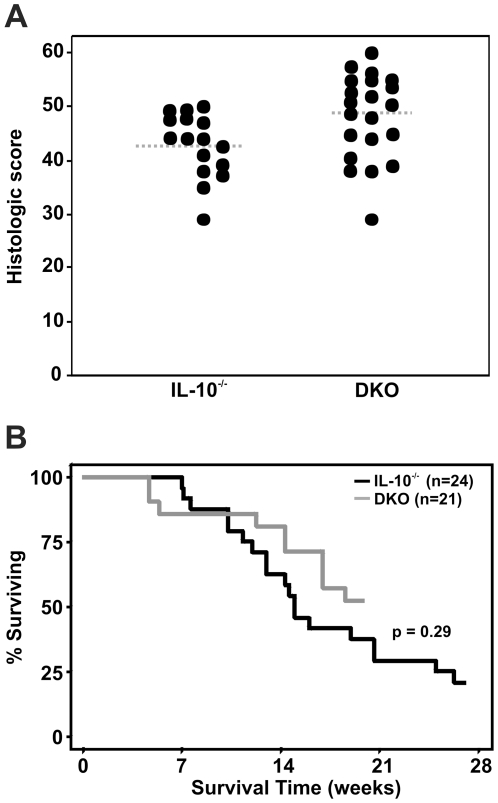
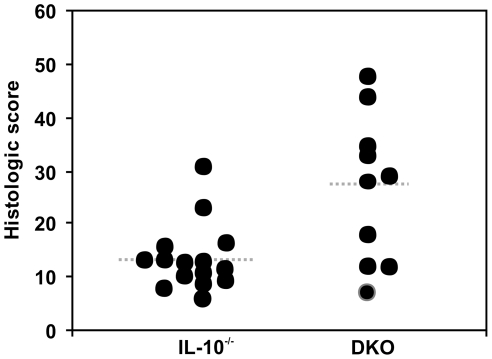
METHODOLOGY/PRINCIPAL FINDINGS: This study investigated effects of mast cells on inflammation and associated neoplasia in IBD-susceptible interleukin (IL)-10-deficient mice with and without mast cells. IL-10-deficient mast cells produced more pro-inflammatory cytokines in vitro both constitutively and when triggered, compared with wild type mast cells. However despite this enhanced in vitro response, mast cell-sufficient Il10(-/-) mice actually had decreased cecal expression of tumor necrosis factor (TNF) and interferon (IFN)-gamma mRNA, suggesting that mast cells regulate inflammation in vivo. Mast cell deficiency predisposed Il10(-/-) mice to the development of spontaneous colitis and resulted in increased intestinal permeability in vivo that preceded the development of colon inflammation. However, mast cell deficiency did not affect the severity of IBD triggered by non-steroidal anti-inflammatory agents (NSAID) exposure or helicobacter infection that also affect intestinal permeability.
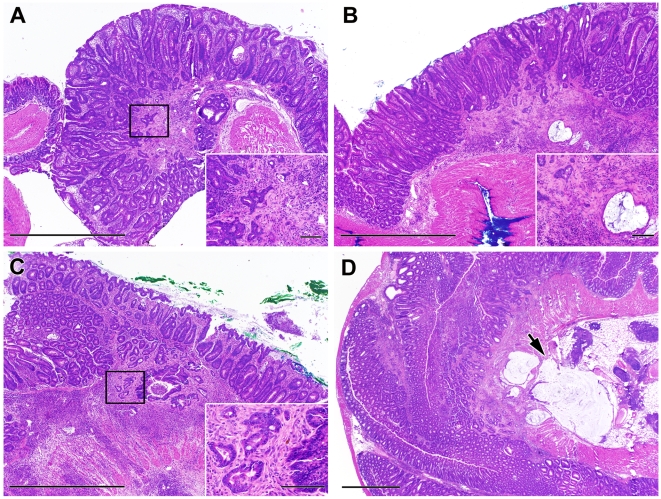
CONCLUSIONS/SIGNIFICANCE: Mast cells thus appear to have a primarily protective role within the colonic microenvironment by enhancing the efficacy of the mucosal barrier. In addition, although mast cells were previously implicated in progression of sporadic colon cancers, mast cells did not affect the incidence or severity of colonic neoplasia in this inflammation-associated model.
炎症性肠病(IBD)被认为是由于遗传易感宿主对常驻肠道细菌的免疫反应刺激而导致的。肥大细胞可能在 IBD 的发病机制中起关键作用,因为它们通常位于肠黏膜屏障下方,并且可以被细菌抗原激活。
方法/主要发现:本研究调查了肥大细胞对炎症和相关肿瘤发生的影响,研究对象是具有和不具有肥大细胞的易患 IBD 的白细胞介素(IL)-10 缺陷型小鼠。与野生型肥大细胞相比,IL-10 缺陷型肥大细胞在体外无论是在组成性还是在触发时都产生了更多的促炎细胞因子。然而,尽管这种体外反应增强了,肥大细胞充足的 Il10(-/-) 小鼠实际上在盲肠中 TNF 和 IFN-γ mRNA 的表达减少,这表明肥大细胞在体内调节炎症。肥大细胞缺乏使 Il10(-/-) 小鼠易患自发性结肠炎,并导致体内肠通透性增加,这先于结肠炎症的发生。然而,肥大细胞缺乏并不影响非甾体抗炎药(NSAID)暴露或幽门螺杆菌感染引发的 IBD 的严重程度,这两种情况也会影响肠通透性。
结论/意义:因此,肥大细胞似乎通过增强黏膜屏障的效力在结肠微环境中具有主要的保护作用。此外,尽管肥大细胞先前与散发性结肠癌的进展有关,但在这种炎症相关模型中,肥大细胞对结肠肿瘤的发生率或严重程度没有影响。